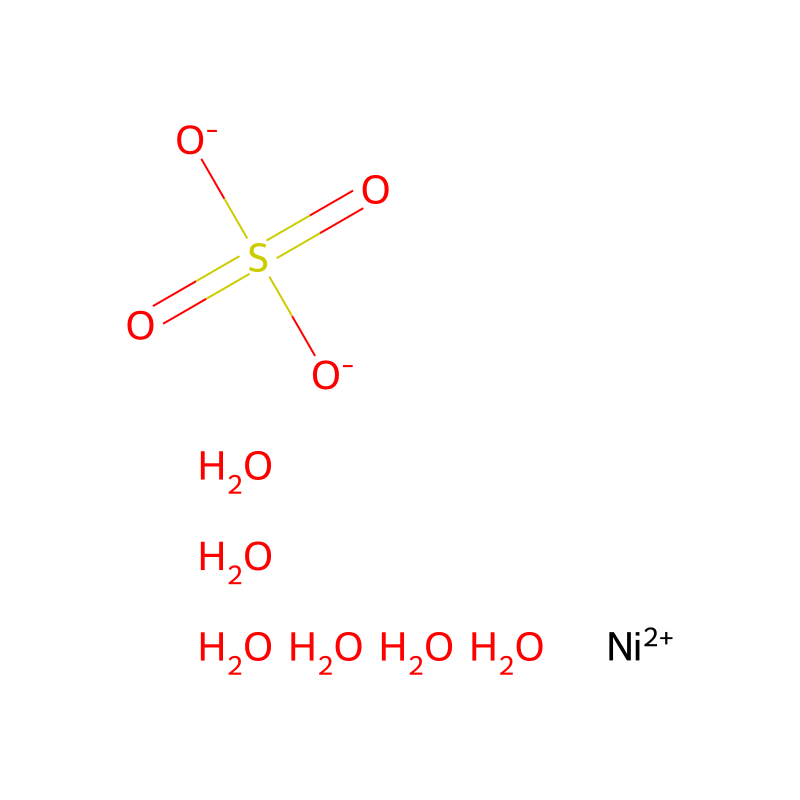
| GHS classification | This chemical does not meet GHS hazard criteria for 0.6% (2 of 326) of reports.DangerH302+H332 (54.9%): Harmful if swallowed or if inhaled [Warning Acute toxicity, oralacute toxicity, inhalation]H302 (96%): Harmful if swallowed [Warning Acute toxicity, oral]H315 (98.8%): Causes skin irritation [Warning Skin corrosion/irritation]H317 (93.6%): May cause an allergic skin reaction [Warning Sensitization, Skin]H332 (98.8%): Harmful if inhaled [Warning Acute toxicity, inhalation]H334 (99.1%): May cause allergy or asthma symptoms or breathing difficulties if inhaled [Danger Sensitization, respiratory]H341 (99.1%): Suspected of causing genetic defects [Warning Germ cell mutagenicity]H350 (54.6%): May cause cancer [Danger Carcinogenicity]H350i (50.3%): May cause cancer by inhalation [Danger Carcinogenicity]H360 (54.6%): May damage fertility or the unborn child [Danger Reproductive toxicity]H360D (55.2%): May damage the unborn child [Danger Reproductive toxicity]H372 (99.1%): Causes damage to organs through prolonged or repeated exposure [Danger Specific target organ toxicity, repeated exposure]H400 (98.8%): Very toxic to aquatic life [Warning Hazardous to the aquatic environment, acute hazard]H410 (99.1%): Very toxic to aquatic life with long lasting effects [Warning Hazardous to the aquatic environment, long-term hazard]P203, P233, P260, P261, P264, P270, P271, P272, P273, P280, P284, P301+P317, P302+P352, P304+P340, P317, P318, P319, P321, P330, P332+P317, P333+P317, P342+P316, P362+P364, P391, P403, P405, and P501 (click each P-code to see the statement)Aggregated GHS information provided per 326 reports by companies from 25 notifications to the ECHA C&L Inventory. Each notification may be associated with multiple companies.Reported as not meeting GHS hazard criteria per 2 of 326 reports by companies.There are 24 notifications provided by 324 of 326 reports by companies with hazard statement code(s).Information may vary between notifications depending on impurities, additives, and other factors. The percentage value in parenthesis indicates the notified classification ratio from companies that provide hazard codes. Only hazard codes with percentage values above 10% are shown. For more detailed information, please visit ECHA C&L website. |
|---|
| Regulatory information | Sulfuric acid, nickel(2+) salt (1:1), hexahydrate is listed on the EPA's Chemical Data Reporting (CDR) system. Manufacturers and importers of Sulfuric acid, nickel(2+) salt (1:1), hexahydrate are required to report information about their production and use of this chemical to the EPA under the Toxic Substances Control Act (TSCA). (40 eCFR Part 711)Nickel (II) sulphate, hexahydrate: HSNO Approval: HSR005114 Approved with controlsThe New Jersey Worker and Community Right to Know Act requires public and private employers to provide information about hazardous substances at their workplaces. (N.J.S.A. 34:5A-1 et. seq.) |
|---|
| DOT label | Class 9 |
|---|
| Fire hazards | Flash point data for this chemical are not available. It is probably combustible. (NTP, 1992) |
|---|
| Health hazards | SYMPTOMS: Symptoms of exposure to this class of compounds include irritation of the skin, eyes and respiratory tractskin sensitization and a dermatitis known as "nickel itch". This begins with a sensation of burning and itching in the hand, followed by erythema and a nodular eruption on the web of the fingers, wrists and forearms. The nodules may become pustules or may ulcerate. In the chronic stage, pigmented or depigmented plaque may be formed. It may also be accompanied by lichenification resembling atopic or neurodermatitis. Other symptoms may include diarrhea, allergic skin rash, giddiness, coughing, sore throat, shortness of breath, irritation of the gastrointestinal tract, abdominal pain, eye damage, nasal or lung damage, and liver and kidney damage. It may cause nausea, vomiting, central nervous system depression and myocardial weakness. Other symptoms include local astringent action, emesis, hyperglycemia, weakness, headache, palpitations and capillary damage (especially in the brain and adrenals). It may also cause asthma, burning pain in the mouth and throat, tenesmus, retching, hemolysis, hematuria, anuria, jaundice, hypotension, collapse and convulsions. Chronic eczema and fever may occur. Pulmonary fibrosis and pulmonary edema have been reported. Pneumonitis has also been reported. Prolonged exposure to excessive concentrations of dust may cause chronic pulmonary disorders. Chronic repeated application of solutions of this class of compounds to the skin may cause erythematous, papular and granulomatous reactions in susceptible individuals.ACUTE/CHRONIC HAZARDS: This compound is toxic by ingestion. It is also harmful if inhaled. It is an irritant of the skin, eyes and respiratory tract. When heated to decomposition it emits toxic fumes of sulfur oxides. (NTP, 1992) |
|---|
| Hazards summary | Reported health effects include contact dermatitis, asthma, GI irritation, liver and kidney damage, and pneumonitis. [CAMEO] Chronic inhalation studies of rats and mice show pulmonary inflammation[ACGIH] SeeNickel and linked occupational diseases. |
|---|
| Reactive group | Salts, Acidic |
|---|
| Reactivity Profile | NICKEL SULFATE HEXAHYDRATE is incompatible with strong acids, sulfur, Ni(NO3)2, wood and other combustibles. (NTP, 1992) At elevated temperature undergoes violent reaction with powdered aluminum or magnesium. When heated to decomposition it emits very toxic fumes of oxides of sulfur [Lewis, 3rd ed., 1993, p. 918]. |
|---|
| Air and Water Reactions | Water soluble. |
|---|
| Hazard Classes and Categories | Acute Tox. 4 (96%)Skin Irrit. 2 (98.8%)Skin Sens. 1 (93.6%)Acute Tox. 4 (98.8%)Resp. Sens. 1 (99.1%)Muta. 2 (99.1%)Carc. 1A (54.6%)Carc. 1A (50.3%)Repr. 1B (54.6%)Repr. 1B (55.2%)STOT RE 1 (99.1%)Aquatic Acute 1 (98.8%)Aquatic Chronic 1 (99.1%)Acute toxicity (Oral) - Category 3Respiratory sensitization - Category 1Skin sensitization - Category 1Carcinogenicity - Category 1ASpecific target organ toxicity - Repeated exposure - Category 1 (respiratory system),
Category 2 (liver, testis)Carcinogens |
|---|
| Fire fighting | Fires involving this material can be controlled with a dry chemical, carbon dioxide or Halon extinguisher. (NTP, 1992) |
|---|
| First aid | EYES: First check the victim for contact lenses and remove if present. Flush victim's eyes with water or normal saline solution for 20 to 30 minutes while simultaneously calling a hospital or poison control center. Do not put any ointments, oils, or medication in the victim's eyes without specific instructions from a physician. IMMEDIATELY transport the victim after flushing eyes to a hospital even if no symptoms (such as redness or irritation) develop.SKIN: IMMEDIATELY flood affected skin with water while removing and isolating all contaminated clothing. Gently wash all affected skin areas thoroughly with soap and water. If symptoms such as redness or irritation develop, IMMEDIATELY call a physician and be prepared to transport the victim to a hospital for treatment.INHALATION: IMMEDIATELY leave the contaminated areatake deep breaths of fresh air. IMMEDIATELY call a physician and be prepared to transport the victim to a hospital even if no symptoms (such as wheezing, coughing, shortness of breath, or burning in the mouth, throat, or chest) develop. Provide proper respiratory protection to rescuers entering an unknown atmosphere. Whenever possible, Self-Contained Breathing Apparatus (SCBA) should be usedif not available, use a level of protection greater than or equal to that advised under Protective Clothing.INGESTION: Some heavy metals are VERY TOXIC POISONS, especially if their salts are very soluble in water (e.g., lead, chromium, mercury, bismuth, osmium, and arsenic). IMMEDIATELY call a hospital or poison control center and locate activated charcoal, egg whites, or milk in case the medical advisor recommends administering one of them. Also locate Ipecac syrup or a glass of salt water in case the medical advisor recommends inducing vomiting. Usually, this is NOT RECOMMENDED outside of a physician's care. If advice from a physician is not readily available and the victim is conscious and not convulsing, give the victim a glass of activated charcoal slurry in water or, if this is not available, a glass of milk, or beaten egg whites and IMMEDIATELY transport victim to a hospital. If the victim is convulsing or unconscious, do not give anything by mouth, assure that the victim's airway is open and lay the victim on his/her side with the head lower than the body. DO NOT INDUCE VOMITING. IMMEDIATELY transport the victim to a hospital.OTHER: Since this chemical is a known or suspected carcinogen you should contact a physician for advice regarding the possible long term health effects and potential recommendation for medical monitoring. Recommendations from the physician will depend upon the specific compound, its chemical, physical and toxicity properties, the exposure level, length of exposure, and the route of exposure. (NTP, 1992) |
|---|
| Nonfire spill response | SMALL SPILLS AND LEAKAGE: If you spill this chemical, you should dampen the solid spill material with water, then transfer the dampened material to a suitable container. Use absorbent paper dampened with water to pick up any remaining material. Seal your contaminated clothing and the absorbent paper in a vapor-tight plastic bag for eventual disposal. Wash all contaminated surfaces with a soap and water solution. Do not reenter the contaminated area until the Safety Officer (or other responsible person) has verified that the area has been properly cleaned.STORAGE PRECAUTIONS: You should store this material at ambient temperatures. (NTP, 1992) |
|---|
| Isolation and Evacuation | Excerpt from ERG Guide 171 [Substances (Low to Moderate Hazard)]:IMMEDIATE PRECAUTIONARY MEASURE: Isolate spill or leak area in all directions for at least 50 meters (150 feet) for liquids and at least 25 meters (75 feet) for solids.SPILL: Increase the immediate precautionary measure distance, in the downwind direction, as necessary.FIRE: If tank, rail tank car or highway tank is involved in a fire, ISOLATE for 800 meters (1/2 mile) in all directionsalso, consider initial evacuation for 800 meters (1/2 mile) in all directions. (ERG, 2024) |
|---|
| Threshold Limit Values (TLV) | 0.1 [mg/m3], inhalable fraction, as Ni |
|---|
| Permissible Exposure Limit (PEL) | 1.0 [mg/m3], as Ni |
|---|
| Protective Action Criteria (PAC) | 1.3 [mg/m3]8.7 [mg/m3]52 [mg/m3] |
|---|
| Personal Protective Equipment (PPE) | RECOMMENDED RESPIRATOR: Where the neat test chemical is weighed and diluted, wear a NIOSH-approved half face respirator equipped with an organic vapor/acid gas cartridge (specific for organic vapors, HCl, acid gas and SO2) with a dust/mist filter. (NTP, 1992) |
|---|
| Immediately Dangerous to Life or Health (IDLH) | 10 mg Ni/m3A potential occupational carcinogen. (NIOSH, 2024)10.0 [mg/m3], as Ni |
|---|
| Adverse effects | Occupational hepatotoxin - Secondary hepatotoxins: the potential for toxic effect in the occupational setting is based on cases of poisoning by human ingestion or animal experimentation.Skin Sensitizer - An agent that can induce an allergic reaction in the skin.Asthma - Reversible bronchoconstriction (narrowing of bronchioles) initiated by the inhalation of irritating or allergenic agents.Toxic Pneumonitis - Inflammation of the lungs induced by inhalation of metal fumes or toxic gases and vapors. |
|---|
| Carcinogen Classification | Nickel Sulfate HexahydrateTR-454: Toxicology and Carcinogenesis Studies of Nickel Sulfate Hexahydrate (CASRN 10101-97-0) in F344/N Rats and B6C3F1 Mice (Inhalation Studies) (1996 )11/29/94No Evidence |
|---|