

Basic information
- Standard SMILES
CO/N=C(\C(=O)N[C@@H]1C(=O)N2C(C(=O)O)=C(COC(C)=O)CS[C@H]12)c1csc(N)n1- InChIKey
GPRBEKHLDVQUJE-QSWIMTSFSA-N- Molecular formula
- C16H17N5O7S2
- Average molar mass
- 455.5 g/mol
- Monoisotopic mass
- 455.05693988
Overview
Cefotaxime is a cephalosporin compound having acetoxymethyl and [2-(2-amino-1,3-thiazol-4-yl)-2-(methoxyimino)acetyl]amino side groups. It has a role as an antibacterial drug and a drug allergen. It is a cephalosporin, an oxime O-ether and a member of 1,3-thiazoles. It is a conjugate acid of a cefotaxime(1-).
Names & identifiers
- Preferred name
- Cefotaxime
- IUPAC
- (6R,7R)-3-(acetyloxymethyl)-7-[[(2Z)-2-(2-amino-1,3-thiazol-4-yl)-2-methoxyiminoacetyl]amino]-8-oxo-5-thia-1-azabicyclo[4.2.0]oct-2-ene-2-carboxylic acid
- English name
- (6R,7R)-3-(Acetoxymethyl)-8-oxo-7-[(2-amino-4-thiazolyl)(methoxyimino)acetylamino]-5-thia-1-azabicyclo[4.2.0]octa-2-ene-2-carboxylic acid
- Molecular formula
- C16H17N5O7S2
- Molecular weight
- 455.47
Names & synonyms
cefotaxime63527-52-6CephotaximeCefotaximaCefotaximumCefotaxim HikmaCHEBI:204928N2GI8B1GK7(6R,7R)-3-(acetyloxymethyl)-7-[[(2Z)-2-(2-amino-1,3-thiazol-4-yl)-2-methoxyiminoacetyl]amino]-8-oxo-5-thia-1-azabicyclo[4.2.0]oct-2-ene-2-carboxylic acidDTXSID6022761Cefotaxim(6R,7R)-3-[(acetyloxy)methyl]-7-[(2Z)-2-(2-amino-1,3-thiazol-4-yl)-2-(methoxyimino)acetamido]-8-oxo-5-thia-1-azabicyclo[4.2.0]oct-2-ene-2-carboxylic acid
Show more names
3-(Acetoxymethyl)-7β-[(2-amino-4-thiazolyl)(methoxyimino)acetylamino]cepham-3-ene-4-carboxylic acid(6R,7R)-3-Acetyloxymethyl-7β-[(2-amino-4-thiazolyl)(methoxyimino)acetylamino]cepham-3-ene-4-carboxylic acid(6R,7R)-3-(Acetoxymethyl)-8-oxo-7-[(2-amino-4-thiazolyl)(methoxyimino)acetylamino]-5-thia-1-azabicyclo[4.2.0]octa-2-ene-2-carboxylic acid(6R,7R)-3-(acetoxymethyl)-7-((Z)-2-(2-aminothiazol-4-yl)-2-(methoxyimino)acetamido)-8-oxo-5-thia-1-azabicyclo[4.2.0]oct-2-ene-2-carboxylic acid5-Thia-1-azabicyclo[4.2.0]oct-2-ene-2-carboxylic acid, 3-[(acetyloxy)methyl]-7-[[2-(2-amino-4-thiazolyl)-2-(methoxyimino)acetyl]amino]-8-oxo-, (6R,7R)-
(6R,7R)-3-Acetoxymethyl-7-{2-(2-amino-thiazol-4-yl)-2-[(Z)-methoxyimino]-acetylamino}-8-oxo-5-thia-1-aza-bicyclo[4.2.0]oct-2-ene-2-carboxylic acid(6R,7R,Z)-3-(acetoxymethyl)-7-(2-(2-aminothiazol-4-yl)-2-(methoxyimino)acetamido)-8-oxo-5-thia-1-aza-bicyclo[4.2.0]oct-2-ene-2-carboxylic acid5-Thia-1-azabicyclo(4.2.0)oct-2-ene-2-carboxylic acid, 3-((acetyloxy)methyl)-7-(((2-amino-4-thiazolyl)(methoxyimino)acetyl)amino)-8-oxo-, (6R-(6alpha,7beta(Z)))-CephotaximKlaforanPrimafen(6R,7R)-3-((acetyloxy)methyl)-7-((2Z)-2-(2-amino-1,3-thiazol-4-yl)-2-(methoxyimino)acetamido)-8-oxo-5-thia-1-azabicyclo(4.2.0)oct-2-ene-2-carboxylic acid(6R,7R)-3-(acetoxymethyl)-7-(((2Z)-2-(2-amino-1,3-thiazol-4-yl)-2-(methoxyimino)acetyl)amino)-8-oxo-5-thia-1-azabicyclo(4.2.0)oct-2-ene-2-carboxylic acid
Database identifiers
- CAS
60846-21-1、63527-52-6- PubChem CID
- 5742673
- DTXSID
DTXSID6022761- ChEMBL
CHEMBL1730- ChEBI
CHEBI:204928- UNII
- N2GI8B1GK7
- EC Number
- 264-299-1
- Nikkaji
- J18.743G
Properties
Computed structural properties
- XLogP
- -1.4
- Topological polar surface area
- 227 Ų
- Hydrogen bond donors
- 3
- Hydrogen bond acceptors
- 12
- Rotatable bonds
- 8
- Heavy atoms
- 30
- Formal charge
- 0
- Complexity
- 833
Experimental & physicochemical properties
Drugs
Pharmaceuticals -> Listed in ZINC15
Pharmaceuticals -> Antibiotics
Pharmaceuticals -> Antibiotics
LogP-0.5
Solubility
Soluble
1.46e-01 g/L
Human Drugs
Breast Feeding; Lactation; Milk, Human; Anti-Infective Agents; Antibacterial Agents; Cephalosporins
Watch group antibiotics
Physical DescriptionSolid
Physicochemical properties
- Density
- 1.802 · 1.802±0.14 g/cm3(Temp: 25 °C; Press: 760 Torr)(predicted)
- pka
- 2.66 · 2.660±0.50(predicted)
Safety & regulation
GHS classification
GHS Classification
Danger
H315 (58.8%): Causes skin irritation [Warning Skin corrosion/irritation]
P233, P260, P261, P264, P264+P265, P271, P272, P280, P284, P302+P352, P304+P340, P305+P351+P338, P319, P321, P332+P317, P333+P317, P337+P317, P342+P316, P362+P364, P403, P403+P233, P405, and P501 (click each P-code to see the statement)
Aggregated GHS information provided per 17 reports by companies from 4 notifications to the ECHA C&L Inventory. Each notification may be associated with multiple companies.
Hazard information
Regulatory InformationStatus: Active Update: 18-05-2018 https://echa.europa.eu/registration-dossier/-/registered-dossier/22006
Hazard Classes and CategoriesSkin Irrit. 2 (58.8%)
Toxicology
Adverse Effects* Local reaction: pain, swelling
Toxicity Summary
Cefotaxime is metabolized by the liver and excreted through the kidneys, and dysfunctions may result in decreased drug clearance leading to increased plasma concentrations. About 50 to 60% of the agent is excreted unchanged, and 15 to 20% is excreted as a desacetyl metabolite desacetylcefotaxime. Toxicity may result in convulsions, dyspnea, hypothermia, cyanosis, reversible encephalopathy, and death. Mortality has occurred with dosages of 6000 mg/kg/day. Treatment for cefotaxime toxicity requires supportive management.
Drug Induced Liver Injury
Drug-Induced Liver Injury Severity and Toxicity (DILIst)
cefotaxime
DILI Positive
Intravenous
DOI:10.1016/j.drudis.2019.09.022
Effects During Pregnancy and Lactation◉ Summary of Use during Lactation
Chemistry & industry
Pharmacology
ATC Code
J - Antiinfectives for systemic use
QJ - Antiinfectives for systemic use
J01DD01
Pharmacodynamics
Cefotaxime is a third generation intravenous cephalosporin antibiotic. It has broad spectrum activity against Gram positive and Gram negative bacteria. It does not have activity against <i>Pseudomonas aeruginosa</i>. Cefotaxime works by inhibiting bacterial cell wall biosynthesis. A positive feature of cefotaxime is that it display a resistance to penicillinases and is useful to treat infections that are resistant to penicillin derivatives.
Mechanism of Action
The bactericidal activity of cefotaxime results from the inhibition of cell wall synthesis via affinity for penicillin-binding proteins (PBPs). Cefotaxime shows high affinity for penicillin-binding proteins in the cell wall including PBP Ib and PBP III.
Biological Half-LifeApproximately 1 hour.
Metabolism/Metabolites
Approximately 20-36% of an intravenously administered dose of 14C-cefotaxime is excreted by the kidney as unchanged cefotaxime and 15-25% as the desacetyl derivative, the major metabolite. The desacetyl metabolite has been shown to contribute to the bactericidal activity. Two other urinary metabolites (M2 and M3) account for about 20-25%. They lack bactericidal activity.
FDA Pharmacological Classification
N2GI8B1GK7
CEFOTAXIME
Established Pharmacologic Class [EPC] - Cephalosporin Antibacterial
Chemical Structure [CS] - Cephalosporins
Cefotaxime is a Cephalosporin Antibacterial.
CEFOTAXIME
MeSH Pharmacological ClassificationSubstances that inhibit the growth or reproduction of BACTERIA.
Absorption, Distribution and Excretion
Rapidly absorbed following intramuscular injection.
Approximately 20-36% of an intravenously administered dose of 14C-cefotaxime is excreted by the kidney as unchanged cefotaxime and 15-25% as the desacetyl derivative, the major metabolite.
Cellular LocationsMembrane
Uses & manufacturing
UsesUse (kg; approx.) in Germany (2009): >1000
Suppliers50 total
北京华美互利生物化工010-56205725 · [email protected]
天津始加生物医药科技有限公司15022261580 · [email protected]
上海阿拉丁生化科技股份有限公司400-6206333 13167063860 · [email protected]
HubeiwidelychemicaltechnologyCo.,Ltd18627774460 · [email protected]
河北创海生物科技有限公司+86-86-13131129325 · [email protected]
北京安司莫森技术有限公司010-82954736 13391601435 · [email protected]
上海晶抗生物工程有限公司021-54721350 13524668266 · [email protected]
安耐吉化学&3A(安徽泽升科技有限公司)021-58432009 400-005-6266 · [email protected]
成都普思生物科技股份有限公司028-85370565-229 18080489829 · [email protected]
山东沃德森生物科技有限公司0531-88723173 18596073690 · [email protected]
上海景颜化工科技有限公司13817811078 · [email protected]
上海泰坦科技股份有限公司400-6009262 15618770481 · [email protected]
武汉丰泰威远科技有限公司+86-27-8746-5837 +86-18627785180 · [email protected]
武汉丰泰威远科技有限公司027-87465837 19945049750 · [email protected]
贵州迪大科技有限责任公司0851-8475-2296 18096062265 · [email protected]
杭州昌儒化工有限公司15342250425;18453016280 · [email protected]
孝感深远化工有限公司15527621225; 15527621225 · [email protected]
湖南汇百侍生物科技有限公司0731-85526065 13308475853 · [email protected]
上海源叶生物科技有限公司13636370518 · [email protected]
深圳菲斯生物科技有限公司0755-83725681-603
上海遐瑞医药科技有限公司+86 21 61551611
南京杜莱生物技术有限公司025-84699383-8003;025-846993838003-8003 18013301590 · [email protected]
广州爱纯医药科技有限公司020-39119399 18927568969 · [email protected]
南京生利德生物科技有限公司025-57798810 18652991625 · [email protected]
南京世洲生物科技有限公司13675144456 · [email protected]
成都零六生物科技有限公司400-1166-196 13458535857 · [email protected]
上海创赛科技有限公司400-6087598 15021221957 · [email protected]
上海麦克林生化科技股份有限公司15221275939 15221275939 · [email protected]
杭州杰恒化工有限公司0571-87396432 · [email protected]
武汉弘德悦欣医药科技有限公司027-83855396 15271852016
珠海优润医药科技有限公司0756-6811852 15876689832
天津阿尔塔科技有限公司022-6537-8550 15522853686 · [email protected]
TargetMol中国(陶术生物)021-021-33632979 15002134094 · [email protected]
上海陶术生物科技股份有限公司+1-781-999-5354; +1-00000000000 · [email protected]
湖北威德利化学科技有限公司027-83989310 18627915365
湖北威德利化学试剂有限公司18327179646 · [email protected]
杭州鼎燕化工有限公司0571-87157530-8003 18267553885 · [email protected]
厦门志信化学有限公司+86-5922680277 +86-13806087780 · [email protected]
广东翁江化学试剂有限公司0751-2886766 13927870850 · [email protected]
浙江珲达生物科技有限公司0571-89903022 18679456698 · [email protected]
上海珞珐生化科技有限公司021-51111890 15317326293 · [email protected]
台州市瑞欣化工有限公司0576-89085261 15867635987 · [email protected]
上海前衍生物科技有限公司02781293128 · [email protected]
上海西格生物科技有限公司021-57810052 18930344717 · [email protected]
南京博米尔生物科技有限公司025-83453382-8005 · [email protected]
山东西亚化学有限公司4009903999 13395398332 · [email protected]
湖北威德利化学试剂有限公司13429867250 13429867250
南京罗迈美生物科技有限公司[email protected]
湖北威德利化学科技有限公司027-83991130 18627774460 · [email protected]
深圳市森迪生物科技有限公司18124570582 TEL:0755-23574479 2355327139 · [email protected]
Additional notes
DefinitionChEBI: Cefotaxime is a cephalosporin compound having acetoxymethyl and [2-(2-amino-1,3-thiazol-4-yl)-2-(methoxyimino)acetyl]amino side groups. It has a role as a drug allergen and an antibacterial drug. It is a member of 1,3-thiazoles, an oxime O-ether and a cephalosporin. It is a conjugate acid of a cefotaxime(1-).
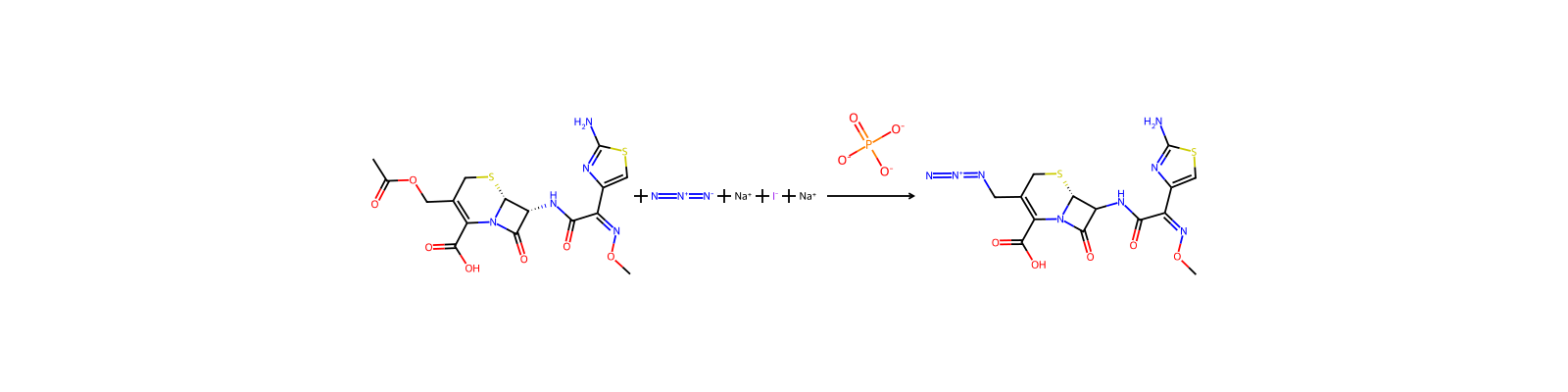
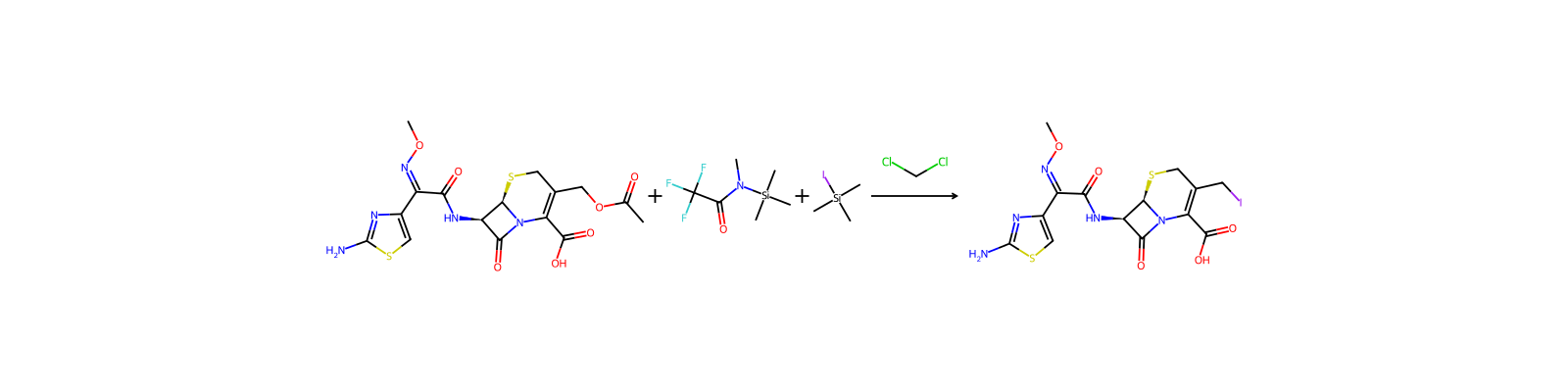
Related reactions
19 records




Linked notes
Loading…