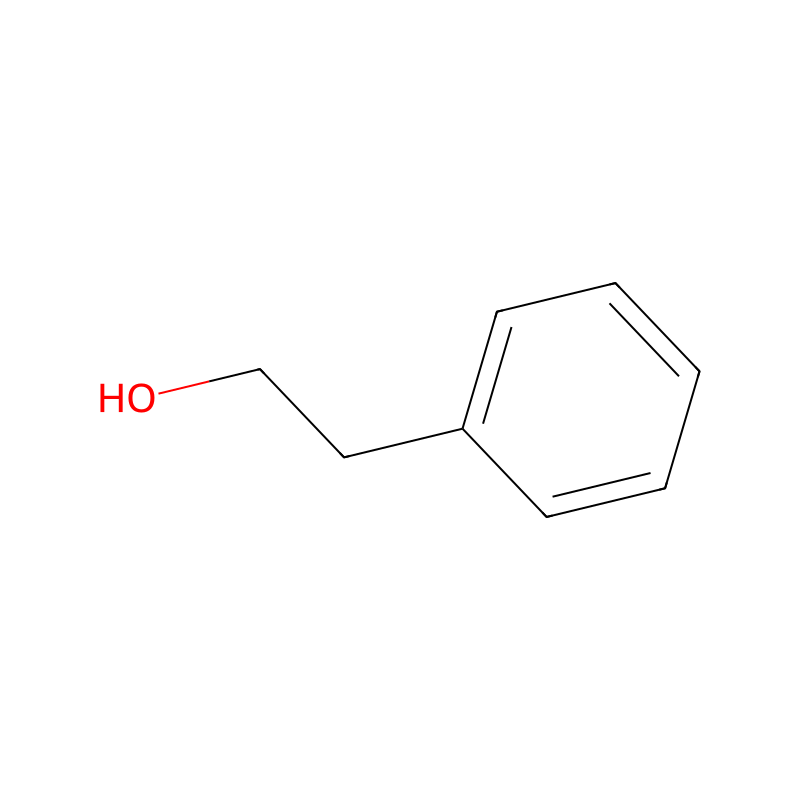
| GHS classification | This chemical does not meet GHS hazard criteria for < 0.1% (2 of 2688) of reports.WarningH302 (81.5%): Harmful if swallowed [Warning Acute toxicity, oral]P264, P264+P265, P270, P280, P301+P317, P305+P351+P338, P330, P337+P317, and P501 (click each P-code to see the statement)Aggregated GHS information provided per 2688 reports by companies from 36 notifications to the ECHA C&L Inventory. Each notification may be associated with multiple companies.Danger |
|---|
| Regulatory information | Chemical: BenzeneethanolRegulation (EC) No 1831/2003 (amended)Benzeneethanol is listed on the EPA's Chemical Data Reporting (CDR) system. Manufacturers and importers of Benzeneethanol are required to report information about their production and use of this chemical to the EPA under the Toxic Substances Control Act (TSCA). (40 eCFR Part 711)Status: Active Update: 08-06-2022 https://echa.europa.eu/registration-dossier/-/registered-dossier/13615Benzeneethanol: Does not have an individual approval but may be used under an appropriate group standard |
|---|
| Other safety information | IMAP assessments - Benzeneethanol: Human health tier II assessment |
|---|
| Fire hazards | Combustible. Gives off irritating or toxic fumes (or gases) in a fire. |
|---|
| Hazards summary | Higher alcohols are not highly toxic in the industrial settingCan cause liver injury, somnolence, and respiratory depression in experimental animals[HSDB] General anesthetic effect after subcutaneous injection of mice[RTECS] A skin, eye, and respiratory tract irritantInhalation of high concentrations may cause CNS effectsPossible toxic effects on human reproduction[ICSC] May cause corneal injury[CHEMINFO] Safe when used as a flavoring agent in food[JECFA] Has teratogenic effects in rats at doses >4.3 mg/kg[REPROTOX] TLV Basis is embryo/fetal damage. [ACGIH TLVs and BEIs] |
|---|
| FDA requirements | Phenethyl alcohol is a food additive permitted for direct addition to food for human consumption as a synthetic flavoring substance and adjuvant in accordance with the following conditions: 1) the quantity added to food does not exceed the amount reasonably required to accomplish its intended physical, nutritive, or other technical effect in food, and 2) when intended for use in or on food it is of appropriate food grade and is prepared and handled as a food ingredient. |
|---|
| UN classification | UN Hazard Class: 6.1UN Pack Group: III |
|---|
| EPA Safer Chemical | Chemical: Benzeneethanol |
|---|
| Chemical Dangers | Decomposes on heating. This produces acrid smoke and irritating fumes. Reacts with strong oxidants and strong acids. |
|---|
| Packaging and Labelling | Do not transport with food and feedstuffs. |
|---|
| NFPA Hazard Classification | 1 - Materials that, under emergency conditions, can cause significant irritation.1 - Materials that must be preheated before ignition can occur. Materials require considerable preheating, under all ambient temperature conditions, before ignition and combustion can occur.0 - Materials that in themselves are normally stable, even under fire conditions. |
|---|
| Peroxide Forming Chemical | 2-PhenylethanolB: Compounds that form peroxides on concentration (distillation/evaporation)2 samples had 10, 12 ppm, age >1 yrsKelly |
|---|
| Hazard Classes and Categories | Acute Tox. 4 (81.5%)Acute toxicity (ingestion) - category 4Acute toxicity (Oral) - Category 4 |
|---|
| Fire fighting | Use water spray, powder, alcohol-resistant foam, carbon dioxide. |
|---|
| First aid measures | Fresh air, rest. Refer for medical attention.Rinse and then wash skin with water and soap. Refer for medical attention .First rinse with plenty of water for several minutes (remove contact lenses if easily possible), then refer for medical attention.Rinse mouth. Do NOT induce vomiting. Refer for medical attention . |
|---|
| Safe storage | Separated from strong oxidants, strong acids and food and feedstuffs. Well closed. Keep in a well-ventilated room. |
|---|
| Disposal methods | SRP: At the time of review, criteria for land treatment or burial (sanitary landfill) disposal practices are subject to significant revision. Prior to implementing land disposal of waste residue (including waste sludge), consult with environmental regulatory agencies for guidance on acceptable disposal practices. |
|---|
| Spillage disposal | Collect leaking liquid in sealable containers. Absorb remaining liquid in sand or inert absorbent. Then store and dispose of according to local regulations. |
|---|
| Eye Prevention | Wear safety goggles. |
|---|
| Fire Prevention | NO open flames. |
|---|
| Inhalation Risk | No indication can be given about the rate at which a harmful concentration of this substance in the air is reached on evaporation at 20 °C. |
|---|
| Skin Prevention | Protective gloves. Protective clothing. |
|---|
| Exposure Prevention | PREVENT GENERATION OF MISTS! |
|---|
| Ingestion Prevention | Do not eat, drink, or smoke during work. |
|---|
| Inhalation Prevention | Use ventilation, local exhaust or breathing protection. |
|---|
| Environmental fate | TERRESTRIAL FATE: Based on a recommended classification scheme(2), an estimated Koc value of 29(SRC), derived from a molecular structure estimation method(1), suggests that 2-phenylethanol will have very high mobility in soil(SRC). 2-Phenylethanol is estimated to have a Koc of 29(1,SRC) and therefore would be expected to be very mobile in soil(2) and would be likely to leach. Limited data in an aerobic screening test(3) indicate that it is readily biodegradable and therefore may readily biodegrade in soil(SRC).AQUATIC FATE: The Henry's Law constant for 2-phenylethanol estimated from its vapor pressure, 0.0868 mm Hg at 25 °C(1), and water solubility, 16,000 mg/L(2), is 1.5X10⁻⁷ atm-cu m/mol(SRC). Using this value of the Henry's Law constant, one can estimate a volatilization half-life of 2-phenylethanol in a model river 1 m deep flowing at 1 m/s with a wind speed of 3 m/s is 46.5 days(3,SRC). 2-Phenylethanol has been demonstrated to be readily biodegradable in an aerobic screening test(4) and therefore may biodegrade in natural water(SRC). Based on a recommended classification scheme(7), an estimated Koc value of 29(SRC), determined from molecular structure(5), indicates that 2-phenylethanol will not adsorb to sediment and particulate matter in the water column(SRC). An estimated BCF value of 6(SRC), based on a log Kow of 1.36(6) and a recommended regression-derived equation(3), suggest that 2-phenylethanol will not bioconcentrate in aquatic organisms(SRC), according to a recommended classification scheme(8).ATMOSPHERIC FATE: According to a theory of gas/particle partitioning of semivolatile organic compounds in the atmosphere(2), 2-phenylethanol, which has a vapor pressure of 0.0868 mm Hg at 25 °C(3) will exist as a vapor in the ambient atmosphere(SRC). Vapor-phase 2-phenylethanol is degraded in the atmosphere by reaction with photochemically-produced hydroxyl radicals(SRC)the half-life for this reaction in air is estimated to be 1.6 days(1,SRC). 2-Phenylethanol solubility in water is 16,000 mg/L(4), and therefore it may be washed out of the atmosphere by rain(SRC). |
|---|
| Food survey values | 2-Phenylethanol has been identified as a volatile component of following foods: tea(1), mushrooms(1), orange juice(2), beer (8-15 ppm)(2), Korean chamchwi(3), casava(4), filberts(5) and Kogyoku apples(6). It has also been identified in meat(7,8), blue cheese(9), a Swiss Mountain cheese(10) and wine(11). |
|---|
| Adverse effects | Neurotoxin - Acute solvent syndrome |
|---|
| Exposure routes | The substance can be absorbed into the body by inhalation of its aerosol or vapour, through the skin and by ingestion. |
|---|
| Toxicity summary | On the basis of the available data, the Expert Panel concludes that Phenethyl Alcohol is safe in cosmetic products in the present practices of use at concentrations of up to 1%.Safe for use in cosmetics, with qualifications |
|---|
| Plant Concentrations | 2-Phenylethanol has been identified in a variety of plants, including: tea roses(1), kiwi fruit flowers(3), Plumeria acutifolia oil, Japanese tobacco leaf oil, ylang-ylang, narcissus, hyacinth, lily, and tea leaves(2). |
|---|
| Signs and Symptoms | Cough. Sore throat. Headache. Nausea.Redness.Redness. Pain.Abdominal pain. Burning sensation. Further see Inhalation. |
|---|
| Effluent Concentrations | In a comprehensive survey of wastewater from 4000 industrial and publicly owned treatment works (POTWs) sponsored by the Effluent Guidelines Division of the U.S. EPA, 2-phenylethanol was identified in discharges of the following industrial category (positive occurrences, median concn in ppb): timber products (5252.4), leather tanning (1140.1), iron and steel mfg (118.7), nonferrous metals (28.9), paint and ink (137.7), organics and plastics (931.1), textile mills (214.9), pulp and paper (244.3), rubber processing (120.7), soaps and detergents (4182.1), pharmaceuticals (3301.2), explosives (114.3), electronics (1176.2), synfuels (68262.4), publicly owned treatment works (1040.5), rum industry (10489.2)(1). Industries with maximum effluent concns above 1 ppm were: organics and plastics, 4.5 ppmsynfuels, 31.1 ppm, and the rum industry 4.6 ppm(1).2-Phenylethanol has been reported in effluent from a publicly-owned treatment works (POTW) in New Jersey(1), the Iona Island wastewater treatment plant in Vancouver, British Colombia(2) and in leachate from a sanitary landfill in Barcelona, Spain(3). It was found in wastewater of a petrochemical company that discharged into the Calcasieu River, LA(4). |
|---|
| Soil Adsorption/Mobility | Using an estimation method based on molecular connectivity indices(1), the Koc for 2-phenylethanol is estimated to be 29(SRC). According to a suggested classification scheme(2), this Koc value suggests that 2-phenylethanol will have very high mobility in soil(SRC). |
|---|
| TSCA Test Submissions | The effects of phenylethyl alcohol (PEA) on the pregnancy of female CrL: COBS CD (SD) BR strain rats (25/control and mid-dose groups, 35/low- and high-dose groups) exposed to PEA by skin painting at dose levels of 0 (water control), 0.14, 0.43 or 1.40 ml/kg/day during days 6-15 of pregnancy were evaluated. The animals were sacrificed on day 20 of pregnancy. Significant differences between high-dose level and control dams were observed in the following: increased clinical observations such as irritability, hunched posture, walking on toes, piloerection and peri-orbital staining, and increased mortality (3/35 animals), decreased body weight gain, decreased levels of creatinine, glutamic-pyruvic transaminase, and increased white cell count. Significant differences between high-dose level and control litter parameters were observed in the following: increased incidence of embryo-fetal deaths (primarily early in pregnancy), decrease in litter size and weight, increased incidence of defects including anophthalmia/microphthalmia, ventricular septal defects, defects/irregularities affecting thorax, and/or kinky tail, defects of the thoracic ribs and occurrence of cervical rib(s). No significant differences between treated and control animals were observed in the following: relative liver and kidney weights, or pregnancy rates. No significant differences between mid- and low-dose level and control groups were observed with respect to maternal toxicity or litter parameters, although a small, dose-dependent increase in some of the morphological parameters was observed in the fetuses of the mid-dose level group. |
|---|
| Natural Pollution Sources | 2-Phenylethanol is a natural product. It has been found in fresh tearose leaves(1). The alcohol, as well as a number of its esters, has been isolated from a great variety of natural sources including oranges, Plumeria acutifolia oil, Japanese tobacco leaf oil, yland-ylang, narcissus, hyacinth, lily, and tea leaves(2). Other natural essential oils containing 2-phenylethanol include: rose, carnation, Aleppo pine, orange blossom, geranium Bourbon, neroli and champaca(3)./ALSO REPORTED FOUND/ IN TOBACCO... IT HAS BEEN IDENTIFIED IN WINES.REPORTED FOUND (AS IS OR ESTERIFIED) IN SEVERAL NATURAL PRODUCTS: ROSE CONCRETE, ROSE ABSOLUTE (60% OR MORE), & ROSE DISTILLATION WATERSALSO FOUND IN ESSENTIAL OILS OF NEROLI, YLANG-YLANG, NARCISSUS, HYACINTH, LILY, TEA LEAVES, MICHELIA CHAMPACA, PANDAMUS ODORATISSIMUS, CONGO & REUNION GERANIUM... |
|---|
| Human Toxicity Excerpts | PHENETHYL ALCOHOL 0.5% IN 0.9% SODIUM CHLORIDE APPLIED AS EYEDROPS TO PT IS REPORTED TO CAUSE SENSATION OF SMARTING IN ABOUT 3 OF 4 PT, BUT TO PRODUCE ONLY OCCASIONAL SLIGHT CONJUNCTIVAL HYPEREMIA.... A patch test using phenyl ethyl alcohol full strength for 24 hr produced no irritation in 20 human subjects. A skin sensitization test carried out on 25 volunteers at a conc of 8% in petrolatum produced no sensitization reactions.Similar threshold conc (0.5%) for conjunctival irritation were noted for phenethyl alcohol in humans and rabbits ... . /Phenethyl alcohol/ |
|---|