Completing data — usually done within a minute
Basic information
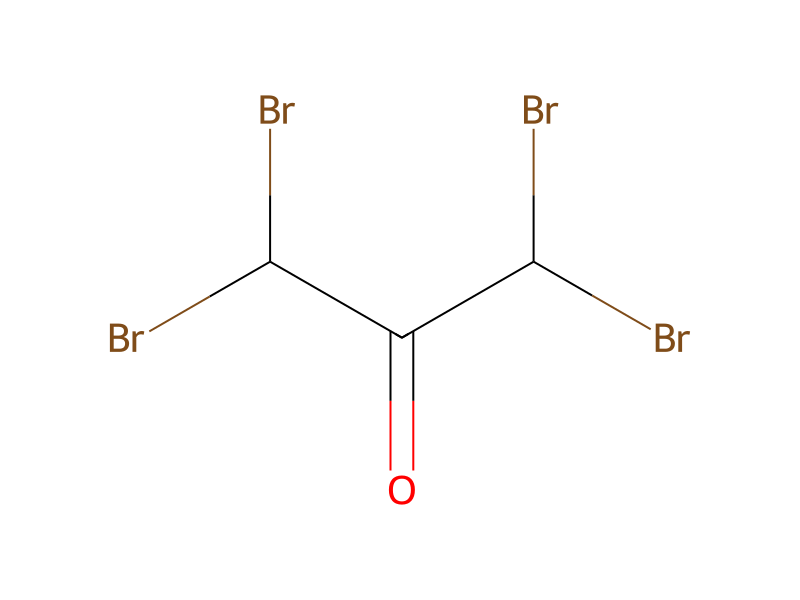
- Standard SMILES
O=C(C(Br)Br)C(Br)Br- InChIKey
SAMNBOHOBWEEEU-UHFFFAOYSA-N- Molecular formula
- C3H2Br4O
- Average molar mass
- 373.664 g/mol
- Monoisotopic mass
- 369.68391308
Names & identifiers
- Preferred name
- 1,1,3,3-Tetrabromoacetone
- IUPAC
- 1,1,3,3-Tetrabromopropan-2-one
- English name
- 1,1,3,3-Tetrabromoacetone
- Molecular formula
- C3H2Br4O
- Molecular weight
- 373.66
Names & synonyms
Tetrabromoacetone1,1,3,3-Tetrabromoacetone1,1,3,3-Tetrabromopropanone1,1,3,3-TETRABROMO-2-PROPANONE1,1,3,3-tetrabroMopropan-2-one1,1,3,3-TETRABROMOACETONE 95+%2-Propanone, 1,1,3,3-tetrabromo-alpha,alpha,alpha',alpha'-Tetrabromoacetone
Database identifiers
- CAS
22612-89-1- PubChem CID
- 608441
- DTXSID
DTXSID50345973- EC Number
- 678-413-6
- Nikkaji
- J209.008B
Properties
Physicochemical properties
- Melting point
- 36 °C · 36°C
- Boiling point
- 129 · 129-130 °C(Press: 7 Torr)
- Density
- 2.904 · 2.904±0.06 g/cm3(Predicted)
- storage temp.
- Refrigerator
- solubility
- Chloroform, Dichloromethane, Ethyl Acetate, Methanol
- form
- Solid
- color
- White Low Melting
- Stability
- Temperature Sensitive
- InChI
- InChI=1S/C3H2Br4O/c4-2(5)1(8)3(6)7/h2-3H
- InChIKey
- SAMNBOHOBWEEEU-UHFFFAOYSA-N
- SMILES
- C(Br)(Br)C(=O)C(Br)Br
- Symbol(GHS)
- 7 · GHS07
- Signal word
- Warning
- Hazard statements
- 302 · H302+H312+H332-H315-H319
- Precautionary statements
- 261 · P261-P264-P270-P271-P280-P301+P312+P330-P302+P352+P312+P362+P364-P304+P340+P312-P305+P351+P338+P337+P313-P501
- Risk Statements
- 36 · 36/37/38
- Safety Statements
- 26 · 26-36/37/39
- HS Code
- 2914.79 · 2914.79.4000
Safety & regulation
Safety data
- hs_code
- 2914.79.4000
- risk_code
- 36/37/38
- Signal word
- Warning
- Symbol(GHS)
- GHS07
- safety_code
- 26-36/37/39
- Hazard statements
- H302+H312+H332-H315-H319
- Precautionary statements
- P261-P264-P270-P271-P280-P301+P312+P330-P302+P352+P312+P362+P364-P304+P340+P312-P305+P351+P338+P337+P313-P501
Chemistry & industry
Applications
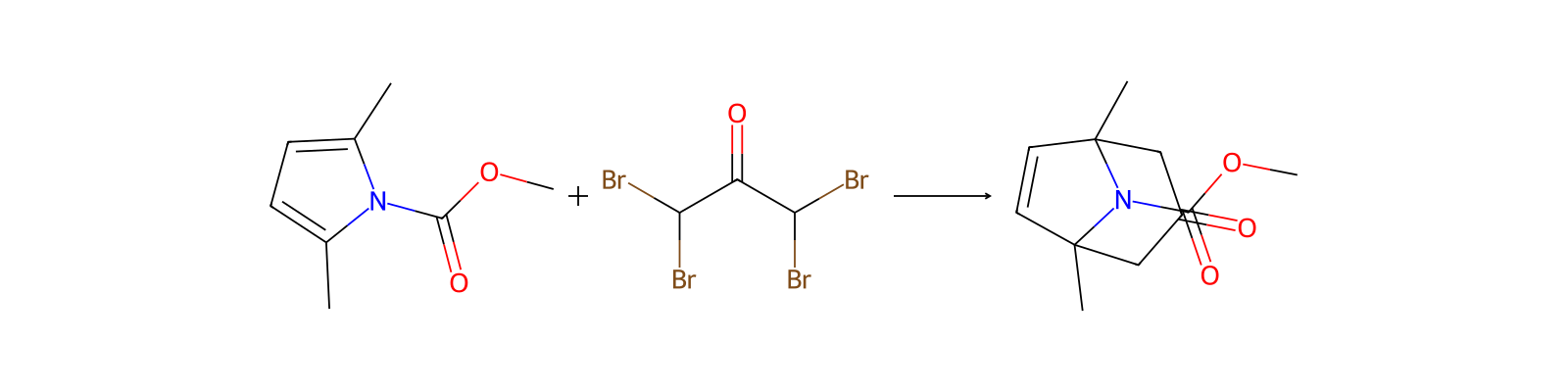
Description1,1,3,3-Tetrabromoacetone is a good source of the 1,3-dibromooxyallyl cation, a synthetic equivalent of the oxyallyl cation; especially useful for [4 + 3] cycloadditions.
Uses1,1,3,3-Tetrabromoacetone is an intermediate in the synthesis of 3-Chloro-4-(dichloromethyl)-5-hydroxy-2(5H)-furanone-13C5, which is an isotope labelled Mutagen X (MX) is a chlorinated furanone that accounts for more of the mutagenic activity of drinking water than any other disinfection byproduct. DNA damages provoked by the six mutagens (furylframide, MX, 4-nitroquinoline N-oxide, sodium azide, 1-nitropyrene, and captan) used in the present study have been known to subject to the nucleotide excision repair system.
Upstream & downstream products
Upstream raw materials
Downstream products
Suppliers50 total
梯希爱(上海)化成工业发展有限公司021-67121386 · [email protected]
上海阿拉丁生化科技股份有限公司400-6206333 13167063860 · [email protected]
Hebei Chuanghai Biotechnology Co., Ltd+86-17732866630 · [email protected]
艾吉析科技(上海)有限公司17717235263 · [email protected]
宁波季诺化学品有限公司0574-87314919 057487319282 · [email protected]
爱斯特(成都)生物制药股份有限公司+86-28-85122536 85324413 · [email protected]
Dayang Chem (Hangzhou) Co.,Ltd.+86-0571-88938639 17705817739 · [email protected]
韶远科技(上海)有限公司021-50795510 4000665055 · [email protected]
Syntechem Co.,Ltd[email protected]
Wuhan Konberd Biotech Co., Ltd+undefined-18986093962 · [email protected]
安耐吉化学&3A(安徽泽升科技股份有限公司)400-0056266 · [email protected]
上海道鞅科技有限公司QQ:3150471267 13381681725 · [email protected]
山东沃德森生物科技有限公司0531-88723173 18596073690 · [email protected]
上海珂华生物科技有限公司021-60455363 18019463053 · [email protected]
上海和宁美生物医药科技有限公司021-18019086215 18019086215 · [email protected]
上海思域化工科技有限公司86-21-34053660 · [email protected]
上海健超生物科技有限公司150-2103-5486 18017383231 · [email protected]
TOKYO CHEMICAL INDUSTRY CO., LTD.03-36680489 · [email protected]
西安奕诺生物科技有限公司18809207782 18809207782 · [email protected]
深圳振强药物研发有限公司0755-66853366 13670046396 · [email protected]
南京毕科生物科技有限公司025-58906079 15151970915 · [email protected]
PT CHEM GROUP LIMITED+86-85511178; +86-85511178 · [email protected]
Labnetwork lnc.+86-27-50766799 +86-18062016861 · [email protected]
上海麦克林生化科技股份有限公司15221275939 15221275939 · [email protected]
杭州杰恒化工有限公司0571-87396432 · [email protected]
陕西缔都医药化工有限公司029-81024372 17792795018 · [email protected]
Accela ChemBio Inc.+1(858) 699-3322 · [email protected]
苏州克瑞斯特医药科技有限公司0512-62910395 17751098781 · [email protected]
九鼎化学(上海)科技有限公司4009209199 · [email protected]
杰达维(上海)医药科技发展有限公司/J & W PharmLab021-64340559 13651849907 · [email protected]
政扬药物研究开发(杭州)有限公司13995958448; 13995958448 · [email protected]
上海源叶生物科技有限公司13636370518 · [email protected]
安泰精细化工技术有限公司18503026267 · [email protected]
成都华纯科技有限公司400-1166-196 15982826727 · [email protected]
砌块化学科技(上海)有限公司021-20432219 13918097649 · [email protected]
Shanghai Acmec Biochemical Technology Co., Ltd.+86-18621343501 · [email protected]
杭州洁汉化工有限公司+86-571-86217390; +8618058761490 · [email protected]
上海臻励生物科技有限公司021-16621358918; 18516310516;16621358918;13045646768 · [email protected]
江苏艾康生物医药研发有限公司025-58859352 13913916777 · [email protected]
上海兹浩医药科技有限公司021-13482410-12 13482410112 · [email protected]
career henan chemical co+86-0371-86658258 · [email protected]
ATK CHEMICAL COMPANY LIMITED+undefined-21-51877795 · [email protected]
上海晶石医药科技有限公司021-000000 · [email protected]
上海沃见生物科技有限公司021-18017654 18017654809 · [email protected]
北京迈瑞达科技有限公司010-82387566 · [email protected]
深圳聚合生化科技有限公司+86-400-002-6226 · [email protected]
TCI Chemicals (India) Pvt. Ltd.[email protected]
河南阿尔法化工有限公司0371-55055611 18137792234 · [email protected]
Accela ChemBio Inc.+1-858-6993322 +86-18019713315 · [email protected]
Aladdin Scientific[email protected]
Related reactions
1 records
Linked notes
Loading…