

Basic information
- Standard SMILES
N[C@@H](c1ccccc1)[C@@H](N)c1ccccc1- InChIKey
PONXTPCRRASWKW-KBPBESRZSA-N- Molecular formula
- C14H16N2
- Average molar mass
- 212.29 g/mol
- Monoisotopic mass
- 212.13134852
Names & identifiers
- Preferred name
- (1S,2S)-1,2-diphenylethane-1,2-diamine
- IUPAC
- (1S,2S)-1,2-diphenylethane-1,2-diamine
- English name
- 1,2-Diphenylethylenediamine
- Molecular formula
- C14H16N2
- Molecular weight
- 212.29
Names & synonyms
(1S,2S)-1,2-diphenylethane-1,2-diamineRefChem:393988608-420-129841-69-8(1S,2S)-(-)-1,2-Diphenylethylenediamine(1S,2S)-(-)-1,2-Diphenyl-1,2-ethanediamineMFCD00082751(1s,2s)-1,2-diphenyl-1,2-ethanediamine1,2-Ethanediamine, 1,2-diphenyl-, (1S,2S)-(-)-1,2-diphenylethylenediamine(1s,2s)-1,2-diphenylethylenediamine16635-95-3
Show more names
TRANS-STILBENE1,2-DIPHENYLETHYLENESTILBENE, TRANS-DL-1,2-Diphenyl-1,2-ethanediamineBibenzilBIBENZALTRANS-TOLUYLENETRANS-BIBENZYLIDENESTILBENE, trans-(RG)TRANS-1,2-DIPHENYLETHYLENE
(S,S)-DPEN(+/-)-Stilbenediamine(1S,2S)-(-)-1,2-Diamino-1,2-diphenylethane(-)-STILBENEDIAMINErac-1,2-Diphenylethane-1,2-diaminedl-StilbenediamineNSC-167211((1S,2S)-2-Amino-1,2-diphenylethyl)amine; (-)-Stilbenediamine; (S,S)-1,2-Diamino-1,2-diphenylethane; (S,S)-1,2-Diphenylethylene-1,2-diamine;
Database identifiers
- CAS
16635-95-3、29841-69-8- PubChem CID
- 6931238
- DTXSID
DTXSID20426127- ChEMBL
CHEMBL467308- UNII
- 9BB7UW58PU、W52J5QHV92
- EC Number
- 605-438-1、608-420-1
- Nikkaji
- J276.439C
Properties
Computed structural properties
- XLogP
- 1.4
- Topological polar surface area
- 52 Ų
- Hydrogen bond donors
- 2
- Hydrogen bond acceptors
- 2
- Rotatable bonds
- 3
- Heavy atoms
- 16
- Formal charge
- 0
- Complexity
- 171
Physicochemical properties
- Melting point
- 123 · 123-125 °C(lit.)
- Boiling point
- 305 · 305-307 °C744 mm Hg(lit.)
- Density
- 0.97 g/mL · 0.97 g/mL at 25 °C(lit.)
- storage temp.
- 2 · Keep in dark place,Inert atmosphere,2-8°C
- solubility
- soluble in Methanol
- form
- powder to crystal
- pka
- 9.78 · 9.78±0.10(Predicted)
- color
- White to Yellow to Orange
- CAS DataBase Reference
- 16635 · 16635-95-3(CAS DataBase Reference)
- Symbol(GHS)
- 7 · GHS07
- Signal word
- Warning
- Hazard statements
- 315 · H315-H319
- Precautionary statements
- 264 · P264-P280-P302+P352+P332+P313+P362+P364-P305+P351+P338+P337+P313
- Hazard Codes
- Xn,N
- Risk Statements
- 22 · 22-36-51/53
- Safety Statements
- 26 · 26-36/37-61
- RIDADR
- 2735 · 2735
- WGK Germany
- 2 · 2
- RTECS
- 4926500 · WJ4926500
- HS Code
- 2921.59 · 2921.59.8090
Safety & regulation
GHS classification
GHS Classification
Warning
H315 (91.8%): Causes skin irritation [Warning Skin corrosion/irritation];H319 (89.8%): Causes serious eye irritation [Warning Serious eye damage/eye irritation];H335 (89.8%): May cause respiratory irritation [Warning Specific target organ toxicity, single exposure; Respiratory tract irritation]
P261, P264, P264+P265, P271, P280, P302+P352, P304+P340, P305+P351+P338, P319, P321, P332+P317, P337+P317, P362+P364, P403+P233, P405, and P501 (click each P-code to see the statement)
Aggregated GHS information provided per 49 reports by companies from 9 notifications to the ECHA C&L Inventory. Each notification may be associated with multiple companies.;Information may vary between notifications depending on impurities, additives, and other factors. The percentage value in parenthesis indicates the notified classification ratio from companies that provide hazard codes. Only hazard codes with percentage values above 10% are shown. For more detailed information, please visit ECHA C&L website.
Hazard information
Hazard Classes and Categories
Acute Tox. 4 (50%);Skin Irrit. 2 (100%);Eye Irrit. 2 (100%)
Skin Irrit. 2 (91.8%);Eye Irrit. 2 (89.8%);STOT SE 3 (89.8%)
Safety data
- wgk
- 2
- rtecs
- WJ4926500
- ridadr
- 2735
- hs_code
- 2921.59.8090
- risk_code
- 22-36-51/53
- Signal word
- Warning
- Symbol(GHS)
- GHS07
- hazard_code
- Xn,N
- safety_code
- 26-36/37-61
- Hazard statements
- H315-H319
- Precautionary statements
- P264-P280-P302+P352+P332+P313+P362+P364-P305+P351+P338+P337+P313
Chemistry & industry
Applications
Uses1,2-Diphenylethylenediamine (DPE) has been found to react in a neutral medium with catecholamines and other catechol compounds in the presence of hexacyanoferrate(III) to give a compound that fluoresces intensely. The reaction is accelerated by amino acids such as glycine. Nohta et al. described a sensitive spectrofluorimetric method for determining catecholamines with 1,2diphenylethylenediamine. The method is based on the reaction of catechol compounds in a neutral medium with 1,2-diphenylethylenediamine in the presence of hexacyanoferrate(II1) and glycine at ambient temperature. The fluorescence shows excitation and emission maxima around 345 and 480 nm, respectively. The method is simple, selective for catechol compounds, and very sensitive. Catecholamines can be determined at concentrations as low as 15-20 pmol ml-1[1].
Upstream & downstream products
Downstream products
Suppliers50 total
北京华美互利生物化工010-56205725 · [email protected]
梯希爱(上海)化成工业发展有限公司021-67121386 · [email protected]
绍兴赜军生物医药科技有限公司0575-82126188 15395856318
上海阿拉丁生化科技股份有限公司400-6206333 13167063860 · [email protected]
成都丽凯手性技术有限公司028-85247892 · [email protected]
INTATRADE GmbH+49 3493/605464 · [email protected]
爱斯特(成都)生物制药股份有限公司+86-28-85122536 85324413 · [email protected]
天津奕星生物科技有限公司022-82103883 18100103827
韶远科技(上海)有限公司021-50795510 4000665055 · [email protected]
科瑞迪化学400-821-5857 021-64326257 · [email protected]
上海迈瑞尔生化科技有限公司4006356688 18621169109 · [email protected]
阿法埃莎(中国)化学有限公司400-6106006 · [email protected]
安耐吉化学&3A(安徽泽升科技股份有限公司)400-0056266 · [email protected]
武汉凯威斯科技有限公司86-027-67849912 · [email protected]
上海柏卡化学技术有限公司400-026-1533/(021) 6478-0600 · [email protected]
重庆张邦医药科技有限责任公司028-84252981 18583719936 · [email protected]
上海瀚鸿科技股份有限公司021-54306202 13764082696 · [email protected]
上海景颜化工科技有限公司13817811078 · [email protected]
嘉兴市艾森化工有限公司0573-85285100 18627885956 · [email protected]
上海隆盛化工有限公司58099637 13585536065 · [email protected]
上海攀鸿化工科技有限公司021-56491756 13512199871 · [email protected]
天津狄克特科技有限公司22-58627059 13920586291 · [email protected]
上海升华医药科技有限公司021-50793966 18917198199
孝感深远化工有限公司15527621225; 15527621225 · [email protected]
大赛璐药物手性技术(上海)有限公司021-50460086-9 15921403865 · [email protected]
四川库利南科技有限公司400-1166-196 18981987031 · [email protected]
天津希恩思生化科技有限公司400 638 7771 · [email protected]
上海钰康生物科技有限公司15618758386 15618758386 · [email protected]
艾科试剂4008-755-333 18080918076 · [email protected]
上海思域化工科技有限公司86-21-34053660 · [email protected]
苏州思变化学技术有限公司0512-65617459 18915409046 · [email protected]
赛默飞世尔科技(中国)有限公司800-810-5118 · [email protected]
江苏艾康生物医药研发有限公司025-66113011 13913916777 · [email protected]
TCI AMERICA800-4238616 · [email protected]
TOKYO CHEMICAL INDUSTRY CO., LTD.03-36680489 · [email protected]
TCI Europe320-37350700 · [email protected]
卡迪亚医药科技有限公司0371-86615086 18203638366 0371-86159066 13526786601
上海贤鼎生物科技有限公司4009209199 · [email protected]
Shanghai Witofly Chemical Co.,Ltd[email protected]
上海睿升化工科技有限公司+86-021-50935922
泰州天鸿生化科技有限公司0523-86132544 15366717810 · [email protected]
无锡中坤生化科技有限公司+86 0510-85629785
杭州迈世腾药物科技有限公司0571-82896630 18969958410 · [email protected]
上海卫希医药科技有限公司021-56789108 18550363168 · [email protected]
上海将来实业股份有限公司400-0066400 13621662912 · [email protected]
泰州同新生物医药科技有限公司0523-86818997 18652728585 · [email protected]
上海将来实业股份有限公司021-61552785 · [email protected]
安徽科迪达化工有限公司0554-2106669 · [email protected]
HBCChem, Inc.+1-510-219-6317 · [email protected]
重庆星灿医药科技有限公司13594048950 19923294409 · [email protected]
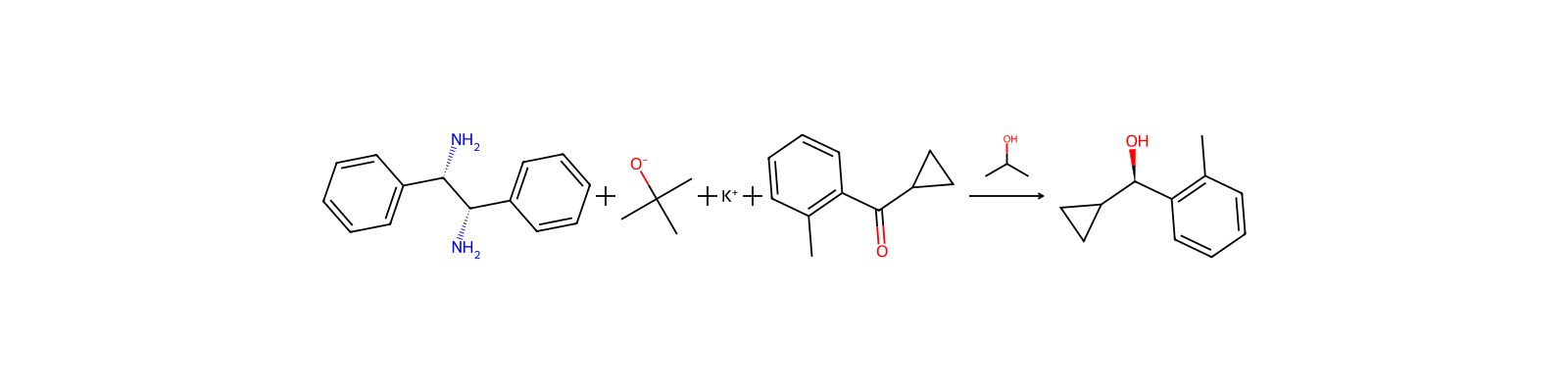
Related reactions
5 records


Linked notes
Loading…