Cyclohexane
cyclohexan · NAPHTHENE · HEXAMETHYLENE · ohexane · Cykloheksan · hexamethylen · CYCLOHEXANE-205 · HEXAHYDROBENZENE
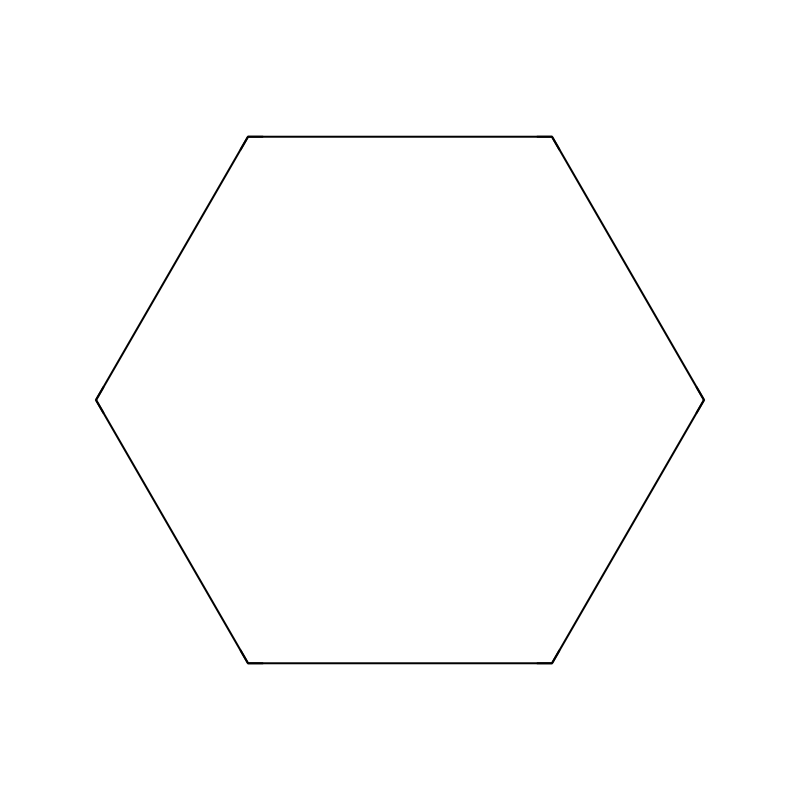
Identifiers & Physical Properties
| CAS No. | 110-82-7 |
|---|---|
| Molecular formula | C6H12 |
| Average molar mass | 84.16 g/mol |
| Monoisotopic mass | 84.09390038 g/mol |
| SMILES | C1CCCCC1 |
| InChIKey | XDTMQSROBMDMFD-UHFFFAOYSA-N |
| PubChem CID | 8078 |
| ChEMBL | CHEMBL15980 |
| ChEBI | CHEBI:29005 |
| EC No. | 203-806-2 |
| DTXSID | DTXSID4021923 |
Chemical & Physical Properties
| XLogP | 3.4 |
|---|---|
| Topological polar surface area | 0 |
| Hydrogen bond donors | 0 |
| Hydrogen bond acceptors | 0 |
| Rotatable bonds | 0 |
| Heavy atoms | 6 |
| Formal charge | 0 |
| Complexity | 15.5 |
| Chemical classes | Flammable agents - 3rd degree |
| Solvents | Solvents -> Aliphatics, Saturated (<C12) |
| Cosmetics | Solvent |
| SpringerMaterials Properties | Coriolis coupling |
| Pesticides | Pesticide -> EPA IRIS |
| LogP (partition coefficient) | log Kow = 3.44 |
| Odor | Solvent odorpungent when impurePungent petroleum-like odorMild sweet odorChloroform-like odorresembling benzenemild, sweet, resembling chloroform. |
| Food additives | SOLVENT OR VEHICLE -> FDA Substance added to food |
| Density | 0.779 at 68 °F (USCG, 1999) - Less dense than waterwill float0.7781 at 20 °C/4 °C% IN SATURATED AIR (760 MM HG) 13.66 AT 26.3 °CDENSITY OF SATURATED, VAPOR-AIR MIXT AT 760 MM HG (AIR = 1) 1.23 AT 26 °CRelative density (water = 1): 0.80.780.7739 @25 °C0.779 g/mL at 25 °C (lit.) |
| Viscosity | 0.977 mPa.s at 20 °C1.26x10-6 mm²/s at 26 °C |
| Color/Form | Colorless mobile liquidColorless liquid [Note: A solid below 44 degrees F] |
| Solubility | less than 1 mg/mL at 63 °F (NTP, 1992)In water, 55 mg/L at 25 °CSolubility in water at 23.5 °C (w/w): 0.0052%Miscible in ethanol, ether, acetone, benzene, ligroin, carbon tetrachlorideMiscible with olive oil100 mL of methanol dissolves 57 grams cyclohexane at 20 °Cethanol: miscible(lit.)PRACTICALLY INSOLUBLE |
| Melting point | 4-7 °C (lit.) |
| Boiling point | 80.7 °C (lit.) |
| Vapor density | 2.9 (vs air) |
| Vapor pressure | 168.8 mm Hg ( 37.7 °C) |
| Refractive index | n20/D 1.426(lit.) |
| Flash point | -1 °F |
| Storage conditions | Store at +5°C to +30°C. |
| Physical state | Liquid |
| Color | colorless |
| Relative polarity | 0.006 |
| Odor threshold | 2.5ppm |
| Explosive limits | 1.2-8.3%(V) |
| Freezing point | 6.554℃ |
| Specific heat capacity | Cp(liquid): 1.84 J/(g·K), at 25℃ |
| Thermal conductivity | 0.1181 W/(m·K) at 25 ℃ |
| λmax | λ: 210 nm Amax: ≤1.00λ: 220 nm Amax: ≤0.50λ: 230 nm Amax: ≤0.20λ: 235 nm Amax: ≤0.10λ: 240 nm Amax: ≤0.08λ: 250 nm Amax: ≤0.03λ: 255 nm Amax: ≤0.01 |
| Merck | 14,2723 |
| BRN | 1900225 |
| Henry's law constant | 1.03, 1.26, 1.40, 1.77, and 2.23 at 10, 15, 20, 25, and 30 °C, respectively (EPICS, Ashworth et al., 1988) 0.54, 0.69, 0.82, 1.43, and 1.79 at 2.0, 6.0, 10.0, 18.0, and 25.0 °C, respectively (Dewulf et al.,1999) |
| Dielectric constant | 2.0(20℃) |
| Exposure limits | ACGIH:TLV-TWA 100 ppmOSHA:PEL-TWA 300 ppm (1050 mg/m3)NIOSH:REL-TWA 300 ppm |
| Stability | Volatile |
| Cosmetics Ingredients Functions | SOLVENT |
| InChI | 1S/C6H12/c1-2-4-6-5-3-1/h1-6H2 |
| InChIKey | XDTMQSROBMDMFD-UHFFFAOYSA-N |
| SMILES | C1CCCCC1 |
| LogP (partition coefficient) | 3.44 at 20℃ |
| Surface tension | 25.06mN/m at 293.15K |
| Substances Added to Food (formerly EAFUS) | CYCLOHEXANE |
| REACH Annex XVII Substances List | Cyclohexane (110-82-7) |
| FDA 21 CFR | 175.105176.200178.3620 |
| CAS DataBase Reference | 110-82-7(CAS DataBase Reference) |
| EWG's Food Scores | 2 |
| FDA UNII | 48K5MKG32S |
| NIST Chemistry Reference | Cyclohexane(110-82-7) |
| EPA Substance Registry System | Cyclohexane (110-82-7) |
| UNSPSC Code | 41116107 |
| NACRES | NA.24 |
| GHS pictogram | GHS02,GHS07,GHS08,GHS09 |
| Signal word | Danger |
| GHS hazard statements | H315-H319-H371-H335-H336-H304-H410-H225 |
| GHS precautionary statements | P501-P273-P270-P240-P260-P210-P233-P243-P241-P242-P271-P264-P280-P370+P378-P391-P331-P337+P313-P305+P351+P338-P308+P311-P362+P364-P303+P361+P353-P332+P313-P301+P310-P304+P340+P312-P403+P233-P403+P235-P405 |
| Target organs | Central nervous system |
| Hazard symbols | F,Xn,N |
| Risk statements (R) | 11-38-50/53-65-67-20 |
| Safety statements (S) | 9-16-25-33-60-61-62 |
| Occupational exposure band (OEB) | A |
| Occupational exposure limit (OEL) | TWA: 300 ppm (1050 mg/m3) |
| UN transport number | UN 1145 |
| Water hazard class (WGK) | 2 |
| RTECS number | GU6300000 |
| F | 3-10 |
| Autoignition temperature | 500 °F |
| TSCA inventory status | TSCA listed |
| Customs code | 2902 11 00 |
| Hazard class | 3Aquatic Acute 1Aquatic Chronic 1Asp. Tox. 1Flam. Liq. 2Skin Irrit. 2STOT SE 3 |
| Packing group | II |
| Storage class | 3 - Flammable liquids |
| Hazardous substances data | 110-82-7(Hazardous Substances Data) |
| Toxicity | LC in mice: ~60-70 mg/l air (Lazarew) |
| Immediately dangerous to life or health concentration | 1,300 ppm [10% LEL] |
| REACH registrations | Active |
| Limited quantities | 1.0 L (0.3 gallon) (liquid) |
| Excepted quantities | Max Inner Pack (30g or 30ml) and Max Outer Pack (500g or 500ml) |
Safety & Regulations
| GHS classification | DangerH225: Highly Flammable liquid and vapor [Danger Flammable liquids]P210, P233, P240, P241, P242, P243, P261, P264, P271, P273, P280, P301+P316, P302+P352, P303+P361+P353, P304+P340, P319, P321, P331, P332+P317, P362+P364, P370+P378, P391, P403+P233, P403+P235, P405, and P501 (click each P-code to see the statement)This chemical does not meet GHS hazard criteria for < 0.1% (1 of 4880) of reports.H225 (> 99.9%): Highly Flammable liquid and vapor [Danger Flammable liquids] |
|---|---|
| Regulatory information | Chemical: CyclohexaneRegulation (EC) No 178/2002 (amended)Cyclohexane is listed on the EPA's Chemical Data Reporting (CDR) system. Manufacturers and importers of Cyclohexane are required to report information about their production and use of this chemical to the EPA under the Toxic Substances Control Act (TSCA). (40 eCFR Part 711)Status: Active Update: 24-03-2023 https://echa.europa.eu/registration-dossier/-/registered-dossier/15483Restricted substance: CyclohexaneCyclohexane: HSNO Approval: HSR001111 Approved with controls |
| Other safety information | IMAP assessments - Cyclohexane: Human health tier I assessment |
| DOT label | Flammable Liquid |
| Fire hazards | Excerpt from ERG Guide 128 [Flammable Liquids (Water-Immiscible)]:· HIGHLY FLAMMABLE: Will be easily ignited by heat, sparks or flames.Highly flammable. Vapour/air mixtures are explosive. Heating will cause rise in pressure with risk of bursting. |
| Fire potential | Dangerous fire hazard when exposed to heat or flamecan react with oxidizing materials. |
| Health hazards | Dizziness, with nausea and vomiting. Concentrated vapor may cause unconsciousness and collapse. (USCG, 1999)CAUTION: Petroleum crude oil (UN1267) may contain TOXIC hydrogen sulphide gas. |
| Hazards summary | Exposed animals develop narcosis and minimal histopathological liver changes. Some authors report an odor threshold of 25 ppm. [ACGIH] A skin, eye, and respiratory tract irritantInhalation of high concentrations may cause CNS effects[ICSC] |
| DOT ID and guide | 1145 128 |
| FDA requirements | Cyclohexane may be used in inks for marking food supplements in tablet form, gum, and confectionery. Restrictions: no residue.Cyclohexane is an indirect food additive for use only as a component of adhesives. |
| Reactive group | Hydrocarbons, Aliphatic Saturated |
| EC classification | Symbol: F, Xn, NR: 11-38-65-67-50/53S: (2)-9-16-25-33-60-61-62Note: 4 |
| UN classification | UN Hazard Class: 3UN Pack Group: II |
| Fire fighting | Excerpt from ERG Guide 128 [Flammable Liquids (Water-Immiscible)]:Use water spray, foam, powder, carbon dioxide. Water may be ineffective. In case of fire: keep drums, etc., cool by spraying with water. |
| First aid measures | Fresh air, rest. Refer for medical attention.Remove contaminated clothes. Rinse and then wash skin with water and soap.Rinse with plenty of water (remove contact lenses if easily possible).Rinse mouth. Do NOT induce vomiting. Refer immediately for medical attention. |
| Accidental release measures | · CALL 911. Then call emergency response telephone number on shipping paper. If shipping paper not available or no answer, refer to appropriate telephone number listed on the inside back cover.· ELIMINATE all ignition sources (no smoking, flares, sparks or flames) from immediate area. |
| First aid | EYES: First check the victim for contact lenses and remove if present. Flush victim's eyes with water or normal saline solution for 20 to 30 minutes while simultaneously calling a hospital or poison control center. Do not put any ointments, oils, or medication in the victim's eyes without specific instructions from a physician. IMMEDIATELY transport the victim after flushing eyes to a hospital even if no symptoms (such as redness or irritation) develop.General First Aid:(General first aid procedures) |
| Safe storage | Fireproof. Provision to contain effluent from fire extinguishing. Separated from strong oxidants. Store in an area without drain or sewer access. |
| Exposure control and personal protection | · Wear positive pressure self-contained breathing apparatus (SCBA).Biological Exposure Indices (BEI) [ACGIH] - 50 mg/g creatinine at end of shift, end of workweek (1,2-cyclohexanediol in urine)[ACGIH TLVs and BEIs]200.0 [ppm] |
| Fire fighting procedures | Use water spray to cool unopened containers.Wear self contained breathing apparatus for fire fighting if necessary.Foam, CO2, dry chemical, spray, fog. |
| Storage conditions | Keep container tightly closed in a dry and well-ventilated place. Containers which are opened must be carefully resealed and kept upright to prevent leakage. Store under inert gas. |
| Cleanup methods | 1. Remove all ignition sources. 2. Ventilate area of spill or leak. 3. For small quantities, absorb on paper towels. Evaporate in safe place (such as fume hood). Allow sufficient time for evap vapors to completely clear hood ductwork. Burn the paper in suitable location away from combustible materials. 3. Large quantities can be collected & atomized in suitable combustion chamber. Combustion may be improved by mixing with more flammable liquid. Cyclohexane liquid should not be allowed to enter confined space, such as sewer, because of possibility of an explosion.Prevent further leakage or spillage if safe to do so. Do not let product enter drains. Discharge into the environment must be avoided.Contain spillage, and then collect with an electrically protected vacuum cleaner or by wet-brushing and place in container for disposal according to local regulations.ACCIDENTAL RELEASE MEASURES. Personal precautions, protective equipment and emergency procedures: Use personal protective equipment. Avoid breathing vapours, mist or gas. Ensure adequate ventilation. Remove all sources of ignition. Evacuate personnel to safe areas. Beware of vapours accumulating to form explosive concentrations. Vapours can accumulate in low areas.Evironmental precautions: Prevent further leakage or spillage if safe to do so. Do not let product enter drains. Discharge into the environment must be avoided.Methods and materials for containment and leaning up: Contain spillage, and then collect with an electrically protected vacuum cleaner or by wet-brushing and place in container for disposal according to local regulations.Use natural barriers or oil control booms to limit motion. Use surface active agent (e.g. detergent, soaps, alcohols) to compress and thicken spilled material. Inject "universal" gelling agent to solidify encircled spill and increase the effectiveness of booms. Remove trapped material with suction hoses and use mechanical dredges or lifts to remove immobilized masses of pollutants and precipitates. |
| Nonfire spill response | Excerpt from ERG Guide 128 [Flammable Liquids (Water-Immiscible)]: |
| Disposal methods | Generators of waste (equal to or greater than 100 kg/mo) containing this contaminant, EPA hazardous waste number U056, must conform with USEPA regulations in storage, transportation, treatment and disposal of waste.SRP: Wastewater from contaminant suppression, cleaning of protective clothing/equipment, or contaminated sites should be contained and evaluated for subject chemical or decomposition product concentrations. Concentrations shall be lower than applicable environmental discharge or disposal criteria. Alternatively, pretreatment and/or discharge to a permitted wastewater treatment facility is acceptable only after review by the governing authority and assurance that "pass through" violations will not occur. Due consideration shall be given to remediation worker exposure (inhalation, dermal and ingestion) as well as fate during treatment, transfer and disposal. If it is not practicable to manage the chemical in this fashion, it must be evaluated in accordance with EPA 40 CFR Part 261, specifically Subpart B, in order to determine the appropriate local, state and federal requirements for disposal.Cyclohexane may be disposed of: 1. By absorbing it in vermiculite, dry sand, earth or a similar material ... 2. By atomizing in a suitable combustion chamber. Combustion may be improved by mixing with a more flammable liquid.Cyclohexane is a good candidate for liquid injection incineration, at a temperature range of 650 to 1600 °C with a residence time of 0.1 - 2 seconds, rotary kiln incineration at a temperature range of 820 to 1,600 °C with residence time of seconds, and fluidized bed incineration at a temperature range of 450 to 980 °C with a residence time of seconds.Cyclohexane is a waste chemical stream constituent which may be subjected to ultimate disposal by controlled incineration. |
| Spillage disposal | Evacuate danger area! Consult an expert! Remove all ignition sources. Personal protection: self-contained breathing apparatus. Ventilation. Do NOT let this chemical enter the environment. Collect leaking and spilled liquid in sealable containers as far as possible. Absorb remaining liquid in sand or inert absorbent. Then store and dispose of according to local regulations. Do NOT wash away into sewer. |
| Body burden | Five of eight samples of mother's milk collected from 4 urban/industrial areas in the United States were positive for cyclohexane(1). A population of 54 normal, healthy, nonsmoking subjects from urban environment (387 samples) had a 64.6% occurrence of cyclohexane in expired air with a geometric mean concentration of 5.0 ng/L(2). In a heterogenous, nonsmoking population of 62 subjects, cyclohexane was a common constitutent in the expired air of control, diabetic, and prediabetic subjects(3).Cyclohexane was qualitatively found in 8 of 12 breath samples of subjects monitored in Bayonne and Elizabeth, NJ, and Research Triangle Park, NC, 1980(1). Cyclohexane was detected in 30 of 56 personal air samplers for outside attendants at gasoline stations at a mean concentration of 0.114 mg/cu m, 45 of 49 samples for transport drivers at a mean concentration of 0.739 mg/cu m, and 43 of 49 samples for service attendants at a mean concentration of 0.127 mg/cu m(2). The indoor air inhaled dose of cyclohexane for residents in 3 Italian cities, March, 1995, was 28.5, 22.5. and 28.0 ug/day(3). |
| Treatment | Treatment is mainly symptomatic and supportive. Gastric lavage, emesis, and the administration of activated charcoal should be avoided, as vomiting increases the risk of aspiration. (A600) |
| Interactions | Female mice inhaled 2x10⁻⁴ mol/L cyclohexane for 0.5-3 days. No change was noted after 0.5 days in hexobarbital (i) sleeping time or its half-life in plasma. After 1 day there was a decrease by 50 and 60% respectively. A steady state in inactivation was noted during the main increase in dealkylase, reductase, and cytochrome.Mice (33 males) received one 60 ul application of 0.3% DMBA in benzene followed by a 60 uL/ application of cyclohexane twice/week for 50 weeks. No promoting activity of cyclohexane was observed. |
| Target organs | DevelopmentalEyes, skin, respiratory system, central nervous systemCentral nervous system |
| Health effects | Petroleum distillates are aspiration hazards and may cause pulmonary damage, central nervous system depression, and cardiac effects such as cardiac arrhythmias. They may also affect the blood, immune system, liver, and kidney. (A600, L1297) |
| Ecotoxicity values | LC50Species: Crangon franciscorum (Bay Shrimp) weight 1.7 g, length 6.4 cmConditions: saltwater, staticConcentration: 3400 ug/L for 24 hr />99% purity/Concentration: 2400 ug/L for 96 hr (95% confidence interval: 1700-3500 ug/L) />99% purity/EC50Species: Daphnia magna (Water flea) age 4-6 days, length 1.5 mmConditions: freshwater, static, 23 °C, pH 6-7, dissolved oxygen 5-9 mg/LConcentration: 45 mmol/cu m for 48 hr (95% confidence interval: 34-60 mmol/cu m)Effect: intoxication, immobilization /> or =97% purity/Species: Daphnia magna (Water flea) age < or =24 hrConditions: freshwater, static, 20-22 °C, pH 7.6-7.7Concentration: 340000 ug/L for 24 hr /formulation/For more Ecotoxicity Values (Complete) data for CYCLOHEXANE (20 total), please visit the HSDB record page. |
| Environmental fate | TERRESTRIAL FATE: Based on a classification scheme(1), an estimated Koc value of 150(SRC), determined from a structure estimation method(2), and an estimated Koc of 350, derived from sorption studies in a high-organic soil(3) indicate that cyclohexane is expected to have moderate mobility in soil(SRC). Volatilization of cyclohexane from moist soil surfaces is expected to be important(SRC) given a Henry's Law constant of 0.15 atm-cu m/mole(4). Cyclohexane is expected to volatilize from dry soil surfaces(SRC) based upon a vapor pressure of 96.9 mm Hg at 25 °C(5). Available biodegradation screening tests have conflicting results concerning the ready biodegradability of cyclohexane(6). Utilizing the Japanese MITI test, only 8% of the Theoretical BOD was reached in 4 weeks indicating not-readily biodegradable(7). In contrast, OECD Method 301F (Manometric Respirometry Test) observed 77% degradation after 28 days(6). Little mineralization of cyclohexane was detected in a single soil biodegradation test(8).AQUATIC FATE: Based on a classification scheme(1), an estimated Koc value of 150(SRC), determined from a structure estimation method(2), and an estimated Koc of 350, derived from sorption studies in a high-organic soil(3), indicates that cyclohexane may have moderate adsorption to suspended solids and sediment in water(SRC). Volatilization from water surfaces is expected(4) based upon a Henry's Law constant of 0.15 atm-cu m/mole(5). Using this Henry's Law constant and an estimation method(4), volatilization half-lives for a model river and model lake are 2.7 hours and 3.6 days, respectively(SRC). According to a classification scheme(6), a BCF range of 31-129 measured in carp (Cyprinus carpio)(7), suggests bioconcentration in aquatic organisms is moderate to high(SRC). Hydrolysis is not expected to be an important environmental fate process since this compound lacks functional groups that hydrolyze under environmental conditions(4). Available biodegradation screening tests have conflicting results concerning the ready biodegradability of cyclohexane(8). Utilizing the Japanese MITI test, only 8% of the Theoretical BOD was reached in 4 weeks indicating not-readily biodegradable(9). In contrast, OECD Method 301F (Manometric Respirometry Test) observed 77% degradation after 28 days(8).ATMOSPHERIC FATE: According to a model of gas/particle partitioning of semivolatile organic compounds in the atmosphere(1), cyclohexane, which has a vapor pressure of 96.9 mm Hg at 25 °C(2), is expected to exist solely as a vapor in the ambient atmosphere. Vapor-phase cyclohexane is degraded in the atmosphere by reaction with photochemically-produced hydroxyl radicals(SRC)the half-life for this reaction in air is estimated to be 2.3 days(SRC), calculated from its rate constant of 6.97X10⁻¹² cu cm/molecule-sec at 25 °C(3). Cyclohexane does not contain chromophores that absorb at wavelengths >290 nm(4) and, therefore, is not expected to be susceptible to direct photolysis by sunlight(SRC). Laboratory studies have suggested that adsorption from the gas-phase in the atmosphere to ambient surfaces may have some importance as an environmental fate process(5). Cyclohexane can contribute to the formation of photochemical smog when it reacts with other volatile organic carbon compounds in the air(6). |
| Food survey values | Muscat oil (from Muscat grapes) was qualitatively found to contain cyclohexane(1)it was suggested that this may have been due to its presence as a solvent in a pesticide sprayed on the grapes(1). |
| Adverse effects | Neurotoxin - Acute solvent syndrome |
| Exposure routes | The substance can be absorbed into the body by inhalation of its vapour and by ingestion.inhalation, ingestion, skin and/or eye contactOral (L400)inhalation (L400)dermal (L400) |
| Milk Concentrations | Studies from the exposure of the general population to cyclohexane revealed that human milk from five of eight mothers contained cyclohexane (concentrations not determined). /It was/ suggested that the cyclohexane in the milk resulted from the mothers' exposure to environmental pollutants since they resided near chemical manufacturing plants or industrial user facilities. |
| Toxicity summary | IDENTIFICATION AND USE: Cyclohexane is a colorless, highly flammable liquid occurring naturally in petroleum at concentrations of 0.5-1.0%. It has a pungent petroleum-like odor and is used as an organic solvent for lacquers, resins, and synthetic rubberpaint and varnish removerextraction of essential oilsmanufacturing of solid fuel for camp stovesin fungicidal formulationsin recrystallization of steroidsand in analytical chemistry for molecular weight determinations. It is also a chemical intermediate in the manufacturing of adipic acid, benzene, cyclohexyl chloride, nitrocyclohexane, cyclohexanol and cyclohexanone. Not registered for current pesticide use in the U.S., but approved pesticide uses may change periodically and so federal, state and local authorities must be consulted for currently approved uses. Studies from the exposure of the general population to cyclohexane revealed that human milk from five of eight mothers contained cyclohexane (concentrations not determined) from the mothers' exposure to environmental pollutants since they resided near chemical manufacturing plants or industrial user facilities. HUMAN EXPOSURE AND TOXICITY: The available data indicate that cyclohexane can be absorbed via oral and inhalation routes but no adequate data exist via the dermal route. Potential symptoms of overexposure to cyclohexane are irritation of eyes, skin and respiratory systemdrowsinessdermatitisnarcosis and coma although cyclohexane generally has low acute toxicity. In humans exposed via inhalation for 4 hours to 86 or 860 mg/cu m cyclohexane, there were no significant treatment-related effects. Occupational exposure to 5 to 211 ppm cyclohexane for a median of 1.2 years, had no adverse effects on the peripheral nervous system. There have been no systemic poisonings reported in man. Cyclohexane is known to undergo oxidative metabolism to yield cyclohexanol (major metabolite), cyclohexanone, and possibly other oxidative products (1,2- or 1,4-dihydroxycyclohexane and its corresponding ketone analogs). ANIMAL STUDIES: High vapor concentrations have produced convulsions in rabbits. Toxic oral doses in rabbits led to severe diarrhea, circulatory collapse and death, without prominent central nervous depression or anesthesia. Autopsy revealed generalized vascular damage but no effects on blood formation. Rats and mice, were exposed to 0, 500, 2000, or 7000 ppm of cyclohexane vapor 6 hr/day, 5 days/week for 14 weeks. During exposure sessions, mice exposed to 7000 ppm exhibited clinical signs of toxicity which included hyperactivity, circling, jumping/hopping, excessive grooming, kicking of rear legs, standing on front legs, and occasional flipping behavior. In another study, male and female mice exposed to 7000 ppm had slight increases in measures of circulating erythrocyte mass (red blood cells, hemoglobin, hematocrit) and plasma protein concentration (males only). Male rats and male and female mice exposed to 7000 ppm had significantly increased relative liver weights, and 7000 ppm male mice also had significantly increased absolute liver weights at the end of the exposure period. In the third study, female rats were administered cyclohexane intraperitoneally at a dose of 0.375, 0.75, or 1.5 g/kg, 5 days a week for 2 weeks. The high dose of 1.5 g/kg of cyclohexane caused a proximal tubular dysfunction of the kidney which resulted in an increase in beta-2-microglobulin. The increase in beta-2-microglobulin was attributed to the metabolite cyclohexanol. When testing the effect of cyclohexane on reproduction and development, there were statistically significant reductions in mean body weight, overall mean body weight gain, and overall mean food efficiency for P1 and F1 females exposed to 7000 ppm. Adult rats exposed to 2000 ppm or 7000 ppm cyclohexane exhibited diminished response or no response to a sound stimulus while in the chambers during exposure. Mean pup weight was statistically significantly reduced from lactation day 7 throughout the remainder of the 25-day lactation period for both F1 and F2 7000 ppm litters. Cyclohexane was negative for mutagenicity at doses of 0.01, 0.033, 0.10, 0.33, 1.0, 3.3, and 10 mg/plate in as many as 5 Salmonella typhimurium strains (TA1535, TA1537, TA97, TA98, and TA100) with or without metabolic activation. ECOTOXICITY STUDIES: Cyclohexane inhibited growth of Chlorella for 11-13 days, but prolonged the exponential growth phase and increased the growth yield 2.5 fold compared with the control. Acute toxicities after 24 and 96 hr exposures to seven alicyclic hexanes including cyclohexane were determined for striped bass and one of their major food organisms, the bay shrimp, Crangon franciscorum. The 96 hr LC50 for striped bass and bay shrimp ranged from 3.2 to 9.3 uL/L and from 1.0 to 6.2 uL/L, respectively.Petroleum distillates are central nervous system depressants and cause pulmonary damage. (A600) |
| RCRA requirements | U056As stipulated in 40 CFR 261.33, when cyclohexane, as a commercial chemical product or manufacturing chemical intermediate or an off-specification commercial chemical product or a manufacturing chemical intermediate, becomes a waste, it must be managed according to Federal and/or State hazardous waste regulations. Also defined as a hazardous waste is any residue, contaminated soil, water, or other debris resulting from the cleanup of a spill, into water or on dry land, of this waste. Generators of small quantities of this waste may qualify for partial exclusion from hazardous waste regulations (40 CFR 261.5). |
| TSCA requirements | Pursuant to section 8(d) of TSCA, EPA promulgated a model Health and Safety Data Reporting Rule. The section 8(d) model rule requires manufacturers, importers, and processors of listed chemical substances and mixtures to submit to EPA copies and lists of unpublished health and safety studies. Cyclohexane is included on this list. Effective date: 12/19/85Sunset date: 12/19/95. |
| FIFRA requirements | Residues of cyclohexane are exempted from the requirement of a tolerance when used in accordance with good agricultural practice as inert (or occasionally active) ingredients in pesticide formulations applied to growing crops only. Use: solvent, cosolvent. |
| Atmospheric standards | This action promulgates standards of performance for equipment leaks of Volatile Organic Compounds (VOC) in the Synthetic Organic Chemical Manufacturing Industry (SOCMI). The intended effect of these standards is to require all newly constructed, modified, and reconstructed SOCMI process units to use the best demonstrated system of continuous emission reduction for equipment leaks of VOC, considering costs, non air quality health and environmental impact and energy requirements. Cyclohexane is produced, as an intermediate or a final product, by process units covered under this subpart. |
| CERCLA reportable quantities | Persons in charge of vessels or facilities are required to notify the National Response Center (NRC) immediately, when there is a release of this designated hazardous substance, in an amount equal to or greater than its reportable quantity of 1000 lb or 454 kg. The toll free number of the NRC is (800) 424-8802. The rule for determining when notification is required is stated in 40 CFR 302.4 (section IV. D.3.b). |
| Clean Water Act requirements | Cyclohexane is designated as a hazardous substance under section 311(b)(2)(A) of the Federal Water Pollution Control Act and further regulated by the Clean Water Act Amendments of 1977 and 1978. These regulations apply to discharges of this substance. This designation includes any isomers and hydrates, as well as any solutions and mixtures containing this substance. |
| F | 3-10 |
| Occupational exposure band (OEB) | A |
| Occupational exposure limit (OEL) | TWA: 300 ppm (1050 mg/m3) |
| Water hazard class (WGK) | 2 |
| Immediately dangerous to life or health concentration | 1,300 ppm [10% LEL] |
| TSCA inventory status | TSCA listed |
| RTECS number | GU6300000 |
| UN transport number | UN 1145 |
| Customs code | 2902 11 00 |
| Toxicity | LC in mice: ~60-70 mg/l air (Lazarew) |
| Risk statements (R) | 11-38-50/53-65-67-20 |
| Signal word | Danger |
| GHS pictogram | GHS02,GHS07,GHS08,GHS09 |
| Hazard symbols | F,Xn,N |
| Safety statements (S) | 9-16-25-33-60-61-62 |
| Hazard class | 3Aquatic Acute 1Aquatic Chronic 1Asp. Tox. 1Flam. Liq. 2Skin Irrit. 2STOT SE 3 |
| Storage class | 3 - Flammable liquids |
| Packing group | II |
| GHS hazard statements | H315-H319-H371-H335-H336-H304-H410-H225 |
| Limited quantities | 1.0 L (0.3 gallon) (liquid) |
| Excepted quantities | Max Inner Pack (30g or 30ml) and Max Outer Pack (500g or 500ml) |
| REACH registrations | Active |
| Autoignition temperature | 500 °F |
| GHS precautionary statements | P501-P273-P270-P240-P260-P210-P233-P243-P241-P242-P271-P264-P280-P370+P378-P391-P331-P337+P313-P305+P351+P338-P308+P311-P362+P364-P303+P361+P353-P332+P313-P301+P310-P304+P340+P312-P403+P233-P403+P235-P405 |
| Hazardous substances data | 110-82-7(Hazardous Substances Data) |
Applications & Uses
Description
Cyclohexane is obtained by the distillation of petroleum or by hydrogenation of benzene. It constitutes 0.5–1.0% of petroleum
Uses
Cyclohexane is a petroleum product obtainedby distilling C4- 400°F boiling rangenaphthas, followed by fractionation andsuperfractionation; also formed by catalytichydrogenation of benzene. It is usedextensively as a solvent for lacquers andresins, as a paint and varnish remover, andin the manufacture of adipic acid, benzene,cyclohexanol, and cyclohexanone.
Uses
Suitable for HPLC, spectrophotometry, environmental testing
Uses
Solvent for lacquers and resins. Paint and varnish remover. In the extraction of essential oils. In analytical chemistry for mol wt determinations (cryoscopic constant 20.3). In the manufacture of adipic acid, benzene, cyclohexyl chloride, nitrocyclohexane, cyclohexanol and cyclohexanone. In the manufacture of solid fuel for camp stoves. In fungicidal formulations (possesses slight fungicidal action). In the industrial recrystallization of steroids.
General Description
A clear colorless liquid with a petroleum-like odor. Used to make nylon, as a solvent, paint remover, and to make other chemicals. Flash point -4°F. Density 6.5 lb / gal (less than water) and insoluble in water. Vapors heavier than air.