

Basic information
- Standard SMILES
CC(=O)[O-].c1cc[c]([Sn+]([c]2ccccc2)[c]2ccccc2)cc1- InChIKey
WDQNIWFZKXZFAY-UHFFFAOYSA-M- Molecular formula
- C20H18O2Sn
- Average molar mass
- 409.1 g/mol
- Monoisotopic mass
- 410.032882
Names & identifiers
- Preferred name
- Triphenyltin hydroxide acetate
- IUPAC
- triphenylstannanylium acetate
- English name
- Triphenyltin acetate
- Molecular formula
- C20H18O2Sn
- Molecular weight
- 409.07
Names & synonyms
TRIPHENYLTIN HYDROXIDE ACETATEtriphenylstannylium acetatetriphenylstannanylium;acetateSCHEMBL68979FENTIN ACETATE [ISO]FENTIN ACETATE [HSDB]AKOS015837514AS-57344TRIPHENYLTIN HYDROXIDE ACETATE [MI]FENTIN ACETATETPTASUZU
Show more names
TPZAgc6936vp1940BRESTANBedilanBatasanGC 6936
Database identifiers
- CAS
900-95-8- PubChem CID
- 9909408
- UNII
- 70M92GQA9T
Properties
Computed structural properties
- Topological polar surface area
- 40.1 Ų
- Hydrogen bond donors
- 0
- Hydrogen bond acceptors
- 2
- Rotatable bonds
- 3
- Heavy atoms
- 23
- Formal charge
- 0
- Complexity
- 227
Experimental & physicochemical properties
Solubility0.009 mg/mL at 20 °C
Melting Point121 - 123 °C
Physical DescriptionSolid
Physicochemical properties
- Melting point
- 118 · 118-122°C
- Boiling point
- 60 °C · 60 °C
- Density
- 1.55 · 1.55
- vapor pressure
- 1.9 x · 1.9 x 10-3 Pa (60 °C)
- storage temp.
- 4 °C · APPROX 4°C
- solubility
- Chloroform (Slightly)
- form
- Powder
- color
- white
- Water Solubility
- 28 mg/L · 28 mg/L (20 ºC)
- Hydrolytic Sensitivity
- 7 · 7: reacts slowly with moisture/water
- Merck
- 14 · 14,9745
- Henry's Law Constant
- 2 · 2.0×103 mol/(m3Pa) at 25℃, Ebert et al. (2023)
- CAS DataBase Reference
- 900 · 900-95-8(CAS DataBase Reference)
- EWG's Food Scores
- 4 · 4-6
- FDA UNII
- 70 M92GQA9T · 70M92GQA9T
- NIST Chemistry Reference
- Triphenyl tin acetate(900-95-8)
- EPA Substance Registry System
- Fentin acetate (900-95-8)
- Symbol(GHS)
- 5 · GHS05,GHS06,GHS08,GHS09
- Signal word
- Danger
- Hazard statements
- 301 · H301-H311-H315-H318-H330-H335-H351-H372-H410
- Precautionary statements
- 264 · P264-P270-P280-P260-P271-P284-P261-P201-P202-P273-P301+P310-P330-P302+P352-P312-P361+P364-P332+P313-P362+P364-P305+P351+P338-P310-P304+P340-P308+P313-P314-P391-P405-P403+P233-P501
- Hazard Codes
- T+;N,N,T+
- Risk Statements
- 24 · 24/25-26-37/38-40-41-48/23-50/53-63
- Safety Statements
- 26 · 26-28-36/37/39-45-60-61
- RIDADR
- 3146 · 3146
- RTECS
- 6650000 · WH6650000
- TSCA
- TSCA listed
- HazardClass
- 6.1 · 6.1
- PackingGroup
- III
- Hazardous Substances Data
- 900 · 900-95-8(Hazardous Substances Data)
- Toxicity
- 50 oral · LD50 oral in rabbit: 30mg/kg
Safety & regulation
Safety data
- tsca
- TSCA listed
- rtecs
- WH6650000
- ridadr
- 3146
- Toxicity
- LD50 oral in rabbit: 30mg/kg
- risk_code
- 24/25-26-37/38-40-41-48/23-50/53-63
- Signal word
- Danger
- Symbol(GHS)
- GHS05,GHS06,GHS08,GHS09
- hazard_code
- T+;N,N,T+
- safety_code
- 26-28-36/37/39-45-60-61
- hazard_class
- 6.1
- packing_group
- III
- Hazard statements
- H301-H311-H315-H318-H330-H335-H351-H372-H410
- Precautionary statements
- P264-P270-P280-P260-P271-P284-P261-P201-P202-P273-P301+P310-P330-P302+P352-P312-P361+P364-P332+P313-P362+P364-P305+P351+P338-P310-P304+P340-P308+P313-P314-P391-P405-P403+P233-P501
- Hazardous Substances Data
- 900-95-8(Hazardous Substances Data)
Chemistry & industry
Pharmacology
Cellular LocationsMembrane
Applications
DescriptionFentin acetate is an obsolete organotin fungicide. It has a low aqueous solubility and low volatility. Evidence suggests it is quite persistent in soil systems but less so in aquatic systems. Based on its physico-chemical properties it is not expected to leach to groundwater. Ecotoxicological data is limited but acute oral ecotoxicity tends to be high. It is moderately toxic to mammals via the oral route.
UsesTriphenyltin Acetate is an organotin compound. Triphenyltin Acetate much like its hydroxide analogue is used as a fungicide and antifeeding compound for insect control. Recent studies show that Triphenyltin Acetate may have adverse effects on the reproductive and immune systems and may disrupt the endocrine system.
UsesFentin is a non-systemic fungicide with protective and curative action. It is used to control early and late blight in potatoes and a range of diseases in vegetables, sugar beet, peanuts, wheat, coffee, cocoa and pecans. It is also used to control algae and snails in rice fields. Fentin has previously been used as an antifoulant in marine paint.
General DescriptionA white crystalline solid. Melting point 123-131°C (253-268°F). Used as a fungicide, algaecide and molluscicide. Controls early and late blight on potatoes.
Upstream & downstream products
Upstream raw materials
Suppliers50 total
上海阿拉丁生化科技股份有限公司400-6206333 13167063860 · [email protected]
Hebei Chuanghai Biotechnology Co., Ltd+86-17732866630 · [email protected]
湖北宥澄新材料科技有限公司17764017698 13163370568 · [email protected]
武汉绿景丰华生物科技有限公司19972070065 · [email protected]
衢州明锋化工有限公司0570-3062502 13819002126;13819008176 · [email protected]
上海迈瑞尔生化科技有限公司4006356688 18621169109 · [email protected]
阿法埃莎(中国)化学有限公司400-6106006 · [email protected]
梯希爱(上海)化工贸易有限公司021-61109150 · [email protected]
南通合润生物科技有限公司18362409333 · [email protected]
常州市华阳科技有限公司+8615250961469 · [email protected]
上海毕楷科技有限公司18516304666
艾科试剂4008-755-333 18080918076 · [email protected]
成都零六生物科技有限公司400-1166-196 13458535857 · [email protected]
Xiamen Eagle Chemical Limited Corporation+86-18900207489 · [email protected]
LUYUNJIA CHEMISTRY XIAMEN LIMITED+86-592-5360779 +86-13055435203
凯试(上海)科技有限公司021-50135380 · [email protected]
天津荣燊化工有限公司18317763565; 18317763565 · [email protected]
海南瀚海致远生物科技有限公司18171012772 · [email protected]
上海波以尔化工有限公司021-50182298 021-50180596 · [email protected]
广东翁江化学试剂有限公司0751-2815987 13927875076 · [email protected]
武汉峰耀同辉化学制品有限公司027-87466205 15377579727 · [email protected]
厦门志信化学有限公司+86-5922680277 +86-13806087780 · [email protected]
山东朴石新材料有限公司13105464419 13105464419 · [email protected]
艾吉析科技(上海)有限公司17721401538;17717235263 17721401538 · [email protected]
湖北美钡新材料有限公司18271819653 · [email protected]
陕西缔都医药化工有限公司+86-29-81139210 +86-17392587031 · [email protected]
南通市苏北化工原料有限公司0513-85290972 18762756250 · [email protected]
上海西陇生化科技有限公司021-52907766-8042
武汉克米克生物医药技术有限公司027-13163388153 13163388153 · [email protected]
山东西亚化学有限公司4009903999 13395398332 · [email protected]
泰安市嘉叶生物科技有限公司15318151873;13127280945 · [email protected]
广州市金华大化学试剂有限公司020-84383047 · [email protected]
佛山晟熠生物科技有限公司18064670521 · [email protected]
山东英朗化工有限公司15763463371 15265310975 · [email protected]
武汉弘德悦欣医药科技有限公司027-83850116 18164090116 · [email protected]
巴师傅(上海)生物医药科技有限公司60662071 18117346937 · [email protected]
上海泰坦科技股份有限公司18616708014 · [email protected]
河南天孚化工有限公司+86-0371-55170693 +86-19937530512 · [email protected]
佛山道麒生物科技有限公司18062666947 · [email protected]
厦门盈融达化工有限公司+86-0592-6210733 · [email protected]
衢州市瑞尔丰化工有限公司0570-3062289 13819008176 15068926975 · [email protected]
career henan chemical co+86-0371-86658258 · [email protected]
海蔚化学86-21-51086038 · [email protected]
Aladdin Scientific[email protected]
爆牛贸易重庆有限公司+86-023-6139-8061 +86-86-13650506873 · [email protected]
陕西缔都医药化工有限公司029-029-029-81148696 18161915376 · [email protected]
ANHUI WITOP BIOTECH CO., LTD+8618071025641 · [email protected]
XIAMEN AMITY INDUSTRY AND TRADE CO., LTD.+8618950047208 · [email protected]
衢州市瑞尔丰化工有限公司0570-3066667
湖北麦凯斯精化科技有限责任公司13026126800 13026126800;13027176014 · [email protected]
Additional notes
DefinitionChEBI: An organotin compound that is the O-acetyl derivative of triphenyltin hydroxide. A fungicide used to control blights on potatoes, leaf spot diseases on sugar beet and anthracnose on beans.
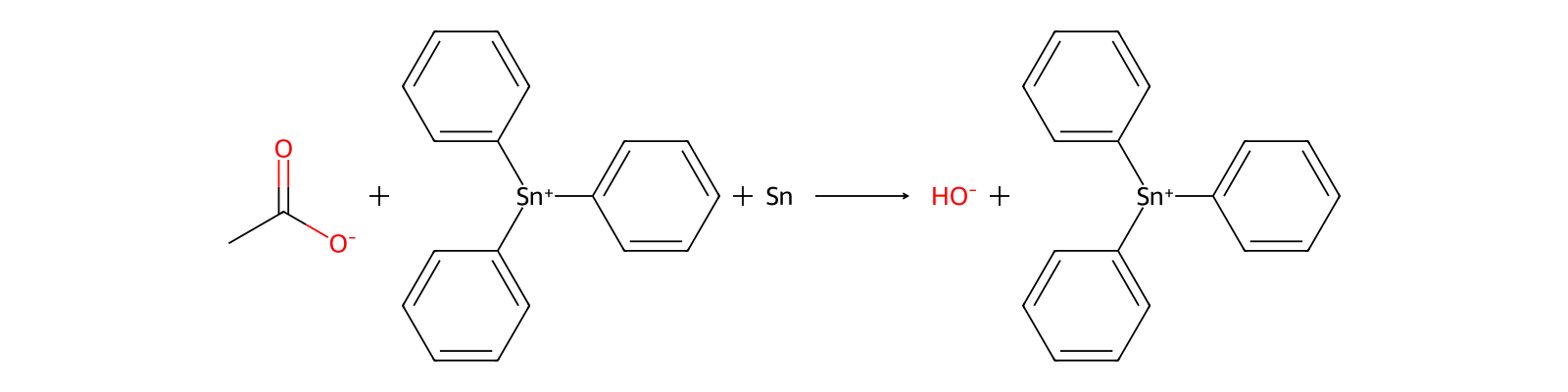
Related reactions
2 records
Linked notes
Loading…