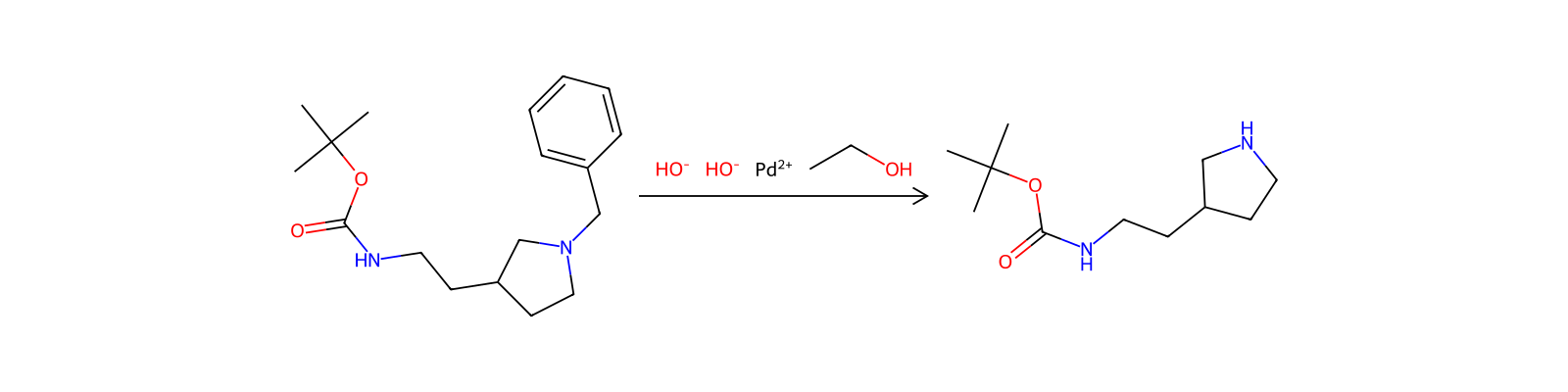

Basic information
- Standard SMILES
[OH-].[OH-].[Pd+2]- InChIKey
NXJCBFBQEVOTOW-UHFFFAOYSA-L- Molecular formula
- H2O2Pd
- Average molar mass
- 140.43 g/mol
- Monoisotopic mass
- 139.90896
Names & identifiers
- Preferred name
- Palladium hydroxide
- IUPAC
- palladium(2+) dihydroxide
- English name
- Palladium hydroxide
- Molecular formula
- H2O2Pd
- Molecular weight
- 140.43
Names & synonyms
Palladium hydroxide12135-22-7Palladium(II) hydroxidePalladium hydroxide on carbonPearlman's catalystPalladium dihydroxidePalladium hydroxide (Pd(OH)2)HRE96R2PEXPEARLMAN'S CATALYST [MI]RefChem:169625EINECS 235-219-2UNII-HRE96R2PEX
Show more names
PD(OH)2Pd(OH)2/C[Pd(cinnamyl)Cl]2PALLADIUM ON CARBONPALLADIUM CARBONPALLADIUM ON ACTIVATED CARBONPd(OH)PALLADIUM ON CHARCOAL
Palladium hydroxide on carbon(20%)Palladium hydroxide on carbon(10%)Palladium Hydroxide 20% on Carbon, ca.50% WaterPearlmans CatalystdihydroxypalladiumpalladiumhydroxidePearlman catalystPALLADIUM(2+) DIHYDROXIDE
Database identifiers
- CAS
12135-22-7- PubChem CID
- 9942167
- UNII
- HRE96R2PEX
- EC Number
- 235-219-2
- Nikkaji
- J154.801H
Properties
Computed structural properties
- Topological polar surface area
- 2 Ų
- Hydrogen bond donors
- 2
- Hydrogen bond acceptors
- 2
- Rotatable bonds
- 0
- Heavy atoms
- 3
- Formal charge
- 0
- Complexity
- 0
Experimental & physicochemical properties
Physical DescriptionBlack odorless powder; [Alfa Aesar MSDS]
Physicochemical properties
- Density
- 3.44 · 3.44[at 20℃]
- storage temp.
- Inert atmosphere,Room Temperature
- form
- powder
- color
- White
- Water Solubility
- INSOLUBLE
- Merck
- 14 · 14,7060
- Solubility Product Constant (Ksp)
- 31 · pKsp: 31.0
- InChI
- InChI=1S/2H2O.Pd/h2*1H2;/q;;+2/p-2
- InChIKey
- NXJCBFBQEVOTOW-UHFFFAOYSA-L
- SMILES
- [Pd](O)O
- CAS DataBase Reference
- 12135 · 12135-22-7(CAS DataBase Reference)
- FDA UNII
- 96 R2PEX · HRE96R2PEX
- EPA Substance Registry System
- 2 · Palladium hydroxide (Pd(OH)2) (12135-22-7)
- UNSPSC Code
- 12352300 · 12352300
- NACRES
- 22 · NA.22
- Symbol(GHS)
- 7 · GHS07
- Signal word
- Warning
- Hazard statements
- 315 · H315-H319
- Precautionary statements
- 305 · P305+P351+P338
- PPE
- 95 · Eyeshields, Gloves, type N95 (US)
- Hazard Codes
- F,Xi
- Risk Statements
- 11 · 11-36/37/38
- Safety Statements
- 22 · 22-24/25-14-36-26-20/21-36/37/39-33-27-16-7/9
- RIDADR
- 1325 · UN1325
- WGK Germany
- 3 · 3
- TSCA
- TSCA listed
- HazardClass
- 4.1 · 4.1
- PackingGroup
- III
- HS Code
- 38151200 · 38151200
- Storage Class
- 11 · 11 - Combustible Solids
- REACH Registrations
- Active
Safety & regulation
GHS classification
GHS Classification
This chemical does not meet GHS hazard criteria for 0.6% (1 of 167) of reports.
Danger
H272 (77.8%): May intensify fire; oxidizer [Danger Oxidizing liquids; Oxidizing solids];H302 (63.5%): Harmful if swallowed [Warning Acute toxicity, oral];H317 (63.5%): May cause an allergic skin reaction [Warning Sensitization, Skin];H318 (63.5%): Causes serious eye damage [Danger Serious eye damage/eye irritation];H319 (16.8%): Causes serious eye irritation [Warning Serious eye damage/eye irritation];H413 (19.2%): May cause long lasting harmful effects to aquatic life [Hazardous to the aquatic environment, long-term hazard]
P210, P220, P261, P264, P264+P265, P270, P272, P273, P280, P301+P317, P302+P352, P305+P351+P338, P305+P354+P338, P317, P321, P330, P333+P317, P337+P317, P362+P364, P370+P378, and P501 (click each P-code to see the statement)
Aggregated GHS information provided per 167 reports by companies from 7 notifications to the ECHA C&L Inventory. Each notification may be associated with multiple companies.;Reported as not meeting GHS hazard criteria per 1 of 167 reports by companies.;There are 6 notifications provided by 166 of 167 reports by companies with hazard statement code(s).;Information may vary between notifications depending on impurities, additives, and other factors. The percentage value in parenthesis indicates the notified classification ratio from companies that provide hazard codes. Only hazard codes with percentage values above 10% are shown. For more detailed information, please visit ECHA C&L website.
Hazard information
Regulatory Information
Status: Active Update: 28-03-2023 https://echa.europa.eu/registration-dossier/-/registered-dossier/19423
Palladium hydroxide (Pd(OH)2): Does not have an individual approval but may be used under an appropriate group standard
Hazards SummaryMay cause irritation; [Alfa Aesar MSDS] See Palladium oxide and Palladium chloride.
Hazard Classes and CategoriesOx. Sol. 3 (77.8%);Acute Tox. 4 (63.5%);Skin Sens. 1 (63.5%);Eye Dam. 1 (63.5%);Eye Irrit. 2 (16.8%);Aquatic Chronic 4 (19.2%)
Safety & protection
Protective Action Criteria (PAC)
2.0 [mg/m3]
22 [mg/m3]
130 [mg/m3]
Regulatory information
Regulatory Information
Status: Active Update: 28-03-2023 https://echa.europa.eu/registration-dossier/-/registered-dossier/19423
Palladium hydroxide (Pd(OH)2): Does not have an individual approval but may be used under an appropriate group standard
Safety data
- PPE
- Eyeshields, Gloves, type N95 (US)
- wgk
- 3
- tsca
- TSCA listed
- ridadr
- UN1325
- hs_code
- 38151200
- risk_code
- 11-36/37/38
- Signal word
- Warning
- Symbol(GHS)
- GHS07
- hazard_code
- F,Xi
- safety_code
- 22-24/25-14-36-26-20/21-36/37/39-33-27-16-7/9
- hazard_class
- 4.1
- Storage Class
- 11 - Combustible Solids
- packing_group
- III
- Hazard statements
- H315-H319
- REACH Registrations
- Active
- Precautionary statements
- P305+P351+P338
Chemistry & industry
Uses & manufacturing
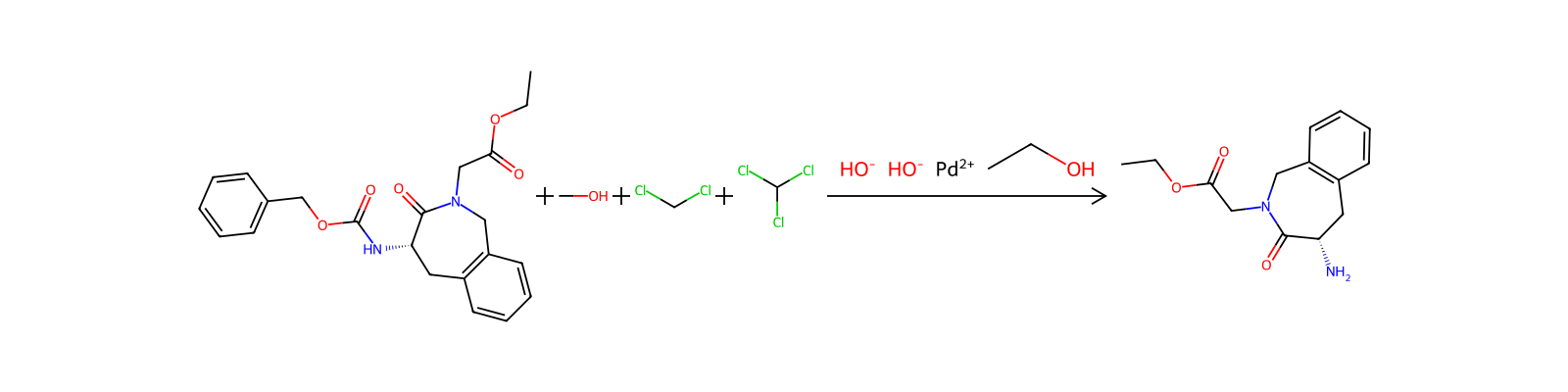
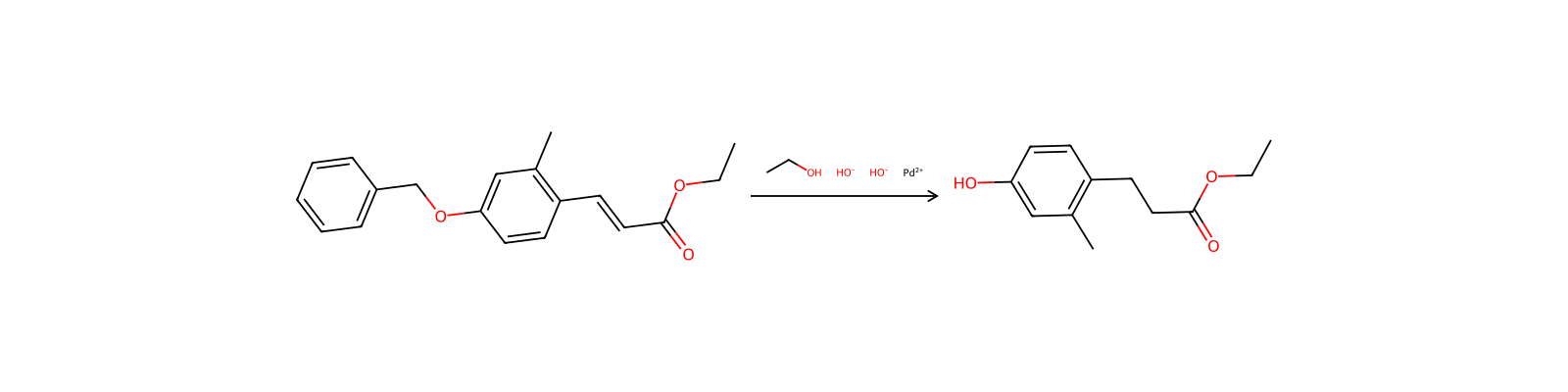
UsesCommercial Pearlman's catalyst is composed of 20% palladium hydroxide (Pd(OH)2) on carbon; Used as a catalyst for hydrogenolysis of benzyl-nitrogen and benzyl-oxygen bonds; [Merck Index]
General Manufacturing InformationPalladium hydroxide (Pd(OH)2): ACTIVE
Applications
UsesNonpyrophoric catalyst for hydrogenolysis of benzyl-nitrogen and benzyl-oxygen bonds.
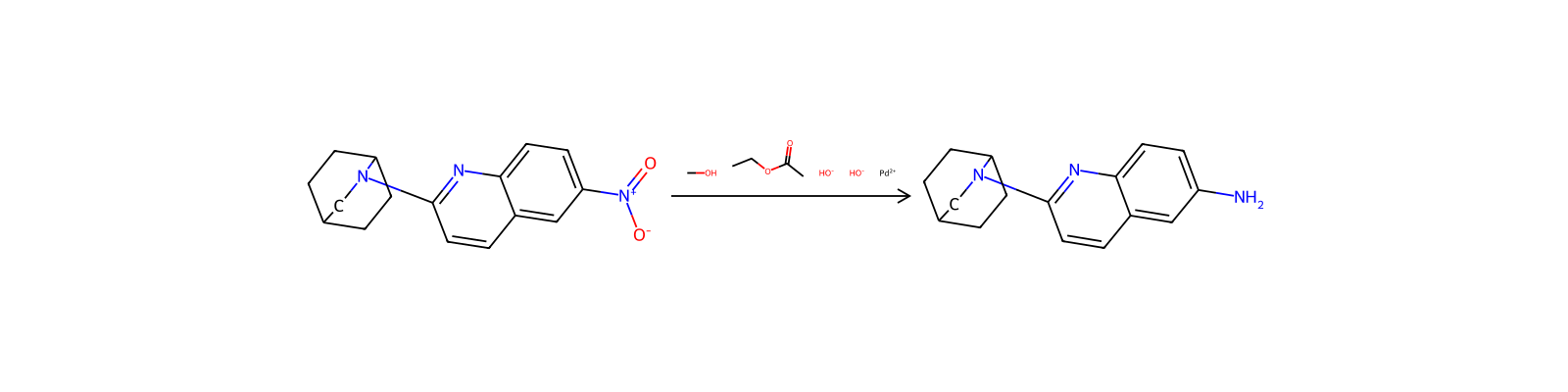
UsesPalladium Hydroxide is a catalyst for hydrogenation reactions as well as in the synthesis of glycopeptides used in obtaining antibodies from autoimmune diseases.
UsesPalladium hydroxide is usually used as a catalyst for arylation reactions.
General DescriptionThis product has been enhanced for energy efficiency.
Upstream & downstream products
Downstream products
Suppliers50 total
北京华美互利生物化工010-56205725 · [email protected]
梯希爱(上海)化成工业发展有限公司021-67121386 · [email protected]
上海阿拉丁生化科技股份有限公司400-6206333 13167063860 · [email protected]
上海腾准生物科技有限公司19821570922 · [email protected]
T&W GROUP021-61551611 13296011611 · [email protected]
爱斯特(成都)生物制药股份有限公司+86-28-85122536 85324413 · [email protected]
韶远科技(上海)有限公司021-50795510 4000665055 · [email protected]
科瑞迪化学400-821-5857 021-64326257 · [email protected]
上海迈瑞尔生化科技有限公司4006356688 18621169109 · [email protected]
阿法埃莎(中国)化学有限公司400-6106006 · [email protected]
上海德默医药科技有限公司400-021-7337 2355568890 · [email protected]
安耐吉化学&3A(安徽泽升科技股份有限公司)400-0056266 · [email protected]
武汉凯威斯科技有限公司86-027-67849912 · [email protected]
北京亿思研科技开发中心010-56645598 13366904824 · [email protected]
上海瀚鸿科技股份有限公司021-54306202 13764082696 · [email protected]
上海景颜化工科技有限公司13817811078 · [email protected]
嘉兴市艾森化工有限公司0573-85285100 18627885956 · [email protected]
上海隆盛化工有限公司58099637 13585536065 · [email protected]
合肥天健化工有限公司551-65418679 15856988503;15837135945 · [email protected]
陕西瑞科新材料股份有限公司0917-8888777 18691786767
北京奥甘生化科技有限公司15340025132; 15340025132 · [email protected]
山东西亚化学有限公司13355009207 13355009207 · [email protected]
四川库利南科技有限公司400-1166-196 18981987031 · [email protected]
河南多贝化工有限公司0370-2785118 17550508557 · [email protected]
艾科试剂4008-755-333 18080918076 · [email protected]
上海思域化工科技有限公司86-21-34053660 · [email protected]
赛默飞世尔科技(中国)有限公司800-810-5118 · [email protected]
北京伊诺凯科技有限公司400-810-7969 010-59572699 · [email protected]
上海特伯化学科技有限公司+86-21-60341587 · [email protected]
TCI AMERICA800-4238616 · [email protected]
TOKYO CHEMICAL INDUSTRY CO., LTD.03-36680489 · [email protected]
上海汇凯化学科技有限公司021-61995394 18916691159 · [email protected]
上海乐晨国际贸易有限公司021-67256163 · [email protected]
苏州爱玛特生物科技有限公司0512-56316828 4008675858 · [email protected]
上海将来实业股份有限公司021-61552785 · [email protected]
HBCChem, Inc.+1-510-219-6317 · [email protected]
日照力德士化工有限公司010-51268198 · [email protected]
郑州阿尔法化工有限公司0371-53732842 15981811963 · [email protected]
上海爱蝶实业有限公司021-58957966 18930537195 · [email protected]
成都零六生物科技有限公司400-1166-196 13458535857 · [email protected]
广拓化学(上海)有限公司021-60899189-8001 18918189673 · [email protected]
上海麦克林生化科技股份有限公司15221275939 15221275939 · [email protected]
杭州杰恒化工有限公司0571-87396432 · [email protected]
上海嵩爰化工科技有限公司010-1234567 18521000990 · [email protected]
上海有朋化工有限公司021-69005955 13701776567 · [email protected]
北京海力扬化学科技有限公司13718199399 · [email protected]
北京欣赛维化学科技有限公司010-56218822 13717722232 · [email protected]
四川海诺威科技有限公司13708085536 13708085536 · [email protected]
上海凯赛化工有限公司021-33516722 13701817765 · [email protected]
上海彤源化工有限公司021-021-69182866 13701855675 · [email protected]
Related reactions
3,873 records




Linked notes
Loading…