Reaction equation

[Cl:1][Si:2]([SiH:5]([Si:10]([Cl:13])([Cl:12])[Cl:11])[Si:6]([Cl:9])([Cl:8])[Cl:7])([Cl:4])[Cl:3].[CH:14]([C-:16]1[CH:20]=[CH:19][CH:18]=[CH:17]1)=[CH2:15].[CH-:21]1[CH:25]=[CH:24][CH:23]=[CH:22]1.[Fe+2:26]>C1(C)C=CC=CC=1.C1C=CC(P(C2C=CC=CC=2)C2C=CC=CC=2)=CC=1.C1C=CC(P(C2C=CC=CC=2)C2C=CC=CC=2)=CC=1.C1C=CC(P(C2C=CC=CC=2)C2C=CC=CC=2)=CC=1.[Cl-].[Rh]>[Cl:11][Si:10]([Si:5]([CH:15]=[CH:14][C-:16]1[CH:20]=[CH:19][CH:18]=[CH:17]1)([Si:6]([Cl:9])([Cl:8])[Cl:7])[Si:2]([Cl:1])([Cl:3])[Cl:4])([Cl:13])[Cl:12].[CH-:21]1[CH:25]=[CH:24][CH:23]=[CH:22]1.[Fe+2:26]Participants
5
Reactant 2
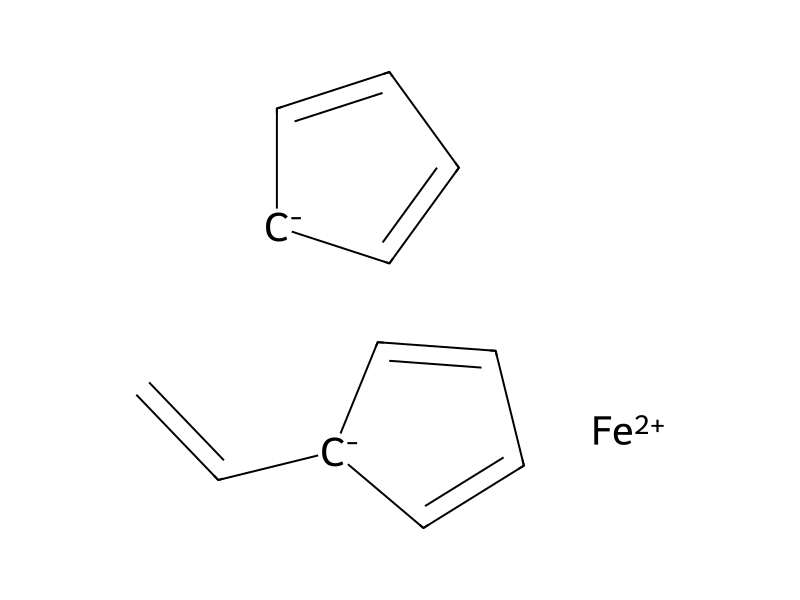

Product 1
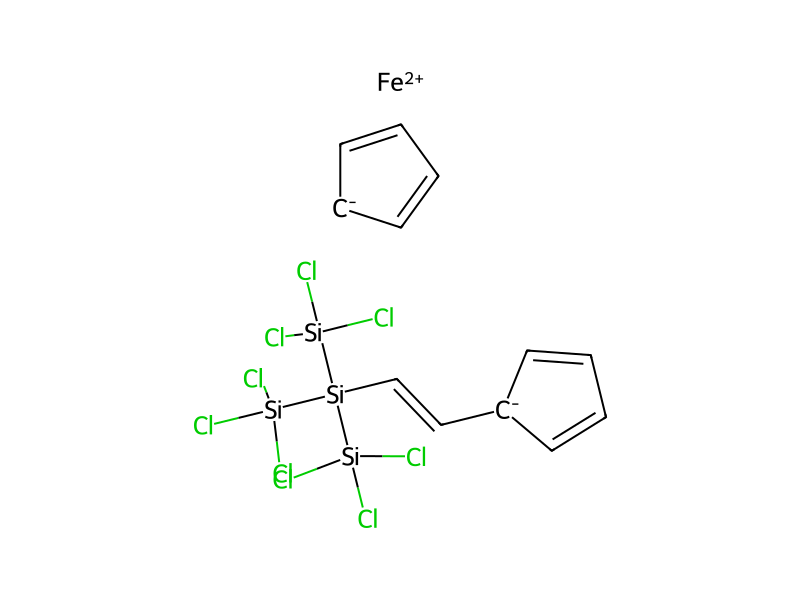
Reagents, catalysts & solvents 2

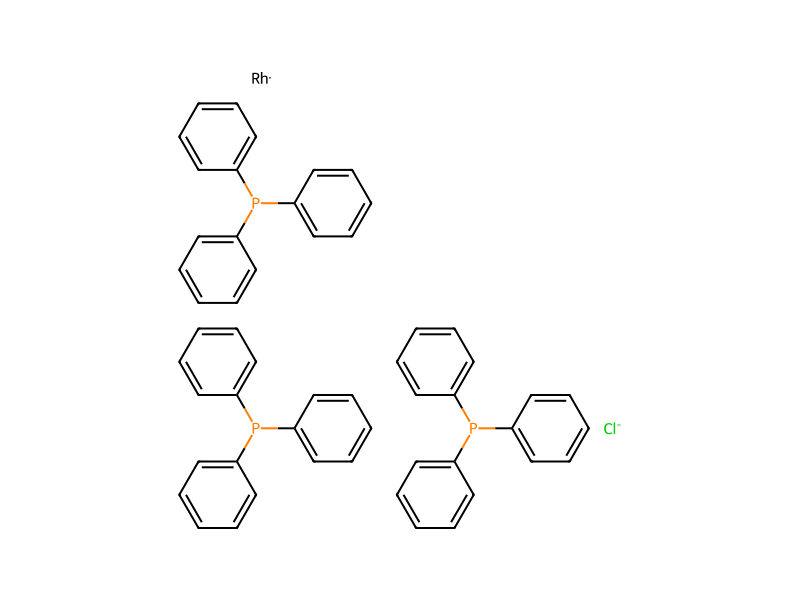
Procedure
Tris(trichlorosilyl)silane prepared in Example 9 is dissolved in toluene with a molar equivalent of vinylferrocene and tris(triphenylphoshine)rhodium chloride (Wilkinson's catalyst) and heated for >4 hours to form tris(trichlorosilyl)silylvinylferrocene by dehydrogenative coupling. This intermediate can be reduced to form 2-(2-ferrocenylethenyl)isotetrasilane (formula (15)), as described in Example 3.
Workup
- temperatureheated for >4 hours
Sources & evidence
- ORD record
- ord-d8de40ac4c474f0a9b81990883ce4636
- Source dataset
- uspto-grants-2013_11
- Patent number
- US08575381B2
Linked notes
Loading…