Reaction equation

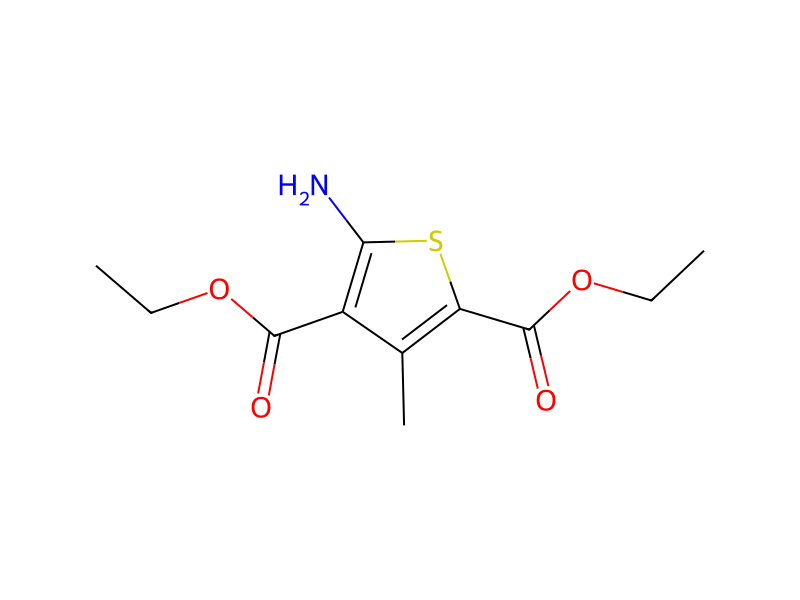
[NH2:1][C:2]1[S:6][C:5]([C:7]([O:9]CC)=[O:8])=[C:4]([CH3:12])[C:3]=1[C:13]([O:15]CC)=O.[C:18]([CH2:20][CH2:21][NH:22][C:23](=[O:32])[O:24][CH2:25][C:26]1[CH:31]=[CH:30][CH:29]=[CH:28][CH:27]=1)#[N:19]>>[CH2:25]([O:24][C:23]([NH:22][CH2:21][CH2:20][C:18]1[NH:19][C:13](=[O:15])[C:3]2[C:4]([CH3:12])=[C:5]([C:7]([OH:9])=[O:8])[S:6][C:2]=2[N:1]=1)=[O:32])[C:26]1[CH:31]=[CH:30][CH:29]=[CH:28][CH:27]=1Participants
3


Procedure
Using diethyl 5-amino-3-methylthiophene-2,4-dicarboxylate and benzyl N-(2-cyanoethyl)carbamate, the ring-closing reaction was carried out similarly to Production Example 1. Successively the hydrolysis was carried out similarly to Example 1, to provide 2-(2-benzyloxycarbonylaminoethyl)-5-methyl-4-oxo-3,4-dihydrothieno[2,3-d]pyrimidine-6-carboxylic acid.
Workup
- customthe ring-closing reaction
Sources & evidence
- ORD record
- ord-8b016c26bc2342399677dc308f424314
- Source dataset
- uspto-grants-2013_02
- Patent number
- US08377944B2
Linked notes
Loading…