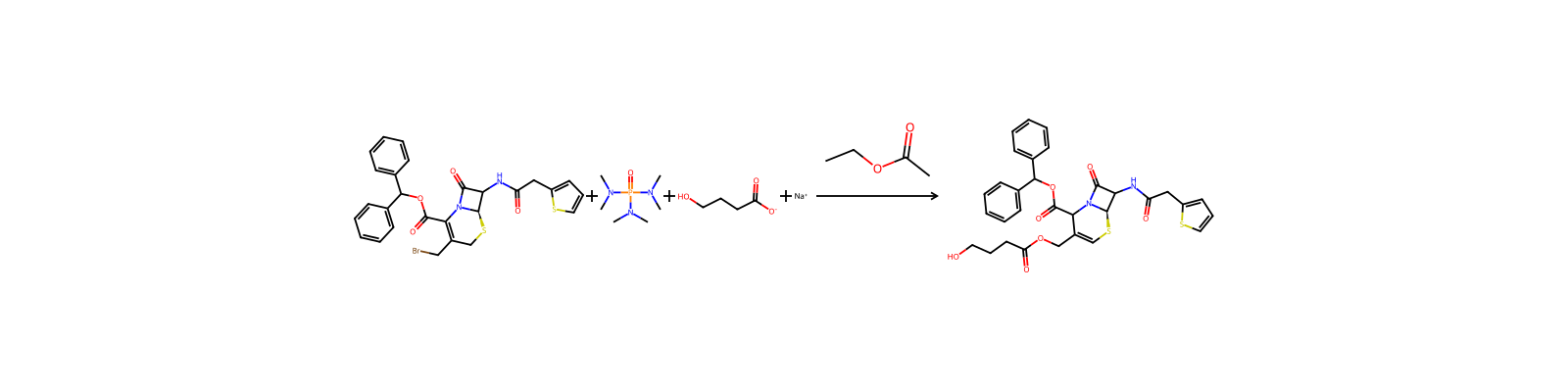
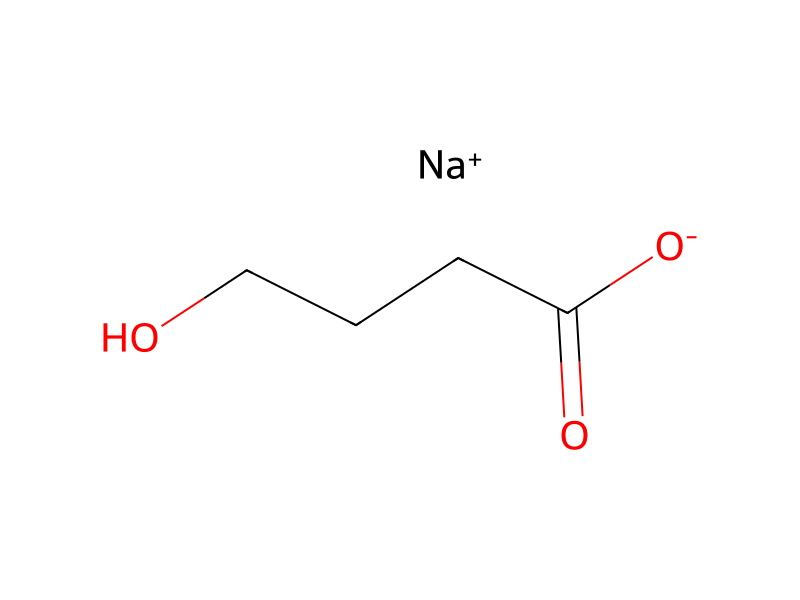
基本情報
- 標準SMILES
O=C([O-])CCCO.[Na+]- InChIKey
XYGBKMMCQDZQOZ-UHFFFAOYSA-M- 分子式
- C4H7NaO3
- 平均分子量
- 126.09 g/mol
- 単同位体質量
- 126.02928836
名称と識別子
- 優先名称
- Sodium Oxybate
- IUPAC
- sodium 4-hydroxybutanoate
名称と別名
Sodium oxybate502-85-2XyremSodium 4-hydroxybutyrateOxybate sodiumSodium Oxybutyrate4-Hydroxybutyric acid sodium saltCatabateSodium gamma-hydroxybutyrateSodium oxybat4-Hydroxybutyrate sodiumSodium-4-hydroxybutyrate
名称をさらに表示
gamma-Hydroxybutyrate sodiumLUMRYZgamma-Hydroxy sodium butyrateButanoic acid, 4-hydroxy-, monosodium saltDTXSID3048940gamma-Hydroxybutyrate sodium saltWY-34784-Hydroxybutyric acid monosodium salt
データベース識別子
- CAS
502-85-2- PubChem CID
- 23663870
- DTXSID
DTXSID3048940- ChEMBL
CHEMBL1200682- UNII
- 7G33012534
- EC Number
- 207-953-3
- Nikkaji
- J6.207C
物性
構造計算による物性
- 極性表面積
- 60.4 Ų
- 水素結合供与体数
- 1
- 水素結合受容体数
- 3
- 回転可能結合数
- 3
- 重原子数
- 8
- 形式電荷
- 0
- 複雑度
- 64
実験および物理化学的性質
Melting Point145-147
Collision Cross Section121.5 Ų [M+H]+ [CCS Type: TW; Method: calibrated with polyalanine and drug standards]
安全と法規制
GHS分類
GHS ClassificationNot Classified;Reported as not meeting GHS hazard criteria by 1 of 1 companies. For more detailed information, please visit ECHA C&L website.
危険有害性情報
Regulatory Information
DEA schedule I controlled substance
Butanoic acid, 4-hydroxy-, monosodium salt: Does not have an individual approval but may be used as a component in a product covered by a group standard. It is not approved for use as a chemical in its own right.
Hazard Classes and CategoriesNot Classified
毒性情報
Health EffectsChronically high levels of 4-hydroxybutyric acid are associated with the inborn errors of metabolism called: 4-Hydroxybutyric Aciduria/Succinic Semialdehyde Dehydrogenase Deficiency.
Adverse Effects
The most frequent adverse effect of sodium oxybate is nausea and vomiting. Other reported symptoms include dizziness, headache, urinary incontinence, and confusion. Overall, adverse effects increase at higher doses and tend to subside with treatment discontinuation. More serious adverse effects are rare, but researchers have noted severe acute psychosis, anxiety, and suicidal ideation. Additionally, patients taking sodium oxybate may experience weight loss. The speculation is that the weight loss is due to increased physical activity and reduced caloric intake. In the study, patients with a higher body mass index (BMI) experienced more significant weight loss. In conclusion, weight loss might be a possible benefit of sodium oxybate treatment in patients with a high BMI who suffer from narcolepsy.;Most reported serious adverse effects of sodium oxybate are due to illicit drug consumption. Abuse or misuse of GHB with other agents that cause changes in alertness (or consciousness) has implications pointing to severe adverse effects such as respiratory depression, seizures, altered mental status (AMS), and death. Parasomnias have been reported. The clinician should inquire about episodes of sleepwalking. Sodium oxybate has also been linked to sleep driving and sleep-related eating disorders.;A recent analysis of the FAERS (FDA Adverse Event Reporting System) highlighted instances of dosing errors associated with sodium oxybate. Reported adverse events connected to taking the second dose too early included falls, drowsiness, dizziness, nausea, vomiting, enuresis, confusion, respiratory depression, bradycardia, CNS depression, seizure, and delirium.;Drug-Drug Interactions;* When oxybate salts (sodium oxybate or lower-sodium oxybate) are administered with divalproex sodium, this increases GHB exposure, causing more significant cognitive impairment. Begin with an initial dose reduction for sodium oxybate when co-administered with divalproex sodium. Close monitoring of patient response is advised, with dose adjustments as necessary during this combination therapy.;* Concomitant use of CNS depressants (eg, benzodiazepines, muscle relaxants, anti-epileptic drugs, opioids, sedating antidepressants, general anesthetics, antipsychotics) may increase the risk of profound sedation, hypotension, respiratory depression, syncope, and death. Considering dose reduction or discontinuation of ≥ 1 CNS depressant, if used concomitantly, is advisable. If short-term opioid use is required, consider interrupting sodium oxybate.
Toxicity Summary
Signs and Symptoms of Overdose;Toxicity is often a result of illicit use and taking a higher dose than prescribed. In a case report, a 19-year-old patient diagnosed with narcolepsy inadvertently self-administered a second dose of oxybate salts within a 90-minute interval following the initial dosage, deviating from the prescribed 150-minute interval. This resulted in respiratory failure, necessitating intubation and mechanical ventilation. Subsequently, the patient's condition improved after 9 hours, enabling a successful extubation. Following the exact dosing schedule and instituting precautionary steps are crucial to preventing errors. In cases of sodium oxybate overdose, clinical features may include confusion, agitation, combativeness, and ataxia to coma. Additional clinical features include emesis, blurred vision, myoclonus, and seizures. Respiratory depression, characterized by Cheyne-Stokes respiration and apnea, is a significant concern, alongside bradycardia and hypothermia. As dosage increases, a notable progression toward deeper levels of coma is expected.;Management of Overdose;No antidote to sodium oxybate is available. Naloxone or flumazenil doesn't reverse the CNS depression induced by sodium oxybate. It is recommended to initiate symptomatic and supportive care promptly. Gastric decontamination may be considered if coingestants are suspected. Emesis can occur in obtundation; place the patient in an appropriate posture (left lateral recumbent position). Although the absence of a gag reflex may be observed in deeply comatose patients, unconscious patients can still become combative during intubation. In such cases, rapid-sequence intubation (RSI) may be necessary. Administer atropine to reverse the bradycardia associated with overdose. Patients detoxifying from an overdose might experience withdrawal syndrome. Symptoms include insomnia, confusion, tachycardia, and hypertension. Benzodiazepine administration seems to be the first-line treatment, while baclofen or propofol is an option as a second-line treatment.
GHB reaches much higher concentrations in the brain and activates GABAB receptors, which are primarily responsible for its sedative effects. GHB receptors are densely expressed in many areas of the brain, including the cortex and hippocampus, and these are the receptors that GHB displays the highest affinity for. There has been somewhat limited research into the GHB receptor; however, there is evidence that activation of the GHB receptor in some brain areas results in the release of glutamate, the principal excitatory neurotransmitter. Activation of both the GHB receptor and GABA(B) is responsible for the addictive profile of GHB. GHB's effect on dopamine release is biphasic,[19] low concentrations stimulate dopamine release via the GHB receptor.[20] Higher concentrations inhibit dopamine release via GABA(B) receptors as do other GABA(B) agonists such as baclofen and phenibut.[21] After an initial phase of inhibition, dopamine release is then increased via the GHB receptor. This explains the paradoxical mix of sedative and stimulatory properties of GHB, as well as the so-called "rebound" effect, experienced by individuals using GHB as a sleeping agent, wherein they awake suddenly after several hours of GHB-induced deep sleep. That is to say that, over time, the concentration of GHB in the system decreases below the threshold for significant GABAB receptor activation and activates predominantly the GHB receptor, leading to wakefulness.
Carcinogen ClassificationNo indication of carcinogenicity to humans (not listed by IARC).
Drug Induced Liver Injury
Drug Induced Liver Injury Rank (DILIrank 2.0)
Sodium oxybate
vNo-DILI-concern
0
No match
DOI:10.1016/j.drudis.2016.02.015
Effects During Pregnancy and Lactation
◉ Summary of Use during Lactation;Sodium, calcium, magnesium and potassium oxybate are salts of gamma-hydroxybutyric acid (GHB). GHB is an endogenous substance, and low amounts are normally found in breastmilk. Infants have been successfully breastfed by mothers taking sodium oxybate therapeutically for narcolepsy. With the typical 2 doses per night treatment regimen, nursing should usually be withheld from the time of the first dose to 4 to 6 hours after the second dose and breastfeeding can be continued during the day. Large doses of GHB have been used as a substance of abuse. No information is available on the use or safety of GHB as a drug of abuse during breastfeeding. Monitor the infant for sedation, poor feeding and poor weight gain.;◉ Effects in Breastfed Infants;A woman was taking 4.5 grams of sodium oxybate twice daily (exact times not reported) for narcolepsy and cataplexy throughout pregnancy and lactation. She breastfed her infant (extent and times not stated). No adverse infant effects were reported.;A woman with narcolepsy took sodium oxybate 4 grams each night at 10 pm and 2 am as well as fluoxetine 20 mg and cetirizine 5 mg daily throughout pregnancy and postpartum. She breastfed her infant except for 4 hours after the 10 pm oxybate dose and 4 hours after the 2 am dose. She either pumped breastmilk or breastfed her infant just before each dose of oxybate. The infant was exclusively breastfed, or breastmilk fed for 6 months when solids were introduced. The infant was evaluated at 2, 4 and 6 months with the Ages and Stages Questionnaires, which were withing the normal range as were the infant's growth and pediatrician's clinical impressions regarding the infant's growth and development.;An abstract reported a woman with narcolepsy who resumed taking sodium oxybate 6 grams at bedtime at 12 weeks postpartum. The mother reportedly used a structured pump-and-feed schedule. The infant demonstrated normal growth and development through three years of follow-up.;◉ Effects on Lactation and Breastmilk;Relevant published information was not found as of the revision date.
法規制情報
Regulatory Information
DEA schedule I controlled substance
Butanoic acid, 4-hydroxy-, monosodium salt: Does not have an individual approval but may be used as a component in a product covered by a group standard. It is not approved for use as a chemical in its own right.
化学と産業
薬理情報
ATC Code
B05XA02
N - Nervous system;N07 - Other nervous system drugs;N07X - Other nervous system drugs;N07XX - Other nervous system drugs;N07XX04 - Sodium oxybate
N - Nervous system;N01 - Anesthetics;N01A - Anesthetics, general;N01AX - Other general anesthetics;N01AX11 - Sodium oxybate
QN - Nervous system;QN01 - Anesthetics;QN01A - Anesthetics, general;QN01AX - Other general anesthetics;QN01AX11 - Sodium oxybate
QN - Nervous system;QN07 - Other nervous system drugs;QN07X - Other nervous system drugs;QN07XX - Other nervous system drugs;QN07XX04 - Sodium oxybate
Protein BindingAt GHB concentrations ranging from 3 mcg/mL to 300 mcg/mL, less than 1% is bound to plasma proteins.
Pharmacodynamics
Sodium oxybate works to improve nocturnal sleep, improve alertness the following day, and ameliorate cataplexy. Decreased excessive daytime sleepiness in narcolepsy is observed in higher doses and at a delayed time. It is proposed that sodium oxybate increases the time spent in Stages N2 and N3 of sleep and decreases the shift to stages N1/Wake/REM, resulting in improved continuity of sleep and deeper sleep. Sodium oxybate is a central nervous system (CNS) depressant that can cause significant respiratory depression. Due to its physiological and psychological effects, sodium oxybate is associated with a risk for substance misuse and abuse, addiction, withdrawal syndrome, and overdoses. Sodium oxybate is a sodium salt of GHB, a naturally occurring CNS depressant that increases dopamine levels and increases serotonin turnover. Sodium oxybate stimulates growth hormone release, often leading to its misuse as a dietary supplement for bodybuilding. In patients with narcolepsy, sodium oxybate increases nocturnal growth hormone secretion and slow-wave sleep at night, which is when growth hormone is typically released.
Mechanism of Action
The physiological actions of sodium oxybate are mediated by gamma-hydroxybutyrate (GHB), its active compound. While the exact mechanism of action of GHB in narcolepsy is not fully understood, it is suggested that GHB has multiple modes of action. At low doses, GHB binds to high- and low-affinity G-protein-coupled GHB receptors. Activation of GHB receptors leads to the release of glutamate, which is an excitatory neurotransmitter. At higher doses, GHB activates GABA<sub>B</sub> receptors at noradrenergic and dopaminergic neurons, as well as at thalamocortical neurons that are involved in sleep-wake regulation, attention and vigilance. GHB metabolizes to GABA, which modulates GABA<sub>A</sub> and GABA<sub>C</sub> receptors.
Biological Half-LifeGHB has an elimination half-life of 0.5 to 1 hour.
Metabolism/Metabolites
Animal studies suggest that metabolism is the major elimination pathway for GHB, producing carbon dioxide and water via the tricarboxylic acid (Krebs) cycle and secondarily by beta-oxidation. GHB dehydrogenase, a cytosolic NADP<sup>+</sup>-linked enzyme, converts GHB to succinic semialdehyde, which is then biotransformed to succinic acid by succinic semialdehyde dehydrogenase. Succinic acid enters the Krebs cycle where it is metabolized to carbon dioxide and water. A second mitochondrial oxidoreductase enzyme, a transhydrogenase, also catalyzes the conversion to succinic semialdehyde in the presence of α-ketoglutarate. GHB can alternatively be converted to carbon dioxide and water via β-oxidation mediated by 3,4-dihydroxybutyrate. No active metabolites have been identified.
Route of Elimination: Animal studies indicate that metabolism is the major elimination pathway for sodium oxybate, producing carbon dioxide and water via the tricarboxylic acid (Krebs) cycle and secondarily by beta-oxidation. Succinic acid enters the Krebs cycle where it is metabolized to carbon dioxide and water. Fecal and renal excretion is negligible. 5% renal elimination. Half Life: 30 to 60 minutes
FDA Pharmacological Classification
SODIUM OXYBATE
Central Nervous System Depression [PE]; Decreased Central Nervous System Organized Electrical Activity [PE]; Central Nervous System Depressant [EPC]
MeSH Pharmacological Classification
Agents that are administered in association with anesthetics to increase effectiveness, improve delivery, or decrease required dosage.
Ultrashort-acting anesthetics that are used for induction. Loss of consciousness is rapid and induction is pleasant, but there is no muscle relaxation and reflexes frequently are not reduced adequately. Repeated administration results in accumulation and prolongs the recovery time. Since these agents have little if any analgesic activity, they are seldom used alone except in brief minor procedures. (From AMA Drug Evaluations Annual, 1994, p174)
Absorption, Distribution and Excretion
Following oral administration of sodium oxybate, GHB is released and rapidly absorbed with an absolute bioavailability of about 88%. The plasma levels of GHB increases more than dose-proportionally, with blood levels increasing 3.7‐fold as total daily dose is doubled from 4.5 g to 9 g. After administration of a single oral dose of 2.25g to 4.5g sodium oxybate, the Cmax was 27–90 μg/mL and the mean Tmax ranged from 25 to 75 minutes. A high-fat meal delays absorption (average Tmax increased from 0.75 hr to 2 hr), reduces Cmax of GHB by 59%, and decreases systemic exposure (AUC) by 37%.
The clearance of GHB is almost entirely by biotransformation to carbon dioxide, which is then eliminated by expiration. On average, less than 5% of unchanged drug appears in human urine within 6 to 8 hours after dosing. Fecal excretion is negligible.
The apparent volume of distribution of GHB ranges from 190 mL/kg to 384 mL/kg.
In healthy GHB-naïve subjects who received a single oral dose of 25 mg GHB per kg of body weight, the total clearance 1228 ± 233 μL/min.
用途と製造
Uses
Use (kg; approx.) in Germany (2009): >750;Consumption (g per capita; approx.) in Germany (2009): 0.00916;Excretion rate: 0.01;Calculated removal (%): 92.1
Used as a general anesthetic, to treat conditions such as insomnia, clinical depression, narcolepsy, and alcoholism, and to improve athletic performance.
General Manufacturing InformationButanoic acid, 4-hydroxy-, sodium salt (1:1): ACTIVE
関連反応
8 件





関連ノート
読み込み中…