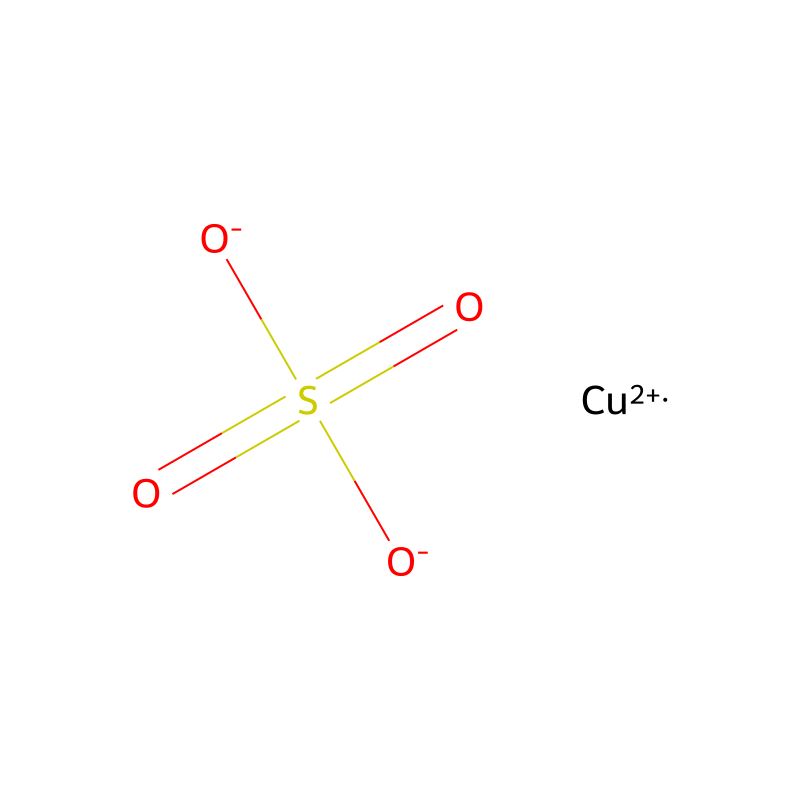
| GHS 分類 | WarningH302: Harmful if swallowed [Warning Acute toxicity, oral]H315: Causes skin irritation [Warning Skin corrosion/irritation]H319: Causes serious eye irritation [Warning Serious eye damage/eye irritation]H400: Very toxic to aquatic life [Warning Hazardous to the aquatic environment, acute hazard]H410: Very toxic to aquatic life with long lasting effects [Warning Hazardous to the aquatic environment, long-term hazard]P264, P264+P265, P270, P273, P280, P301+P317, P302+P352, P305+P351+P338, P321, P330, P332+P317, P337+P317, P362+P364, P391, and P501 (click each P-code to see the statement)This chemical does not meet GHS hazard criteria for 1.1% (14 of 1268) of reports. |
|---|
| 規制情報 | Chemical: Sulfuric acid, copper(2+) salt (1:1)Commission Regulation No 844/2012Sulfuric acid copper(2+) salt (1:1) is listed on the EPA's Chemical Data Reporting (CDR) system. Manufacturers and importers of Sulfuric acid copper(2+) salt (1:1) are required to report information about their production and use of this chemical to the EPA under the Toxic Substances Control Act (TSCA). (40 eCFR Part 711)Status: Active Update: 22-12-2022 https://echa.europa.eu/registration-dossier/-/registered-dossier/15416Status: Cease Manufacture Update: 06-05-2018 https://echa.europa.eu/registration-dossier/-/registered-dossier/24414Sulfuric acid, copper(2+) salt: Does not have an individual approval but may be used as a component in a product covered by a group standard. It is not approved for use as a chemical in its own right.Copper sulphate: Does not have an individual approval but may be used under an appropriate group standard |
|---|
| その他の安全情報 | IMAP assessments - Sulfuric acid, copper(2+) salt (1:1): Human health tier I assessment |
|---|
| 輸送ラベル(DOT) | Poison |
|---|
| 火災危険 | Excerpt from ERG Guide 151 [Substances - Toxic (Non-Combustible)]:Non-combustible, substance itself does not burn but may decompose upon heating to produce corrosive and/or toxic fumes. Containers may explode when heated. Runoff may pollute waterways. (ERG, 2024)Not combustible. Gives off irritating or toxic fumes (or gases) in a fire. Many reactions may cause fire or explosion. See Chemical dangers |
|---|
| 健康有害性 | INGESTION: copper sulfate may induce severe gastroenteric distress (vomiting, gastroenteric pain, and local corrosion and hemorrhages), prostration, anuria, hematuria, anemia, increase in white blood cells, icterus, coma, respiratory difficulties, and circulatory failure. (USCG, 1999) |
|---|
| 有害性の概要 | A strong irritant[Merck Index] A severe skin and eye irritantA respiratory tract irritantCan cause copper poisoning after ingestion[ICSC] Interferes with embryo development in high-dose animal studies[REPROTOX] An irritant[MSDSonline] See Copper sulfate. See Copper. |
|---|
| FDA 要件 | In accordance with 21 CFR 184.1(b)(1), the ingredient is used in food with no limitation other than current good manufacturing practice. The affirmation of this ingredient as generally recognized as safe (GRAS) as a direct human food ingredient is based upon the following current good manufacturing practice conditions of use: 1) The ingredient is used as a nutrient supplement as defined in 21 CFR 170.3(o)(20) of this chapter and as a processing aid as defined in 21 CFR 170.3(o)(24) of this chapter. 2) The ingredient is used in food at levels not to exceed current good manufacturing practice. Copper sulfate may be used in infant formula in accordance with section 412(g) of the Federal Food, Drug, and Cosmetic Act (the act) or with regulations promulgated under section 412(a)(2) of the act. Prior sanctions for this ingredient different from the uses established in this section do not exist or have been waived.Trace minerals added to animal feeds. These substances added to animal feeds as nutritional dietary supplements are generally recognized as safe when added are levels consistent with good feeding practice. Element: CopperSource compound: copper sulfate. (All substances listed may be in anhydrous or hydrated form.) |
|---|
| 反応性グループ | Salts, Acidic |
|---|
| FIFRA 要件 | A tolerance is established in potable water for residues of copper resulting from the use of the algicides or herbicides basic copper carbonate (malachite), copper sulfate, copper monoethanolamine, and copper triethanolamine to control aquatic plants in reservoirs, lakes, ponds, irrigation ditches, and other potential sources of potable water. |
|---|
| Reactivity Profile | Anhydrous CUPRIC SULFATE serves as a weak oxidizing agent. Causes hydroxylamine to ignite. Gains water readily. The hydrated salt is vigorously reduced by hydroxylamine [Mellor 8:292(1946-1947)]. Both forms are incompatible with finely powdered metals. Both are incompatible with magnesium, corrode steel and iron, may react with alkalis, phosphates, acetylene gas, hydrazine, or nitromethane, and may react with beta-naphthol, propylene glycol, sulphathiazole and triethanolamine if the pH exceeds 7 (NTP, 1992). Both act as acidic salts, corrode metals and irritate tissues. |
|---|
| 大気基準 | Cupric sulfate is designated as a hazardous substance under section 311(b)(2)(A) of the Federal Water Pollution Control Act and further regulated by the Clean Water Act Amendments of 1977 and 1978. These regulations apply to discharges of this substance. This designation includes any isomers and hydrates, as well as any solutions and mixtures containing this substance. |
|---|
| Chemical Dangers | The solution in water is a weak acid. Decomposes at 650 °C. This produces toxic fumes of sulfur oxides (see ICSC 0074). Reacts violently with hydroxylamine. This generates fire hazard. Reacts with magnesium powder. This produces flammable/explosive gas (hydrogen - see ICSC 0001). Reacts with acetylene and potassium chlorate. This generates explosion hazard. Attacks some metals in the presence of water. |
|---|
| 消火 | Excerpt from ERG Guide 151 [Substances - Toxic (Non-Combustible)]:SMALL FIRE: Dry chemical, CO2 or water spray.LARGE FIRE: Water spray, fog or regular foam. If it can be done safely, move undamaged containers away from the area around the fire. Dike runoff from fire control for later disposal. Avoid aiming straight or solid streams directly onto the product.FIRE INVOLVING TANKS, RAIL TANK CARS OR HIGHWAY TANKS: Fight fire from maximum distance or use unmanned master stream devices or monitor nozzles. Do not get water inside containers. Cool containers with flooding quantities of water until well after fire is out. Withdraw immediately in case of rising sound from venting safety devices or discoloration of tank. ALWAYS stay away from tanks in direct contact with flames. For massive fire, use unmanned master stream devices or monitor nozzlesif this is impossible, withdraw from area and let fire burn. (ERG, 2024)In case of fire in the surroundings, use appropriate extinguishing media. |
|---|
| 応急処置措置 | Fresh air, rest.Rinse skin with plenty of water or shower. Refer for medical attention if skin irritation occurs.First rinse with plenty of water for several minutes (remove contact lenses if easily possible), then refer for medical attention.Do NOT induce vomiting. Give one or two glasses of water to drink. Refer for medical attention . |
|---|
| 応急処置 | INGESTION: induce vomiting and administer gastric lavagegive a saline cathartic, fluid therapy, and transfusions if requiredcalcium disodium EDTA has been found moderately effective.SKIN AND EYES: wash affected tissues with water. (USCG, 1999) |
|---|
| 安全保管 | Well closed. Dry. Store only in original container. Store in an area without drain or sewer access. |
|---|
| 暴露管理・個人防護 | 0.01 [mg/m3], respirable fraction (Cu, inorganic cmpnds)[German Research Foundation (DFG)] |
|---|
| 消火手順 | If material involved in fire: Extinguish fire using agent suitable for type of surrounding fire (material itself does not burn or burns with difficulty). |
|---|
| 保管条件 | KEEP TIGHTLY CLOSED. |
|---|
| 清掃方法 | Environmental concerns - land spill: Dig a pit, lagoon,or holding area to contain liquid or solid material. /SRP: If time permits, pits, ponds, lagoons, soak holes, or holding areas should be sealed with an impermeable flexible membrane liner./ Cover solids with a plastic sheet to prevent dissolving in rain or fire fighting water.Environmental concerns - water spill: Neutralize with agricultural lime (CaO), crushed limestone (CaCO3), or sodium bicarbonate (NaHCO3). Adjust pH to neutral (pH= 7). Use mechanical dredges or lifts to remove immobilized masses of pollutants and precipitates. |
|---|
| 非火災時の漏出対応 | Excerpt from ERG Guide 151 [Substances - Toxic (Non-Combustible)]:Do not touch damaged containers or spilled material unless wearing appropriate protective clothing. Stop leak if you can do it without risk. Prevent entry into waterways, sewers, basements or confined areas. Cover with plastic sheet to prevent spreading. Absorb or cover with dry earth, sand or other non-combustible material and transfer to containers. DO NOT GET WATER INSIDE CONTAINERS. For solids, prevent dust cloud and avoid inhalation of dust. (ERG, 2024) |
|---|
| 処分方法 | SRP: At the time of review, criteria for land treatment or burial (sanitary landfill) disposal practices are subject to significant revision. Prior to implementing land disposal of waste residue (including waste sludge), consult with environmental regulatory agencies for guidance on acceptable disposal practices.Group III Containers (both combustible and non-combustible) that previously held organic mercury, lead, cadmium, arsenic, or inorganic pesticides should be triple rinsed, punctured and disposed of in a sanitary landfill. Non-rinsed containers should be encapsulated and buried at a specially designated landfill site. /Organic mercury, lead, cadmium, arsenic, or inorganic pesticides/The following wastewater treatment technologies have been investigated for copper (II) sulfate: activated carbon.Add slowly to a large container of water. Stir in slight excess of soda ash. Let stand for 24 hr. Decant or siphon into another container and neutralize with 6 M HCl. ... The sludge may be added to landfill. Recommendable methods: Precipitation, solidification, & landfill. Peer-review: ... Copper can be recovered by cation exchange. (Peer-review conclusions of an IRPTC expert consultation (May 1985)) |
|---|
| 漏出処分 | Personal protection: particulate filter respirator adapted to the airborne concentration of the substance, protective clothing, protective gloves and safety goggles. Do NOT let this chemical enter the environment. Sweep spilled substance into covered containers. If appropriate, moisten first to prevent dusting. Then store and dispose of according to local regulations. |
|---|
| Preventive Measures | Personnel protection: Keep upwind. ... Avoid breathing vapors or dusts. Wash away any material which may have contacted the body with copious amounts of water or soap and water.If material not involved in fire: Keep material out of water sources & sewers. Build dikes to contain flow as necessary.SRP: Local exhaust ventilation should be applied wherever there is an incidence of point source emissions or dispersion of regulated contaminants in the work area. Ventilation control of the contaminant as close to its point of generation is both the most economical and safest method to minimize personnel exposure to airborne contaminants.SRP: Contaminated protective clothing should be segregated in such a manner so that there is no direct personal contact by personnel who handle, dispose, or clean the clothing. Quality assurance to ascertain the completeness of the cleaning procedures should be implemented before the decontaminated protective clothing is returned for reuse by the workers. |
|---|
| 体内負荷 | The milk of female vineyard workers, who were exposed to copper sulfate and a variety of other pesticides, contained 6.2 times as much copper as the milk of milkmaids who did equally hard work but not exposed to pesticides. |
|---|
| Treatment | EYES: irrigate opened eyes for several minutes under running water. INGESTION: do not induce vomiting. Rinse mouth with water (never give anything by mouth to an unconscious person). Seek immediate medical advice. SKIN: should be treated immediately by rinsing the affected parts in cold running water for at least 15 minutes, followed by thorough washing with soap and water. If necessary, the person should shower and change contaminated clothing and shoes, and then must seek medical attention. INHALATION: supply fresh air. If required provide artificial respiration. |
|---|
| 相互作用 | THE IV INDUCED STIMULATION OF ALPHA-ADRENERGIC NERVOUS SYSTEM BY CUPRIC SULFATE WAS PARTIALLY ATTENUATED BY PRETREATMENT OF SHEEP WITH METHYSERGIDE. PHENOXYBENZAMINE COMPLETELY BLOCKED THE EFFECTS OF CUPRIC SULFATE & TREATMENT WITH PROPRANOLOL ENHANCED THE EFFECTS.Acute copper (II) sulfate poisoning in the mouse induces renal tubular degeneration and necrosis. Administration of sodium 2,3-dimercaptopropane-sulfonate effectively prevented the development on the morphological sequelae of copper intoxication.Pokeweed mitogen (PWM), a T cell-dependent polyclonal B cell activator, stimulates the differentiation of immunoglobin secreting cells from normal human peripheral blood mononuclear cells. ... Peripheral blood mononuclear cells failed to generate immunoglobin secreting cells in response to poke weed mitogen after brief exposure to D-penicillamine and copper sulfatepreincubation with either penicillamine or copper sulfate alone had no effect. Experiments utilizing purified populations of B and T cells indicated that penicillamine and copper sulfate markedly inhibited helper T cell activity but not B cell function.Dimercaptosuccinic acid ... administered intragastrically to rabbits after sc administration of copper sulfate promoted urinary excretion.For more Interactions (Complete) data for COPPER(II) SULFATE (10 total), please visit the HSDB record page. |
|---|
| 健康影響 | People must absorb small amounts of copper every day because copper is essential for good health, however, high levels of copper can be harmful. Very-high doses of copper can cause damage to your liver and kidneys, and can even cause death. Copper may induce allergic responses in sensitive individuals. (L278, L279) |
|---|
| 生態毒性値 | LC50 Anguilla rostrata (American eel) 3.20 mg/l/96 hr. /Conditions of bioassay not specified/LC50 Schistosoma mansoni (Miricidia) 8.5 mg/l per hr. /Conditions of bioassay not specified/LC90 Schistosoma mansoni (Miricidia) 15.75 mg/l per hr. /Conditions of bioassay not specified/LC50 Puntius conchonius 0.709 mg/l/48 hr in water hardness of 310 mg/l calcium carbonate. /Static bioassay/For more Ecotoxicity Values (Complete) data for COPPER(II) SULFATE (17 total), please visit the HSDB record page. |
|---|
| 環境中動態 | Terrestrial Fate: In soil, copper sulfate is partly washed down to lower levels, partly bound by soil components, and partly oxidatively transformed.... Granular copper sulfate /was applied/ to the surface of Hoover Reservoir, Franklin County, Ohio. Soluble and particulate cupric copper concn at several depths were measured by atomic absorption spectrophotometry for four days after application. The soluble cupric copper concn decreased to near baseline values in 2 to 6 hr when 0.2 or 0.4 g of copper sulfate per square meter were added to the surface. Most of the copper sulfate was dissolved in the first 1.75 m of the water column, and only 2 percent of the total copper sulfate reached the depth of approx 4.5 m. |
|---|
| 有害作用 | Occupational hepatotoxin - Secondary hepatotoxins: the potential for toxic effect in the occupational setting is based on cases of poisoning by human ingestion or animal experimentation.Methemoglobinemia - The presence of increased methemoglobin in the bloodthe compound is classified as secondary toxic effect |
|---|
| 暴露経路 | The substance can be absorbed into the body by inhalation of its aerosol and by ingestion.Oral (L277)inhalation (L277)dermal (L277) |
|---|
| Milk Concentrations | The milk of female vineyard workers, who were exposed to copper sulfate and a variety of other pesticides, contained 6.2 times as much copper as the milk of milkmaids who did equally hard work but not exposed to pesticides. |
|---|
| 毒性の概要 | For healthy, non-occupationally-exposed humans the major route of exposure to copper is oral. The mean daily dietary intake of copper in adults ranges between 0.9 and 2.2 mg. ... In some cases, drinking water may make a substantial additional contribution to the total daily intake of copper, particularly in households where corrosive waters have stood in copper pipes. ... All other intakes of copper (inhalation and dermal) are insignificant in comparison to the oral route. Inhalation adds 0.3-2.0 ug/day from dusts and smoke. Women using copper IUDs are exposed to only 80ug or less of copper per day from this source. The homeostasis of copper involves the dual essentiality and toxicity of the element. Its essentiality arises from its specific incorporation into a large number of proteins for catalytic and structural purposes. The cellular pathways of uptake, incorporation into protein and export of copper are conserved in mammals and modulated by the metal itself. Copper is mainly absorbed through the gastrointestinal tract. From 20 to 60% of the dietary copper is absorbed, with the rest being excreted through the feces. Once the metal passes through the basolateral membrane it is transported to the liver bound to serum albumin. The liver is the critical organ for copper homeostatis. The copper is partitioned for excretion through the bile or incorporation into intra- and extracellular proteins. The primary route of excretion is through the bile. The transport of copper to the peripheral tissues is accomplished through the plasma attached to serum albumin, ceruloplasmin or low-molecular weight complexes. ... The biochemical toxicity of copper, when it exceeds homeostatic control, is derived from its effects on the structure and function of biomolecules, such as DNA, membranes and proteins directly or through oxygen-radical mechanisms. The toxicity of a single oral dose of copper varies widely between species. ... The major soluble salts (copper(II) sulfate, copper(IIExcess copper is sequestered within hepatocyte lysosomes, where it is complexed with metallothionein. Copper hepatotoxicity is believed to occur when the lysosomes become saturated and copper accumulates in the nucleus, causing nuclear damage. This damage is possibly a result of oxidative damage, including lipid peroxidation. Copper inhibits the sulfhydryl group enzymes such as glucose-6-phosphate 1-dehydrogenase, glutathione reductase, and paraoxonases, which protect the cell from free oxygen radicals. It also influences gene expression and is a co-factor for oxidative enzymes such as cytochrome C oxidase and lysyl oxidase. In addition, the oxidative stress induced by copper is thought to activate acid sphingomyelinase, which lead to the production of ceramide, an apoptotic signal, as well as cause hemolytic anemia. Copper-induced emesis results from stimulation of the vagus nerve. (L277, T49, A174, L280) |
|---|
| Signs and Symptoms | Cough. Sore throat.Redness. Pain.Redness. Pain. Blurred vision.Abdominal pain. Burning sensation. Nausea. Vomiting. Diarrhoea. Shock or collapse.Breathing high levels of copper can cause irritation of the nose and throat. Ingesting high levels of copper can cause nausea, vomiting, diarrhea, headache, dizziness, and respiratory difficulty. (L278, L279) |
|---|
| Acute Toxicity Link | Chemical: COPPER SULFATE |
|---|
| CERCLA 報告数量 | Persons in charge of vessels or facilities are required to notify the National Response Center (NRC) immediately, when there is a release of this designated hazardous substance, in an amount equal to or greater than its reportable quantity of 10 lb or 45.4 kg. The toll free number of the NRC is (800) 424-8802In the Washington D.C. metropolitan area (202) 426-2675. The rule for determining when notification is required is stated in 40 CFR 302.4 (section IV. D.3.b). |
|---|
| 清浄水法要件 | Toxic pollutant designated pursuant to section 307(a)(1) of the Federal Water Pollution Control Act and is subject to effluent limitations. /Copper and cmpd/ |
|---|
| 州飲料水ガイドライン | (AZ) ARIZONA 1300 ug/l /Copper/ |
|---|
| Federal Drinking Water Standards | EPA 1300 ug/l (Action Level) /Copper/ |
|---|
| 連邦飲料水ガイドライン | EPA 1000 ug/l /Copper/ |
|---|
| TSCA 収載状態 | TSCA listed |
|---|