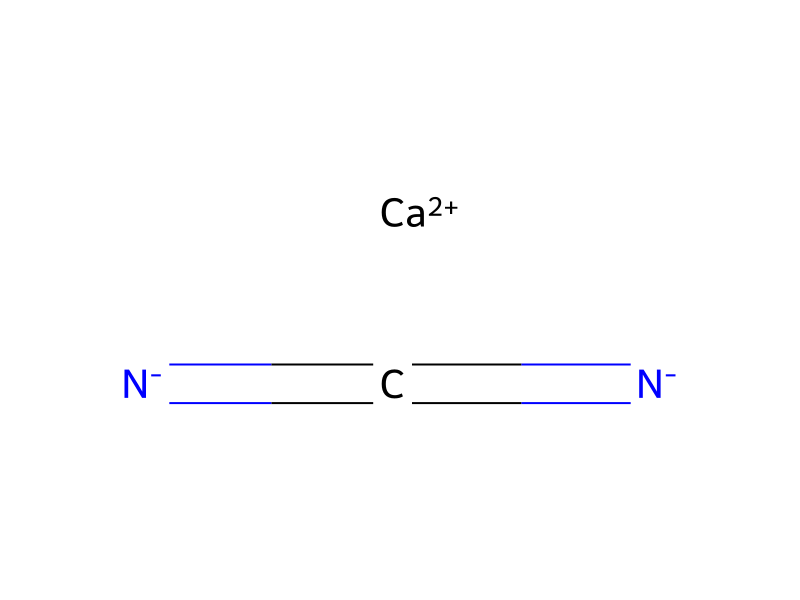
基本情報
- 標準SMILES
[Ca+2].[N-]=C=[N-]- InChIKey
MYFXBBAEXORJNB-UHFFFAOYSA-N- 分子式
- CaCN2
- 平均分子量
- 80.1 g/mol
- 単同位体質量
- 79.96873898
概要
Calcium cyanamide, with more than 0.1% calcium carbide appears as a colorless to gray, odorless solid. May cause illness from ingestion. May irritate the skin. If exposed to water or high temperatures, calcium cyanamide may generate toxic and flammable fumes. Used to make pesticides and in fertilizers.
名称と識別子
- 優先名称
- Calcium Cyanamide
- IUPAC
- calcium azanidylidenemethylideneazanide
名称と別名
名称をさらに表示
データベース識別子
- CAS
156-62-7- PubChem CID
- 56955933
- DTXSID
DTXSID6020353- ChEMBL
CHEMBL3301667- ChEBI
CHEBI:64301- EC Number
- 205-861-8
物性
構造計算による物性
- 極性表面積
- 2 Ų
- 水素結合供与体数
- 0
- 水素結合受容体数
- 2
- 回転可能結合数
- 0
- 重原子数
- 4
- 形式電荷
- 0
- 複雑度
- 18.3
実験および物理化学的性質
Chemical Classes
Hazardous Air Pollutants (HAPs)
Nitrogen Compounds -> Cyanamides
Reactive agents - 2nd degree
Density
2.29 at 68 °F (NTP, 1992) - Denser than water; will sink
2.29 at 20 °C/4 °C
2.3 g/cm³
2.29
2.29 @25 °C
2.29
Color/Form
Pure calcium cyanamide occurs as glistening, hexagonal crystals belonging to the rhombohedral system
Colorless crystals or powder
White crystals
Solubility
Decomposes (NTP, 1992)
Soluble
Insoluble in organic solvents
Essentially insoluble in water (decomposes)
Solubility in water: reaction
Insoluble
Boiling Point
Sublimes >2102 °F (NTP, 1992)
Sublimes 1150-1200ºC
sublimes
Sublimes
Melting Point
2372 °F (NTP, 1992)
1300ºC
Approximately 1340 °C
2372 °F
2444 °F
Vapor Pressure
0 mmHg (approx) (NIOSH, 2024)
0 mmHg (approx)
0 mmHg (approx)
Physical Description
Calcium cyanamide, with more than 0.1% calcium carbide appears as a colorless to gray, odorless solid. May cause illness from ingestion. May irritate the skin. If exposed to water or high temperatures, calcium cyanamide may generate toxic and flammable fumes. Used to make pesticides and in fertilizers.
Colorless, gray, or black crystals or powder (fertilizer); Note: Commercial grades may contain calcium carbide; [NIOSH]
COLOURLESS CRYSTALS.
Colorless, gray, or black crystals or powder.
Colorless, gray, or black crystals or powder. [fertilizer] [Note: Commercial grades may contain calcium carbide.]
Other Experimental Properties
Sublimes at 1150-1200 °C; heat of formation from CaC2 + N2: -69.0 kcal/mole (25 °C); heat of fusion 1.29 cal/g; no known solvent will bring about soln without decomp; undergoes partial hydrolysis to the soluble calcium hydrogen cyanamide, a source of cyanamide ions; nonvolatile and noncombustible
Hygroscopic; specific heat, 20-100 °C: 909 J/kg; free energy of formation: -303 kJ/mol (298K); normal entropy: 87.1 J/mol-K
Reacts with acid to form HN-C-NH, solid with appreciable vapor pressure
In water or alkaline solutions it may polymerize to dicyandiamide; decomposes in water to form acetylene and ammonia
For more Other Experimental Properties (Complete) data for Calcium cyanamide (7 total), please visit the HSDB record page.
安全と法規制
GHS分類
GHS Classification
Danger
H302: Harmful if swallowed [Warning Acute toxicity, oral]
P261, P264, P264+P265, P270, P271, P280, P301+P317, P304+P340, P305+P354+P338, P317, P319, P330, P403+P233, P405, and P501 (click each P-code to see the statement)
This chemical does not meet GHS hazard criteria for 0.5% (1 of 189) of reports.
Danger
H261 (21.7%): In contact with water releases flammable gas [Danger Substances and mixtures which in contact with water, emit flammable gases]
危険有害性情報
Regulatory Information
Chemical: Cyanamide, calcium salt (1:1)
Hazard Traits - Dermatotoxicity; Ocular Toxicity; Respiratory Toxicity
Status: Active Update: 28-06-2019 https://echa.europa.eu/registration-dossier/-/registered-dossier/12164
Calcium cyanamide, with >0.1 % calcium carbide: Does not have an individual approval but may be used under an appropriate group standard
The New Jersey Worker and Community Right to Know Act requires public and private employers to provide information about hazardous substances at their workplaces. (N.J.S.A. 34:5A-1 et. seq.)
Fire Hazards
Excerpt from ERG Guide 138 [Substances - Water-Reactive (Emitting Flammable Gases)]:
· Produce flammable gases on contact with water.
Not combustible (impurities constitute a fire risk). Gives off irritating or toxic fumes (or gases) in a fire. Risk of fire and explosion on contact with water or metals.
Health Hazards
Excerpt from ERG Guide 138 [Substances - Water-Reactive (Emitting Flammable Gases)]:
· Inhalation or contact with vapors, substance or decomposition products may cause severe injury or death.
Hazards Summary
Calcium cyanamide is used as a fertilizer, pesticide, and in the manufacture of other chemicals. It is irritating to the eyes, skin, and respiratory tract in humans. Acute (short-term) inhalation exposure may cause gastritis,rhinitis, pharyngitis, laryngitis, and tracheobronchitis. Acute oral exposure may cause a vasomotor reaction, resulting in intense flushing of the face, upper body, and arms. Tachycardia and hypotension have also been observed in humans following acute oral exposure. Chronic (long-term) occupational exposure has been reported to cause chronic rhinitis with perforation of the nasal septum in workers. EPA has not classified calcium cyanamide with respect to potential carcinogenicity.
Commercial grade calcium cyanamide decomposes in water to release ammonia and acetylene. Calcium cyanamide is a skin irritant and potential sensitizer. An antabuse-like reaction may occur in exposed workers who drink alcohol. [ACGIH] On contact with water, may produce corrosive solutions; [CAMEO] Solutions may be corrosive to eyes; In animal experiments, the dry form is not irritating, but solutions may cause severe irritation after 24 hours of contact; [CHEMINFO] An irritant; Harmful if swallowed; [MSDSonline]
DOT ID and Guide
1403 138
1403 138(with >0.1% calcium carbide)
Special Reports
BRIEN JF, LOOMIS CW; DISPOSITION AND PHARMACOKINETICS OF DISULFIRAM AND CALCIUM CARBIMIDE (CALCIUM CYANAMIDE); DRUG METAB REV 14 (1): 113-26 (1983). A REVIEW WITH 40 REFERENCES ON THE PHARMACOKINETICS OF DISULFIRAM & CALCIUM CYANAMIDE.
Clinical and Experimental Toxicology of Cyanides. Ballantyne B, Marrs TC, eds (1987). Reactions, industrial processes, and materials with potential for exposure to cyanide compounds were discussed in this overview on the toxicology of cyanides. Specific topics that were addressed included: production of the cyanide and nitrile compounds hydrogen cyanide, sodium cyanide, potassium cyanide, calcium cyanide, calcium cyanamide, cyanogen, cyanogen chloride, cyanogen bromide, cyanoacetic acid, acetone cyanohydrin, acrylonitrile, adiponitrile, fatty acid nitriles, and benzonitrile; cyanides in chemical synthesis; synthesis and uses of monomers, resins, and fibers; synthesis and uses of other organic chemicals; synthesis of inorganic chemicals; uses in industrial processes, including metal heat treatment processes, electroplating, mineral extraction and recovery, paper and textile manufacture, dyeing, printing and photography, leather manufacture, and nitrile containing rubbers and plastics; agricultural uses and pest control; naturally occurring cyanogens; patterns of exposure; and additional sources of cyanide exposure.
DHEW/NCI; Bioassay of Calcium Cyanamide for Possible Carcinogenicity p.v (1979) Technical Rpt Series No. 163 DHEW Pub No. (NIH) 79-1719
FIFRA Requirements
As the federal pesticide law FIFRA directs, EPA is conducting a comprehensive review of older pesticides to consider their health and environmental effects and make decisions about their continued use. Under this pesticide reregistration program, EPA examines newer health and safety data for pesticide active ingredients initially registered before November 1, 1984, and determines whether the use of the pesticide does not pose unreasonable risk in accordance to newer saftey standards, such as those described in the Food Quality Protection Act of 1996. Pesticides for which EPA had not issued Registration Standards prior to the effective date of FIFRA '88 were divided into three lists based upon their potential for human exposure and other factors, with List B containing pesticides of greater concern than those on List C, and with List C containing pesticides of greater concern than those on List D. Calcium cyanamide is found on List D. Case No: 4017; Pesticide type: fungicide, herbicide; Case Status: No products containing the pesticide are actively registered ... The case /is characterized/ as "cancelled." Under FIFRA, pesticide producers may voluntarily cancel their registered products. EPA also may cancel pesticide registrations if registrants fail to pay required fees or make/meet certain reregistration commitments, or if EPA reaches findings of unreasonable adverse effects.; Active ingredient (AI): Calcium cyanamide; AI Status: The active ingredient is no longer contained in any registered pesticide products ... "cancelled."
安全と保護具
Fire Fighting
Excerpt from ERG Guide 138 [Substances - Water-Reactive (Emitting Flammable Gases)]:
Use dry powder. NO carbon dioxide, foam, water.
First Aid Measures
Fresh air, rest.
Remove contaminated clothes. Rinse skin with plenty of water or shower.
Rinse with plenty of water for several minutes (remove contact lenses if easily possible). Refer immediately for medical attention.
Rinse mouth. Give one or two glasses of water to drink. Refer for medical attention .
Accidental Release Measures
· CALL 911. Then call emergency response telephone number on shipping paper. If shipping paper not available or no answer, refer to appropriate telephone number listed on the inside back cover.
· ELIMINATE all ignition sources (no smoking, flares, sparks or flames) from immediate area.
First Aid
EYES: First check the victim for contact lenses and remove if present. Flush victim's eyes with water or normal saline solution for 20 to 30 minutes while simultaneously calling a hospital or poison control center. Do not put any ointments, oils, or medication in the victim's eyes without specific instructions from a physician. IMMEDIATELY transport the victim after flushing eyes to a hospital even if no symptoms (such as redness or irritation) develop.
General First Aid:
(General first aid procedures)
Exposure Control and Personal Protection
· Wear positive pressure self-contained breathing apparatus (SCBA).
1.0 [mg/m3], inhalable fraction[German Research Foundation (DFG)]
Fire Fighting Procedures
If material /is/ involved in /a/ fire: Extinguish fire using agent suitable for type of surrounding fire. (Material itself does not burn or burns with difficulty.) Do not use water on material itself. Cool all affected containers with flooding quantities of water. Apply water from as far a distance as possible.
Cleanup Methods
Environmental considerations: Water spill: Use natural barriers or oil spill control booms to limit spill travel. use natural deep water pockets, excavated lagoons, or sand bag barriers to trap material at bottom. Remove trapped material with suction hoses.
Environmental considerations: Land spill: Dig a pit, pond, lagoon, holding area to contain liquid or solid material. /SRP: If time permits, pits, ponds, lagoons, soak holes, or holding areas should be sealed with an impermeable flexible membrane liner./ Cover solids with a plastic sheet to prevent dissolving in rain or fire fighting water. dike surface flow using soil, sand bags, foamed polyurethane, or foamed concrete.
Disposal Methods
SRP: The most favorable course of action is to use an alternative chemical product with less inherent propensity for occupational harm/injury/toxicity or environmental contamination. Recycle any unused portion of the material for its approved use or return it to the manufacturer or supplier. Ultimate disposal of the chemical must consider: the material's impact on air quality; potential migration in soil or water; effects on animal and plant life; and conformance with environmental and public health regulations.
Spillage Disposal
Personal protection: particulate filter respirator adapted to the airborne concentration of the substance. Cover the spilled material with dry non-combustible inert absorbent. Sweep spilled substance into covered plastic containers. Do NOT wash away into sewer.
毒性情報
Interactions
ALDEHYDE DEHYDROGENASE-INHIBITOR, CALCIUM CYANAMIDE, WAS FOUND IN CALCINATED BONE MEAL, WHICH IS WIDELY USED IN ANIMAL DIETS. RATS FED SUCH DIETS SHOWED AN APPARENT LOW SENSITIVITY TO DISULFIRAM TREATMENT.
In six male alcoholic volunteers, oral administration of calcium carbimide (0.7 mg/kg) before ingestion of ethanol (0.5 g/kg) produced an interaction consisting of increased blood acetaldehyde level, tachycardia and increased pulse pressure, which was due mainly to decreased diastolic blood pressure. For these experimental conditions, calcium carbimide had a duration of action of at least 24 h to produce an interaction with ethanol. The order of intensity of the interaction with regard to the calcium carbimide pretreatment time interval was 4 greater than 8 approximately 12 greater than 24 hr. Using the criterion of heart rate above 100 as indicative of the calcium carbimide-ethanol interaction, the onset was 0.13, 0.25, 0.25 and 0.38 h for the 4-, 8-, 12- and 24-hr pretreatment experiments and the duration of the interaction was 1.6, 1.0, 1.0 and 0.12 hr, respectively. There were positive linear correlations between acetaldehyde level and heart rate and between acetaldehyde level and pulse pressure. There was appreciable interindividual variability in the heart rate and blood pressure responses. Increased blood acetaldehyde level seemed to be required for the physiological changes to occur. Calcium carbimide pretreatment at the 4 hr interval produced increased blood ethanol level for the last hour of the interaction and reduced the rate of ethanol metabolism.
IN A DOUBLE-BLIND STUDY, SUBJECTS WERE TREATED WITH DISULFIRAM OR CALCIUM CYANAMIDE, INHIBITORS OF ACETALDEHYDE DEHYDROGENASE ELIMINATION, PRIOR TO CONSUMPTION OF LOW DOSES OF ETHANOL. SELF-RATING SCALES, INDIVIDUAL INTERVIEWS, & OBSERVATIONS BY INDEPENDENT JUDGES REVEALED THAT EXPTL SUBJECTS MANIFESTED ENHANCED CHANGES IN MOOD & EUPHORIA COMPARED TO PLACEBO CONTROL SUBJECTS.
Environmental Fate
CALCIUM CYANAMIDE REACTS IN SOIL TO ... FORM UREA, AMMONIA, NITRITE, & NITRATE. SOIL MOISTURE & ACIDITY AFFECT RATE OF DECOMP THAT TAKES PLACE IN A FEW DAYS UNDER USUAL CONDITIONS.
The effects of promoting decomposition on soil and suppressing absorption to crops to aldrin and dieldrin were experimented with using soil conditioner. In this experiment, 5 kinds of soil conditioners, fused magnesium phosphate, calcium carbonate, calcium cyanamide, magnesium nitrohumate and compost, were used. By application of fused magnesium phosphate and calcium cyanamide to soil, the pH of soil was raised from acidity to about neutrality, and absorption of aldrin and dieldrin to crops were increased, further, the oxidation from aldrin to dieldrin was promoted. The application of magnesium nitrohumate and compost suppressed absorption of aldrin and dieldrin by crops. The residue amounts of aldrin and dieldrin on soil were decreased by the application of fused magnesium phosphate or calcium cyanamide with compost.
Exposure Routes
The substance can be absorbed into the body in hazardous amounts by inhalation and by ingestion.
inhalation, ingestion, skin and/or eye contact
Ecotoxicity Excerpts
/OTHER TERRESTIRAL SPECIES/ A 14-day toxicity test of 5 herbicides, including calcium cyanamide, was performed on 2 species of earthworms, lumbricus terrestris & eisenia foetida. Median lethal concn were determined for the compounds homogenously incorporated into the test soil substrates in aq suspension or by grinding in a portion of quartz sand. The lethal effects on earthworms are discussed to show the value of the toxicity tests in the hazard evaluation of pesticides on beneficial soil organisms.
Signs and Symptoms
Cough. Burning sensation. Sore throat.
Redness.
Redness. Pain.
Sore throat. Burning sensation in the throat and chest. Abdominal pain.
irritation eyes, skin, respiratory system; headache, dizziness, rapid breath, low blood pressure, nausea, vomiting; skin burns, sensitization; cough; Antabuse-like effects
Ongoing Test Status
The following link will take the user to the National Toxicology Program (NTP) Test Agent Search Results page, which tabulates all of the "Standard Toxicology & Carcinogenesis Studies", "Developmental Studies", and "Genetic Toxicity Studies" performed with this chemical. Clicking on the "Testing Status" link will take the user to the status (i.e., in review, in progress, in preparation, on test, completed, etc.) and results of all the studies that the NTP has done on this chemical.[Available from: http://ntp-apps.niehs.nih.gov/ntp_tox/index.cfm?fuseaction=ntpsearch.searchresults&searchterm=156-62-7]
Human Toxicity Excerpts
/HUMAN EXPOSURE STUDIES/ The effect of the aldehyde dehydrogenase inhibitors disulfiram (Antabuse) and cyanamide (calcium carbimide, Dipsan) on the metabolism of serotonin measured as relative amounts of the metabolites 5-hydroxyindole-3-acetic acid and 5-hydroxytryptophol in urine were studied in alcoholic patients. Sixteen out of 23 patients receiving drug therapy showed elevated excretion of 5-hydroxytryptophol. However, there was a marked, 15-fold, variability in 5-hydroxytryptophol excretion rate between patients. A high degree of variability was also seen in another group of patients studied before and after introduction of drug therapy. When patients were followed during the dose interval, a time-dependent response after each single dose could be observed. The disulfiram response lasted over the course of several days whereas the response to cyanamide lasted for less than 12 hr. It is concluded that treatment with disulfiram and cyanamide affects serotonin metabolism leading to increased production of 5-hydroxytryptophol, but there is a marked inter-individual variability in degree of response.
/HUMAN EXPOSURE STUDIES/ Healthy volunteers taking ethanol after pretreatment with calcium carbimide, a drug commonly used in treatment of alcoholism, were studied by echocardiography. Marked facial flushing and accumulation of acetaldehyde after ethanol were accompanied by circulatory acceleration corresponding in magnitude to at least moderate physical exercise. The heart rate (+ or - standard deviation) rose from 58 + or - 6 to 107 + or - 11 beats/min (p less than 0.001) the cardiac output from 4.1 + or - 0.6 to 9.4 + or - 1.1 l/min (p less than 0.001), and the ejection fraction from 70 + or - 3 to 89 + or - 2% (p less than 0.001). The systolic blood pressure rose initially from 121 + or - 6 to 143 + or - 5 mm Hg (p less than 0.001). The diastolic blood pressure declined from 80 + or - 0 to 51 + or - 13 mm Hg (p less than 0.01), and the estimated peripheral resistance to one-third of its preethanol level (p less than 0.001). These marked cardiovascular changes suggest that the ethanol-calcium carbimide interaction can be hazardous to alcoholics with ischaemic or other forms of myocardial diseases.
/SIGNS AND SYMPTOMS/ Neurotoxic effect of calcium cyanamide is vasomotor disturbance. /From table/
/CASE REPORTS/ A 34-year-old housewife with alcohol dependence vomited severely, lost consciousness, and died after she took more than 20 ml of 1% calcium cyanamide, and alcoholic beverage containing about 129 g of ethyl alcohol. An autopsy was performed around 16 h after death. The body weighed 55.5 kg, and moderate lung edema was found. Ethanol concentrations were 4.24 mg/g in the left heart blood, 4.39 mg/g in the right heart blood, and 21.55 mg/g in the stomach contents. Cyanamide concentrations were 0.63 ug/g in the left heart blood, 0.20 microgram/g in the right heart blood, and 0.22 microgram/g in the stomach contents. The cause of death was determined to be acute ethanol intoxication with alcohol-cyanamide reaction.
For more Human Toxicity Excerpts (Complete) data for Calcium cyanamide (10 total), please visit the HSDB record page.
Carcinogen Classification
Calcium cyanamide
TR-163: Bioassay of Calcium Cyanamide for Possible Carcinogenicity (CASRN 156-62-7) (1979 )
12/13/78
No Evidence
No Evidence
No Evidence
Drug Induced Liver Injury
Drug-Induced Liver Injury Severity and Toxicity (DILIst)
CALCIUM CARBIMIDE
DILI Positive
Oral
DOI:10.1016/j.drudis.2019.09.022
法規制情報
FIFRA Requirements
As the federal pesticide law FIFRA directs, EPA is conducting a comprehensive review of older pesticides to consider their health and environmental effects and make decisions about their continued use. Under this pesticide reregistration program, EPA examines newer health and safety data for pesticide active ingredients initially registered before November 1, 1984, and determines whether the use of the pesticide does not pose unreasonable risk in accordance to newer saftey standards, such as those described in the Food Quality Protection Act of 1996. Pesticides for which EPA had not issued Registration Standards prior to the effective date of FIFRA '88 were divided into three lists based upon their potential for human exposure and other factors, with List B containing pesticides of greater concern than those on List C, and with List C containing pesticides of greater concern than those on List D. Calcium cyanamide is found on List D. Case No: 4017; Pesticide type: fungicide, herbicide; Case Status: No products containing the pesticide are actively registered ... The case /is characterized/ as "cancelled." Under FIFRA, pesticide producers may voluntarily cancel their registered products. EPA also may cancel pesticide registrations if registrants fail to pay required fees or make/meet certain reregistration commitments, or if EPA reaches findings of unreasonable adverse effects.; Active ingredient (AI): Calcium cyanamide; AI Status: The active ingredient is no longer contained in any registered pesticide products ... "cancelled."
Atmospheric Standards
Listed as a hazardous air pollutant (HAP) generally known or suspected to cause serious health problems. The Clean Air Act, as amended in 1990, directs EPA to set standards requiring major sources to sharply reduce routine emissions of toxic pollutants. EPA is required to establish and phase in specific performance based standards for all air emission sources that emit one or more of the listed pollutants. Calcium cyanamide is included on this list.
CERCLA Reportable Quantities
Persons in charge of vessels or facilities are required to notify the National Response Center (NRC) immediately, when there is a release of this designated hazardous substance, in an amount equal to or greater than its reportable quantity of 1000 lb or 454 kg. The toll free number of the NRC is (800) 424-8802. The rule for determining when notification is required is stated in 40 CFR 302.4 (section IV.D.3.b).
化学と産業
薬理情報
ATC Code
N - Nervous system
QN - Nervous system
Pharmacodynamics
Administration of calcium carbimide causes a syndrome characterized by intense flushing, rapid pulse, panting respiration and perception of acetaldehyde in the exhaled breath. This syndrome remains for a few hours after alcohol consumption and it stops completeley after 24 hours. This syndrome is caused by the accumulation of acetaldehyde and altered vascular reaction. Therefore, the more the alcohol consumption the more the adverse effects caused by acetaldehyde accumulation.
Mechanism of Action
Calcium carbimide is a potent inhibitor of the aldehyde dehydrogenase. Ethanol is normally metabolized to acetaldehyde that is quickly metabolized because this molecule is toxic, thus it has to stay in very low quantities in the body. Carbimide performs its effect by being a competitive inhibitor of the hepatic aldehyde-NAD oxidoreductase dehydrogenase which is the enzyme responsible for the oxidation of acetaldehyde to water and acetate.
... CYANAMIDE MAY REACT WITH SULFUR GROUPS OF GLUTATHIONE & THUS INFLUENCES CATALYTIC OXIDN-REDN PROCESSES.
Oral administration of 7.0 mg/kg calcium carbimide to the rat produced differential inhibition of hepatic aldehyde dehydrogenase (ALDH) isozymes, as indicated by the time-course profiles of enzyme activity. The low-Km mitochondrial ALDH was most susceptible to inhibition following calcium carbimide administration, with complete inhibition occurring at 0.5 hr and return to control activity at 96 hr. The low-Km cytosolic and high-Km mitochondrial, cytosolic, and microsomal ALDH isozymes were inhibited to a lesser degree and (or) for a shorter duration compared with the mitochondrial low-Km enzyme. The time course of carbimide, the hydrolytic product of calcium carbimide, was determined in plasma following oral administration of 7.0 mg/kg calcium carbimide to the rat. The maximum plasma carbimide concentration (102 ng/mL) occurred at 1 hr and the apparent elimination half-life in plasma was 1.5 hr. Carbimide was not measurable in the liver during the 6.5 hr time interval when carbimide was present in the plasma. There were negative, linear correlations between plasma carbimide concentration and hepatic low-Km mitochondrial, low-Km cytosolic, and high-Km microsomal ALDH activities. In vitro studies demonstrated that carbimide, at concentrations obtained in plasma following oral calcium carbimide administration, produced only 19% inhibition of low-Km mitochondrial ALDH and no inhibition of low-Km cytosolic and high-Km microsomal ALDH isozymes. These data demonstrate that carbimide, itself, is not primarily responsible for hepatic ALDH inhibition in vivo following oral calcium carbimide administration. It would appear that carbimide must undergo metabolic conversion in vivo to inhibit hepatic ALDH enzymes, which is supported by the observation of no measurable carbimide in the liver when ALDH was maximally inhibited following oral calcium carbimide administration.
Metabolism/Metabolites
The activity of calcium carbimide requires an initial metabolic transformation to the bioactive form. The transformation requires the activity of catalase and the presence of H2O2 for the formation of N-hydroxycyanamide. This bioactive compound will later spontaneosly decompose into cyanide and nitroxyl. The nitroxyl component will be the direct inhibitor of the aldehyde dehydrogenase.
The structure of the major urinary metabolite of cyanamide, the active component of the alcohol deterrent agents Temposil , Dipsan , and Abstem , in rats, rabbits, and dogs has been established as N- acetylcyanamide by its identity with chemically synthesized N- acetylcyanamide , and by conversion of the metabolite and the synthetic product to identical derivatives, viz. to N-benzyl-N- acetylcyanamide and to N-(p-nitrobenzyl)-N- acetylcyanamide . The latter derivatives were analyzed by pulsed positive/negative ion chemical ionization mass spectroscopy. Urine from patients receiving cyanamide as a treatment mode was shown to contain N- acetylcyanamide by chemical ionization mass spectrometric analysis of the isolated p-nitrobenzyl derivative, thereby establishing that N- acetylcyanamide is also a metabolite in man. The major portion (87%) of the first 27-hr urinary radioactivity excreted by the dog after receiving a low dose of [14C]cyanamide (0.04 mmol/kg, po) was N- acetylcyanamide , as determined by inverse isotope dilution and measurement of the specific radioactivity of its N-p-nitrobenzyl derivative. This indicates that at low doses acetylation is also a major route of biotransformation of cyanamide in the dog. Hepatic N-acetyltransferase, isolated from the rabbit and dog, catalyzed the transfer of the acetyl group from acetyl-S-CoA to [14C]cyanamide producing N-acetyl[14C]cyanamide. The enzyme isolated from the liver of a rapid acetylator phenotype rabbit was twice as effective as the dog enzyme in catalyzing this transfer. Thus, the enzyme responsible for this biotransformation of cyanamide is an acetyl-S-CoA-dependent N-acetyltransferase.
Absorption, Distribution and Excretion
It presents a very rapid absorption which has caused the presence of side effects as nausea, headache and vomiting. The oral bioavailability of calcium carbimide depends on the administered dose which can vary from 50-81% on a dose of 0.3-1.5 mg/kg respectively. In preclinical trials, peak plasma concentration occurred at 60 minutes after administration. The values of Cmax, AUC and T max of calcium carbimide of a dose of 1.5 mg/kg were 1.65 mcg/ml, 77.86 mcg/mg min and 12 minutes respectively.
The rate of elimination of ethanol when calcium carbimide is administered tends to be around 5% slower than the one presented in patients without any treatment. In the presence of calcium carbimide, the blood levels of acetaldehyde were increased from 1.7-6.5 microM to 40-242 microM.
The apparent volume of distribution of ethanol in the presence of calcium carbimide is 0.64 l/kg compared to 0.68 l/kg when administered in the absence of any drug. All the reports studying the pharmacokinetic profile of ethanol after administered with calcium carbimide agree with a reduced volume of distribution driven by the effect of calcium carbimide.
After intravenous administration of calcium carbimide, there was a two compartment pharmacokinetic profile with a total plasma clearance rate ranging from 0.0123 to 0.0190 L/kg min.
用途と製造
Uses
Calcium cyanamide is used as a fertilizer, defoliant, herbicide, fungicide, and pesticide; in the manufacture and refining of iron; and in the manufacture of calcium cyanide, melamine, and dicyandiamide.
Used to manufacture calcium cyanide and dicyandiamide; used to desulfurize specialty steels; [ACGIH]
The product is no longer used as a defoliant, fertilizer, or herbicide. [ACGIH]
Steel Producing [Category: Industry]
The active ingredient is no longer contained in any registered pesticide products ... "cancelled."
As defoliant, herbicide, pesticide /non-US/; manuf and refining of iron; manuf of calcium cyanide, melamine, dicyandiamide.
U.S. Imports
(1978) 6.07X10+8 G
(1982) 1.83X10+9 G
U.S. Production
Production volumes for non-confidential chemicals reported under the Inventory Update Rule. [Table#3104]
Production volume for non-confidential chemicals reported under the 2006 Inventory Update Rule. Chemical: Cyanamide, calcium salt. Aggregated National Production Volume: <500,000 lbs.
Methods of Manufacturing
Calcium cyanamide is manufactured in three steps. First, lime is made by heating high-grade limestone. ... Second, calcium carbide is synthesized from lime and coke or coal in an electric furnace. Electric resistance heating is used to melt the lime and effect the endothermic reaction with the coke. Third, calcium cyanamide is synthesized from calcium carbide and nitrogen. This reaction is exothermic but requires heating of a portion of the reaction mixture to the initiation temperature of 900 - 1000 °C. The heat source is then removed. The reaction continues by controlled addition of nitrogen; it produces 286.6 kJ/mol at 1100 °C, and 295 kJ/mol at 0 °C.
Reaction of nitrogen with calcium carbide at elevated temp
Formulations/Preparations
Commercial grades may occur as grayish-black lumps of powder.
Grades: Fertilizer, 21% Nitrogen; Industrial
General Manufacturing Information
Cyanamide, calcium salt (1:1): ACTIVE
Used as a fertilizer since 1905. Later introduced as herbicide and defoliant by American Cyanamid Co., but these uses are now discontinued.
Industrial-grade calcium cyanamide contains, in addition to CaCN2, approximately 20% CaO and 10-12% free carbon, which gives the product its gray-black color. It also contains a small amount of nitrides formed from silica and alumina. The total nitrogen content varies from 22-25%, depending on the raw materials used. Of the total nitrogen, 92-95% is present as cyanamide and 0.1-0.4% as dicyandiamide; the remainder is present as nitrides.
Commercial-grade calcium cyanamide has approximately the following composition: [Table#3103]
関連反応
現在のフィルター条件では反応記録がありません。
関連ノート
読み込み中…