反応式

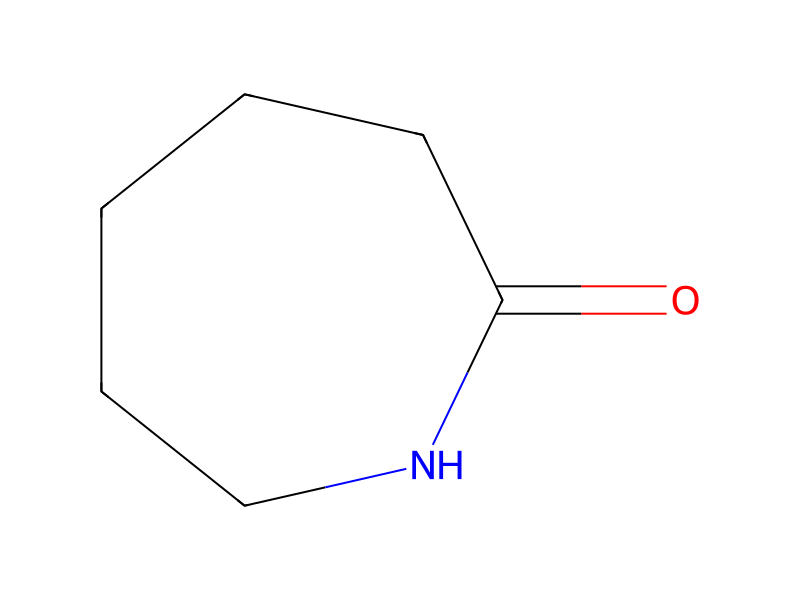
[C:1]1(=[O:8])[NH:7][CH2:6][CH2:5][CH2:4][CH2:3][CH2:2]1.NCCCCCC(O)=O.[C:18]([OH:27])(=[O:26])[CH2:19][CH2:20][CH2:21][CH2:22][C:23]([OH:25])=[O:24].[NH2:28][CH2:29][CH2:30][CH2:31][CH2:32][CH2:33][CH2:34][NH2:35]>>[CH2:4]1[CH2:5][CH2:6][NH:7][C:1](=[O:8])[CH2:2][CH2:3]1.[CH2:32]([CH2:33][CH2:34][NH2:35])[CH2:31][CH2:30][CH2:29][NH2:28].[CH2:20]([CH2:19][C:18]([OH:27])=[O:26])[CH2:21][CH2:22][C:23]([OH:25])=[O:24]参加物



実験手順
Any method known in the art can be used to produce the polyamides. The polyamides are generally prepared by melt phase polymerization from a diacid-diamine complex which may be prepared either in situ or in a separate step. In either method, the diacid and diamine are used as starting materials. Alternatively, an ester form of the diacid may be used, preferably the dimethyl ester. If the ester is used, the reaction must be carried out at a relatively low temperature, generally 80 to 120° C., until the ester is converted to an amide. The mixture is then heated to the polymerization temperature. In the case of polycaprolactam, either caprolactam or 6-aminocaproic acid can be used as a starting material and the polymerization may be catalyzed by the addition of adipic acid/hexamethylene diamine salt which results in a nylon 6/66 copolymer. When the diacid-diamine complex is used, the mixture is heated to melting and stirred until equilibration.
後処理
- customphase polymerization from a diacid-diamine complex which
- custommay be prepared either in situ or in a separate step
- customthe reaction
- temperatureThe mixture is then heated to the polymerization temperature
- customthe polymerization
出典と根拠
- ORDレコード
- ord-8bba1f5457294840a651493ae01fdba7
- 出典データセット
- uspto-grants-2010_08
- 特許番号
- US07786252B2
関連ノート
読み込み中…