4-Ethenylphenyl acetate → 3-Hydroxyadamantyl methacrylate vinylphenol
Reaction equation

[C:1]([O:6][C:7]12[CH2:16][CH:11]3[CH2:12][CH:13]([CH2:15][C:9]([OH:17])([CH2:10]3)[CH2:8]1)[CH2:14]2)(=[O:5])[C:2]([CH3:4])=[CH2:3].C(O[C:22]1[CH:29]=[CH:28][C:25]([CH:26]=[CH2:27])=[CH:24][CH:23]=1)(=O)C>>[C:1]([O:6][C:7]12[CH2:14][CH:13]3[CH2:12][CH:11]([CH2:10][C:9]([OH:17])([CH2:15]3)[CH2:8]1)[CH2:16]2)(=[O:5])[C:2]([CH3:4])=[CH2:3].[CH:26]([C:25]1[CH:28]=[CH:29][CH:22]=[CH:23][C:24]=1[OH:5])=[CH2:27]Participants
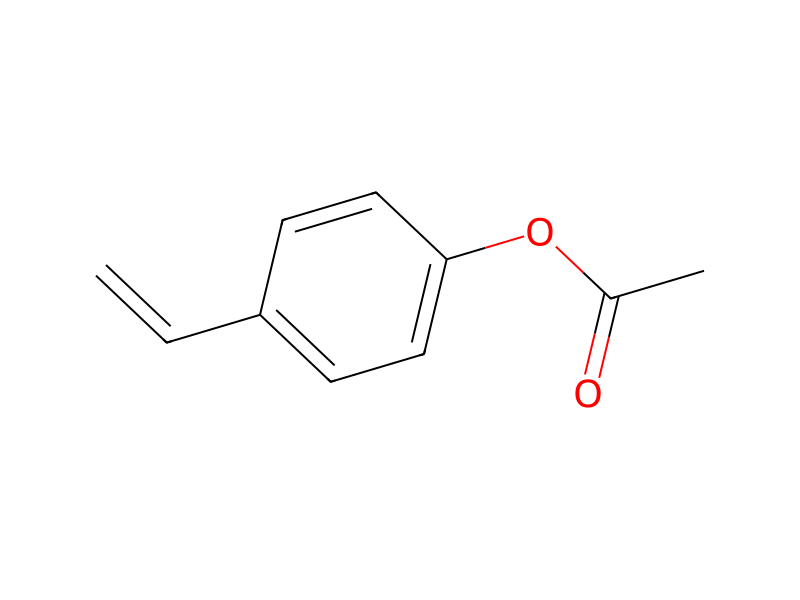


Procedure
3-Hydroxyadamantyl methacrylate and 4-acetoxystyrene were charged at a charge ratio of 2:8 to synthesize a base resin. The resin obtained was treated with an alkali solution to cause soluvolysis of the acetyl group, thereby obtaining a 3-hydroxyadamantyl methacrylate-vinylphenol copolymer (molecular weight: 4,500). To polyvinylphenol produced by Maruzen Sekiyu, 15 wt % of the copolymer obtained was added and the mixture was dissolved in PGMEA (propylene glycol methyl ether acetate). To this solution, 5 wt % of triphenylsulfoium trifluoromethanesulfonate was added and thoroughly dissolved. The thus-obtained resist solution was filtered through a 0.2 μm teflon membrane filter, spin-coated on a silicon substrate subjected to an HMDS treatment, and pre-baked at 110° C. for 60 seconds to form a 0.5 μm-thick resist film. This resist film was exposed by a KrF excimer laser stepper (NA=0.45), baked at 120° C. for 60 seconds, developed with a 2.38% tetramethylammonium hydroxide (TMAH) developer, and rinsed with deionized water. With an exposure amount of 12.0 mJ/cm2, a resolution of 0.25 μmL/S was obtained. In this resist pattern, swelling was not generated.
Workup
- customto synthesize a base resin
- customThe resin obtained
- additionwas treated with an alkali solution
Sources & evidence
- ORD record
- ord-801daea3578d4d18b255ae5702214638
- Source dataset
- uspto-grants-2004_09
- Patent number
- US06794113B2
Reaction notes
Loading…