2-(4-Bromophenyl)quinoline → 2-[4,4''-Di(2-quinolyl)-1,1':3',1''-terphenyl-5-yl]-4,6-di-p-tolyl-1,3,5-triazine
Reaction equation

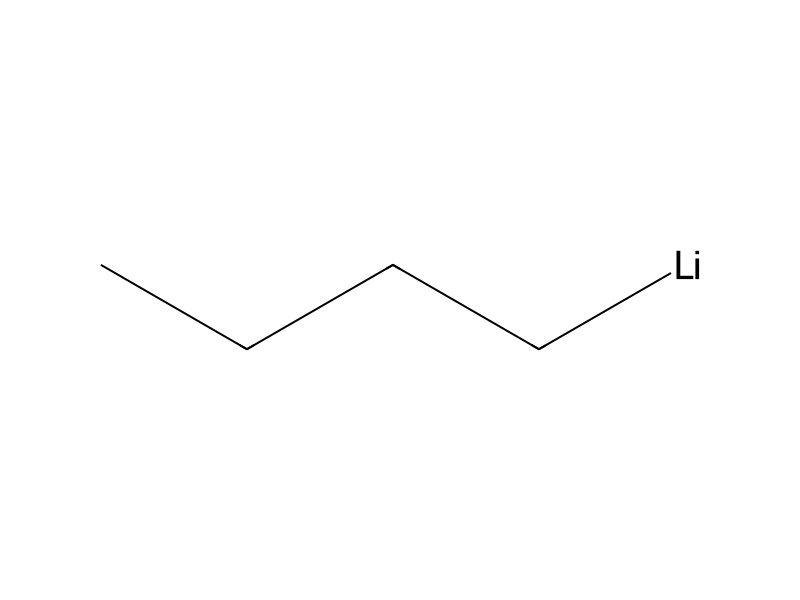
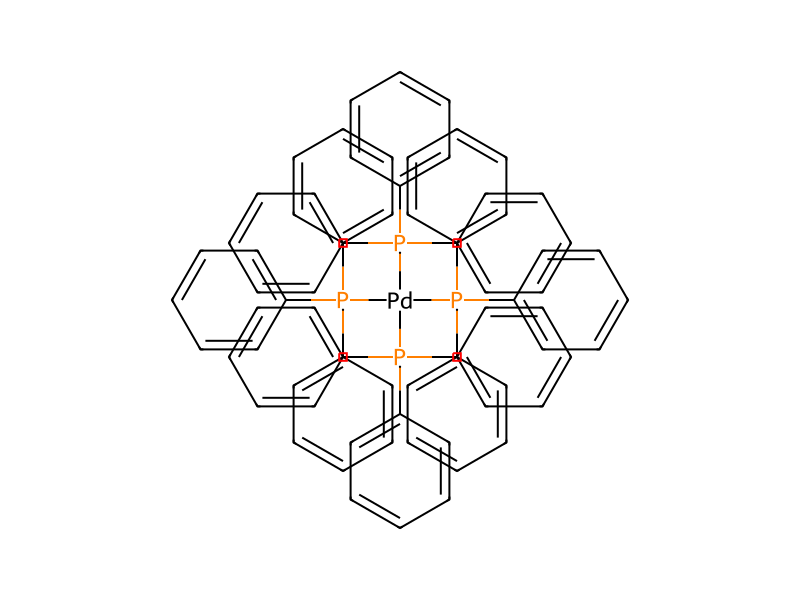
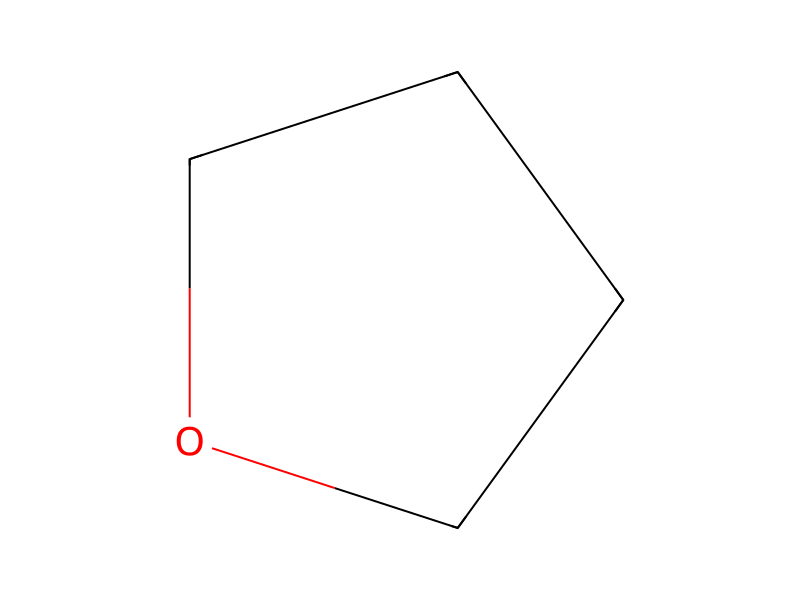
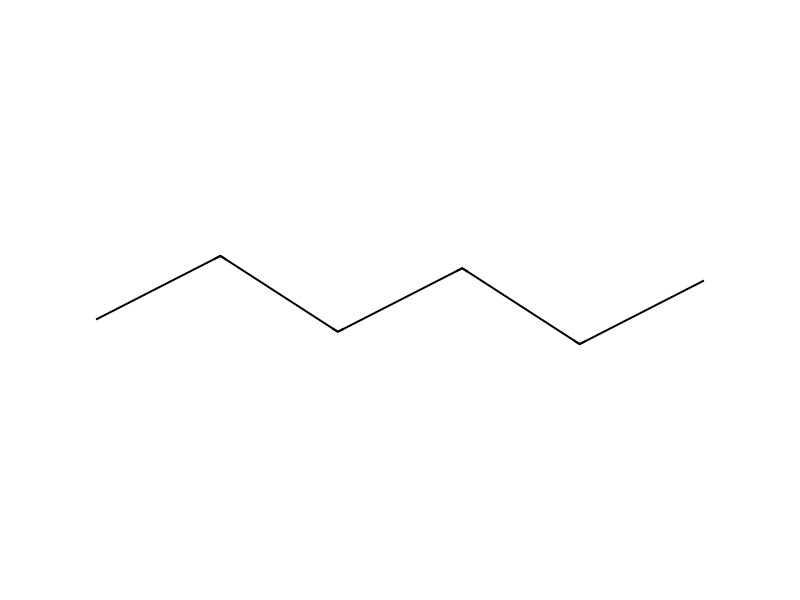
Br[C:2]1[CH:7]=[CH:6][C:5]([C:8]2[CH:17]=[CH:16][C:15]3[C:10](=[CH:11][CH:12]=[CH:13][CH:14]=3)[N:9]=2)=[CH:4][CH:3]=1.[CH2:18]([Li])[CH2:19][CH2:20][CH3:21].Br[C:24]1[CH:25]=[C:26]([C:31]2[N:36]=[C:35]([C:37]3[CH:42]=[CH:41][C:40]([CH3:43])=[CH:39][CH:38]=3)[N:34]=[C:33]([C:44]3[CH:49]=[CH:48][C:47]([CH3:50])=[CH:46][CH:45]=3)[N:32]=2)[CH:27]=[C:28](Br)[CH:29]=1>O1CCCC1.CCCCCC.C1C=CC([P]([Pd]([P](C2C=CC=CC=2)(C2C=CC=CC=2)C2C=CC=CC=2)([P](C2C=CC=CC=2)(C2C=CC=CC=2)C2C=CC=CC=2)[P](C2C=CC=CC=2)(C2C=CC=CC=2)C2C=CC=CC=2)(C2C=CC=CC=2)C2C=CC=CC=2)=CC=1>[N:9]1[C:8]2[C:21](=[CH:2][CH:3]=[CH:4][CH:5]=2)[CH:20]=[CH:19][C:18]=1[C:25]1[C:26]([C:31]2[N:36]=[C:35]([C:37]3[CH:42]=[CH:41][C:40]([CH3:43])=[CH:39][CH:38]=3)[N:34]=[C:33]([C:44]3[CH:49]=[CH:48][C:47]([CH3:50])=[CH:46][CH:45]=3)[N:32]=2)=[CH:27][C:28]([C:15]2[CH:10]=[CH:11][CH:12]=[C:13]([C:2]3[CH:7]=[CH:6][C:5]([C:8]4[CH:17]=[CH:16][C:15]5[C:10](=[CH:11][CH:12]=[CH:13][CH:14]=5)[N:9]=4)=[CH:4][CH:3]=3)[CH:14]=2)=[CH:29][CH:24]=1Participants
Reactant 3


Product 1

Reagents, catalysts & solvents 3
Procedure
In a stream of argon, 2.58 g (9.09 mmol) of 2-(4-bromophenyl) quinoline was dissolved in 20 mL of tetrahydrofuran. To the thus-obtained solution, 6.01 mL of a solution in hexane of 9.70 mmol of butyllithium was dropwise added at −78° C. The resultant mixture was stirred at −78° C. for 15 minutes, and then 2.45 g (9.70 mmol) of dichloro(tetramethylethylene-diamine)zinc(II) was added. Temperature of the resultant mixture was elevated to room temperature, and stirred for 1.5 hours. The resultant mixture, and 1.50 g (3.03 mmol) of 2-(3,5-dibromophenyl)-4,6-di-p-tolyl-1,3,5-triazine, and 420 mg (0.364 mmol) of tetrakis(triphenylphosphine)palladium were suspended in 30 mL of tetrahydrofuran, and the obtained suspension was heated under reflux with stirring for 15 hours. The reaction mixture was cooled to room temperature, and was then distilled under a reduced pressure to remove low boiling ingredients. Methanol was added to the concentrate and the thus-deposited solid was filtered. The thus-obtained crude product was purified by silica gel chromatography using a methanol/chloroform (1:100-2:100) mixed liquid as a developing solvent to give 2.03 g of the target 2-[4,4″-di(2-quinolyl)-1,1′:3′,1″-terphenyl-5-yl]-4,6-di-p-tolyl-1,3,5-triazine as a white solid (yield: 90%).
Workup
- customwas elevated to room temperature
- temperaturethe obtained suspension was heated
- temperatureunder reflux
- stirringwith stirring for 15 hours
- distillationwas then distilled under a reduced pressure
- customto remove low boiling ingredients
- additionMethanol was added to the
- concentrationconcentrate
- filtrationthe thus-deposited solid was filtered
- customThe thus-obtained crude product
- customwas purified by silica gel chromatography
- additionmixed liquid as a developing solvent
Sources & evidence
- ORD record
- ord-8be869e0c42940d3830baafcdbcb0d6e
- Source dataset
- uspto-grants-2014_05
- Patent number
- US08735577B2
Reaction notes
Loading…