Methanol → 5-(4-(Trifluoromethyl)phenyl)oxazole
Reaction equation

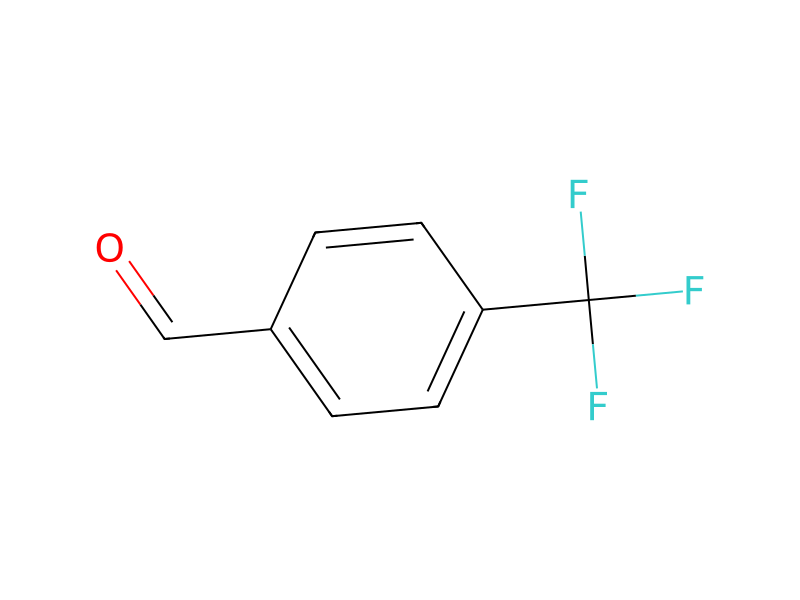
[F:1][C:2]([F:12])([F:11])[C:3]1[CH:10]=[CH:9][C:6]([CH:7]=[O:8])=[CH:5][CH:4]=1.CO.C1(C)C=CC(S([CH2:24][N+:25]#[C-:26])(=O)=O)=CC=1.C(=O)([O-])[O-].[K+].[K+]>CC(C)=O.CCCCCC>[F:1][C:2]([F:11])([F:12])[C:3]1[CH:10]=[CH:9][C:6]([C:7]2[O:8][CH:26]=[N:25][CH:24]=2)=[CH:5][CH:4]=1Participants




Procedure
To a 250 mL round-bottom flask was added 4-(trifluoromethyl)benzaldehyde (4.50 g, 25.84 mmol), methanol (100 mL), p-toluene sulfonylmethyl isocyanide (5.55 g, 28.42 mmol), followed by potassium carbonate (4.60 g, 33.33 mmol). The reaction mixture was stirred at reflux for about 1 hour and followed by TLC. The solvent was then evaporated and saturated aq.NaHCO3 was added. The resultant suspension was extracted with CH2Cl2 (3×20 mL). Combined organic layers were washed with brine, dried (anhydrous Na2SO4), and concentrated to leave a yellow solid. The product was purified by MPLC column chromatography (Biotage; Acetone/hexane as an eluent) to provide 5-(4-(trifluoromethyl)phenyl)oxazole 30 (5.38 g, 98% yield) as white solid. MS (ES) m/z 214 (M+H+).
Workup
- temperatureat reflux for about 1 hour
- customThe solvent was then evaporated
- additionNaHCO3 was added
- extractionThe resultant suspension was extracted with CH2Cl2 (3×20 mL)
- washCombined organic layers were washed with brine
- dry with materialdried (anhydrous Na2SO4)
- concentrationconcentrated
- customto leave a yellow solid
- customThe product was purified by MPLC column chromatography (Biotage
Sources & evidence
- ORD record
- ord-2c80ca6982df4956818972c395a22bd6
- Source dataset
- uspto-grants-2013_10
- Patent number
- US08551992B2
Reaction notes
Loading…