Hydrogen Bromide → methyl 5-bromo-2-methyl-3-((tetrahydro-2H-pyran-4-yl)amino)benzoate
Reaction equation

Br.[NH2:2][C:3]1[C:4]([CH3:14])=[C:5]([CH:10]=[C:11]([Br:13])[CH:12]=1)[C:6]([O:8][CH3:9])=[O:7].[O:15]1[CH2:20][CH2:19][C:18](=O)[CH2:17][CH2:16]1>>[Br:13][C:11]1[CH:12]=[C:3]([NH:2][CH:18]2[CH2:19][CH2:20][O:15][CH2:16][CH2:17]2)[C:4]([CH3:14])=[C:5]([CH:10]=1)[C:6]([O:8][CH3:9])=[O:7]Participants

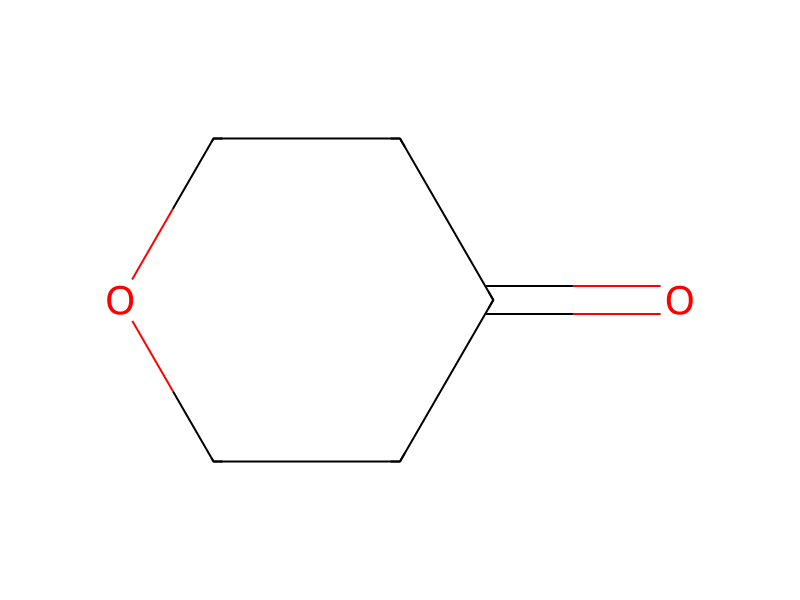


Procedure
Scheme 1 below outlines a particular embodiment for the production of the free base of Compound I, as well as the hydrobromide of Compound I. Briefly, methyl 3-amino-5-bromo-2-methylbenzoate (1) is reacted with dihydro-2H-pyran-4(3H)-one under reductive amination conditions to form methyl 5-bromo-2-methyl-3-((tetrahydro-2H-pyran-4-yl)amino)benzoate (2) in step 1. In step 2, reductive amination is again used to form 5-bromo-3-(ethyl(tetrahydro-2H-pyran-4-yl)amino)-2-methylbenzoate (3). This compound is then reacted under Suzuki coupling conditions in step 3 to form methyl 5-(ethyl(tetrahydro-2H-pyran-4-yl)amino)-4-methyl-4′-(morpholinomethyl)-[1,1′-biphenyl]-3-carboxylate (4), which is hydrolyzed to the corresponding acid (5) in step 4. In step 5, acid (5) is reacted under amide coupling reaction conditions with 3-(aminomethyl)-4,6-dimethyl-dihydro-pyridin-2(1H)-one hydrochloride to form Compound I.
Sources & evidence
- ORD record
- ord-9ea4a28c692947058730559e4224ebaf
- Source dataset
- uspto-grants-2016_07
- Patent number
- US09394283B2
Reaction notes
Loading…