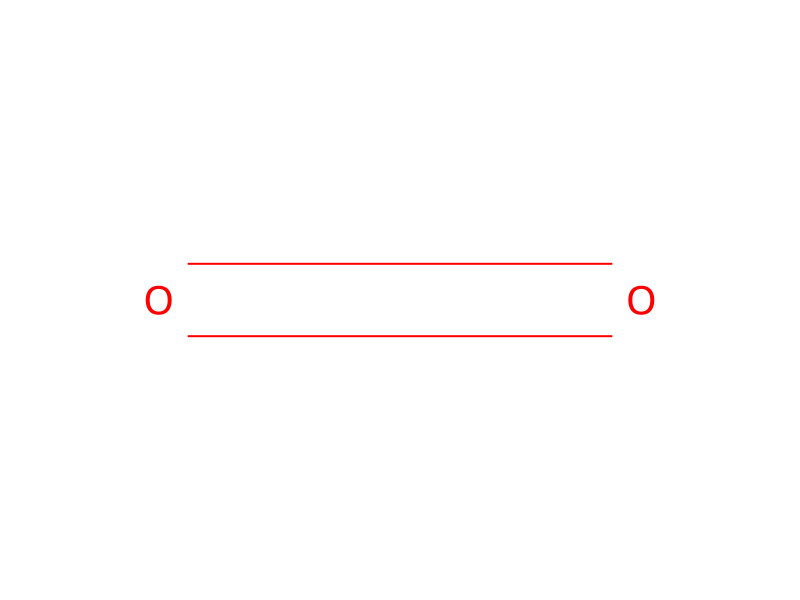
Oxygen → Perhydroxyl radical
Reaction equation

CC([C@@H]1[C@@]2(C)CC[C@@H]3[C@]4(C)C(=CC(CC4)=O)CC[C@H]3[C@@H]2CC1)=[O:3].[CH3:24][C:25]([C@:27]1([OH:47])[C@@:31]2([CH3:46])[CH2:32][CH2:33][C@@H:34]3[C@:44]4([CH3:45])[C:38](=[CH:39][C:40]([CH2:42][CH2:43]4)=[O:41])[CH2:37][CH2:36][C@H:35]3[C@@H:30]2[CH2:29][CH2:28]1)=[O:26].C(OC1CC[C@@]2(C)C(=CC[C@@H]3[C@@H]2CC[C@@]2(C)[C@H]3CC[C@@H]2C(=O)C)C=1)C.[O:73]=[O:74].[K]>O1CCCC1.CN(C)C=O.C(O)(C)(C)C>[O-:73][OH:74].[CH3:24][C:25]([C@:27]1([O:47][OH:3])[C@@:31]2([CH3:46])[CH2:32][CH2:33][C@@H:34]3[C@:44]4([CH3:45])[C:38](=[CH:39][C:40]([CH2:42][CH2:43]4)=[O:41])[CH2:37][CH2:36][C@H:35]3[C@@H:30]2[CH2:29][CH2:28]1)=[O:26]Participants
Reactant 5


Product 2


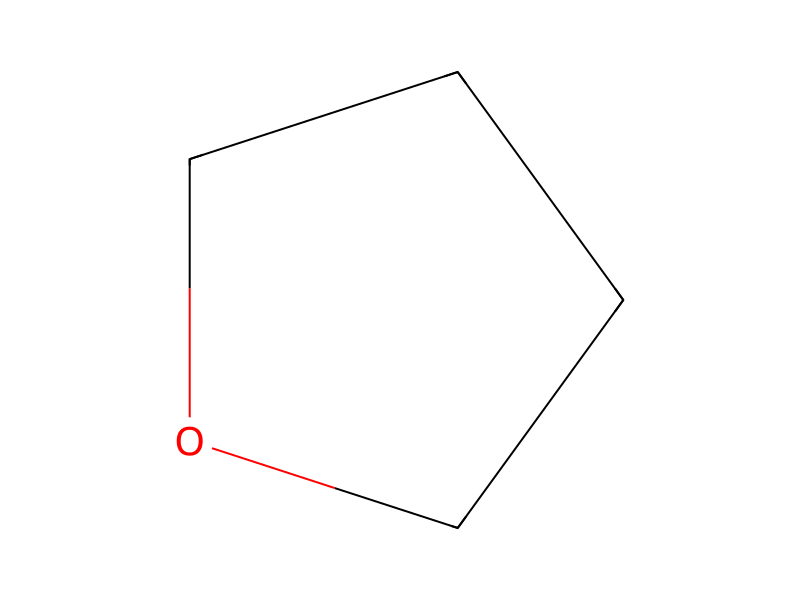
Reagents, catalysts & solvents 3

Procedure
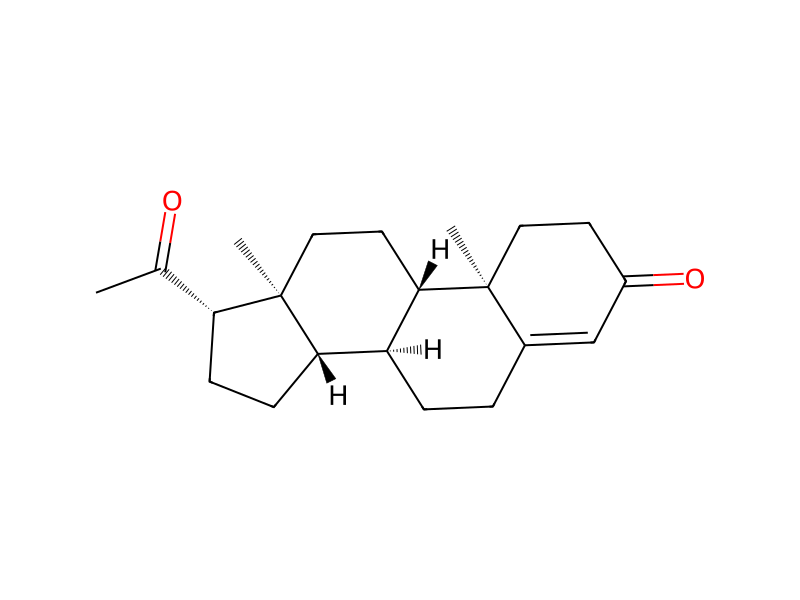
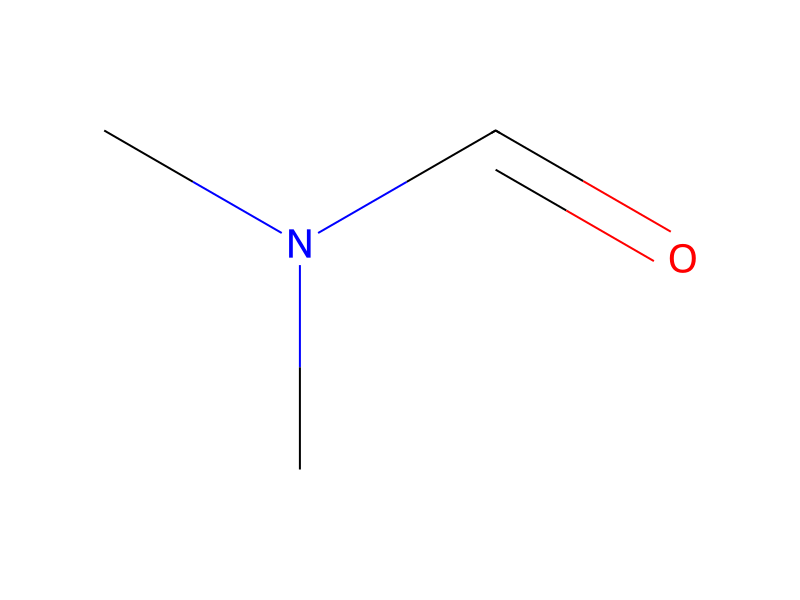
The direct introduction of a hydroxyl group at the 17 position of progesterone, protected as its Δ3,5 methyl enol ether, would be a valuable process for the synthesis of 17α-hydroxyprogesterone, and could be readily adapted to other corticosteroid intermediates. Unfortunately, this oxidation has heretofore been a poor process. D. Barton [J. Chem. Soc., 1578(1962)] developed a method for the hydroperoxylation of the 17(20)-enolate of 3-ethoxypregna-3,5-dien-20-one using oxygen and potassium and tert-butyl alcohol, dimethylformamide (DMF), and tetrahydrofuran (THF). The intermediate hydroperoxide was isolated in 30% yield and hydrolyzed to 17α-hydroperoxyprogesterone in 75% yield. This process was ultimately improved when J. Garnder [J. Org. Chem., 33, 3294(1968)] found that the addition of trialkylphosphites reduced the intermediate hydroperoxide to the alcohol in situ and was stable to the reaction conditions. Gardner used his modifications of the Barton procedure to oxygenate pregnen-20-ones to their 17α-hydroxy compounds; in a similar fashion, pregnan-20-ones, were converted in yields between 60-70 %.
Sources & evidence
- ORD record
- ord-1b9133fb2ea648afbbcac32ba201a661
- Source dataset
- uspto-grants-1982_05
- Patent number
- US04329294
Reaction notes
Loading…