Methyl bromoacetate → 2-cyclopropyl-5-methoxyl-1H-indole-3-acetic acid methyl ester
Reaction equation
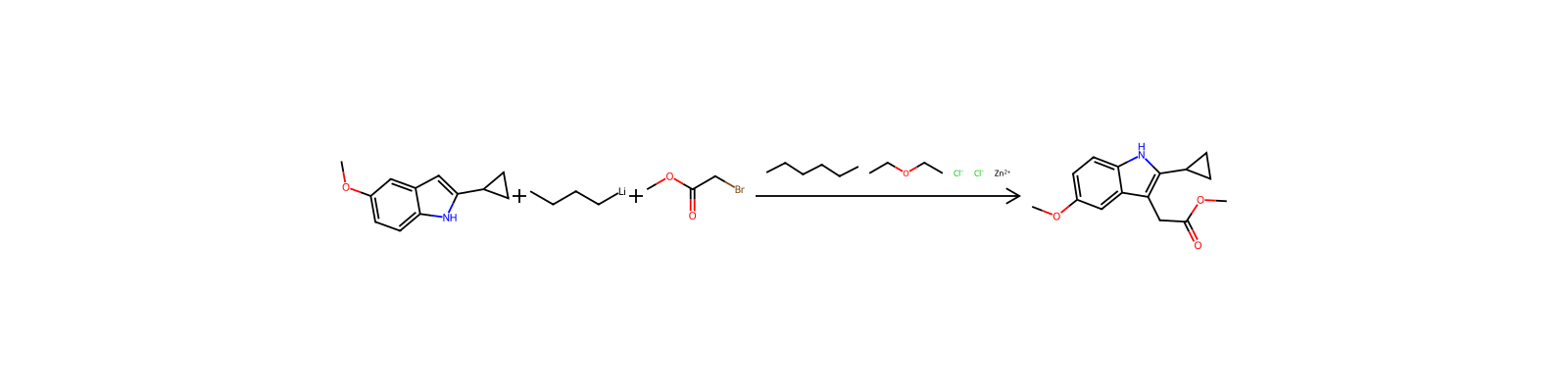
[CH:1]1([C:4]2[NH:5][C:6]3[C:11]([CH:12]=2)=[CH:10][C:9]([O:13][CH3:14])=[CH:8][CH:7]=3)[CH2:3][CH2:2]1.C([Li])CCC.Br[CH2:21][C:22]([O:24][CH3:25])=[O:23]>CCCCCC.CCOCC.[Cl-].[Cl-].[Zn+2]>[CH3:25][O:24][C:22](=[O:23])[CH2:21][C:12]1[C:11]2[C:6](=[CH:7][CH:8]=[C:9]([O:13][CH3:14])[CH:10]=2)[NH:5][C:4]=1[CH:1]1[CH2:3][CH2:2]1Participants
7







Procedure
As in Example 1, Part C, 4.46 g (0.024 mole) of 2-cyclopropyl-5-methoxy-1H-indole was treated with 15 mL (0.024 mol) of a 1.6M solution of n-butyl lithum in hexane, 24 ml (0.024 mol) of a 1M solution of ZnCl2 in ether, and 12.27 mL (0.024 mol) of methyl 2-bromoacetate to give after chromatography on silica gel (5% EtOAc/toluene→15% EtOAc/toluene) 3.81 g (61%) of 2-cyclopropyl-5-methoxy-1H-indole-3-acetic acid methyl ester as an oil.
Sources & evidence
- ORD record
- ord-1d3e00c4ab214f5b886c58df2d5ce28a
- Source dataset
- uspto-grants-2001_06
- Patent number
- US06252084B1
Reaction notes
Loading…