Hydrochloric Acid → (R)-3-hydroxytetradecanoic acid
Reaction equation

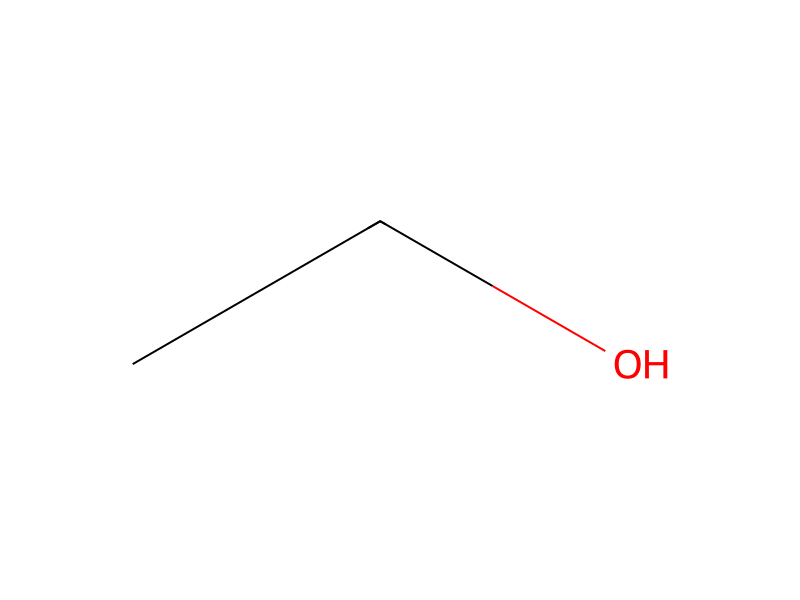
[O:1]=[C:2]([CH2:8][CH2:9][CH2:10][CH2:11][CH2:12][CH2:13][CH2:14][CH2:15][CH2:16][CH2:17][CH3:18])[CH2:3][C:4]([O:6]C)=[O:5].Cl.[H][H].[OH-].[Na+].S(=O)(=O)(O)O>CO.C(O)C>[OH:1][C@H:2]([CH2:8][CH2:9][CH2:10][CH2:11][CH2:12][CH2:13][CH2:14][CH2:15][CH2:16][CH2:17][CH3:18])[CH2:3][C:4]([OH:6])=[O:5]Participants


Procedure
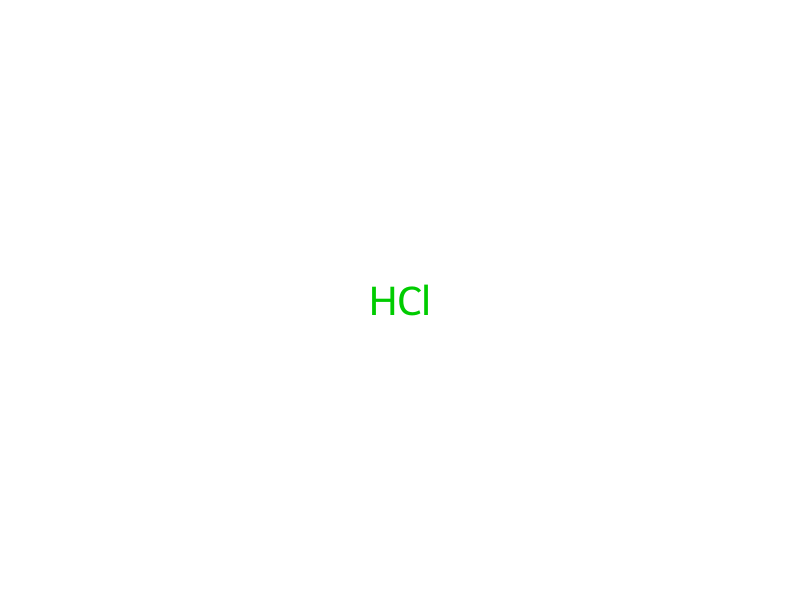
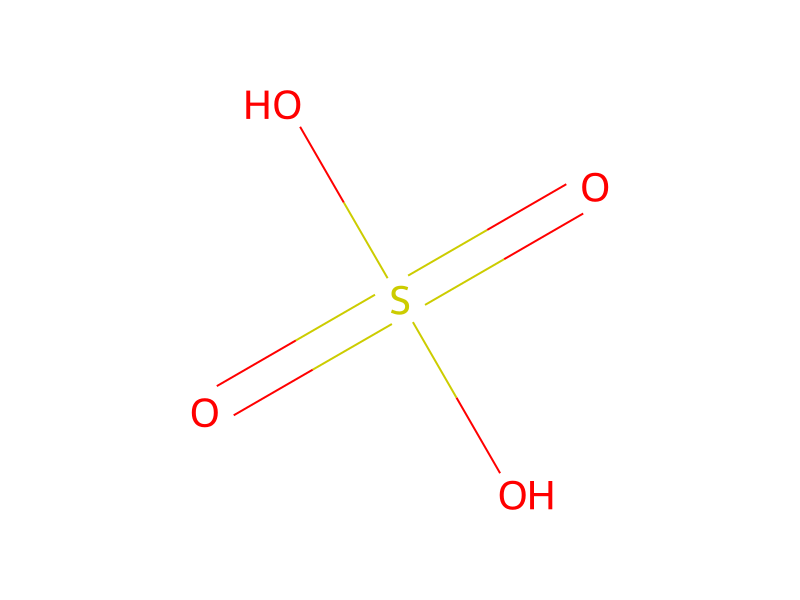
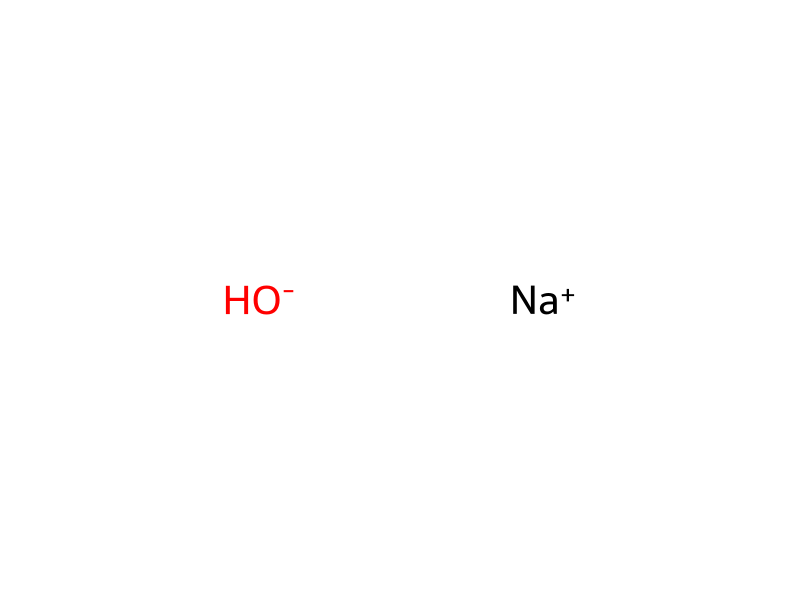
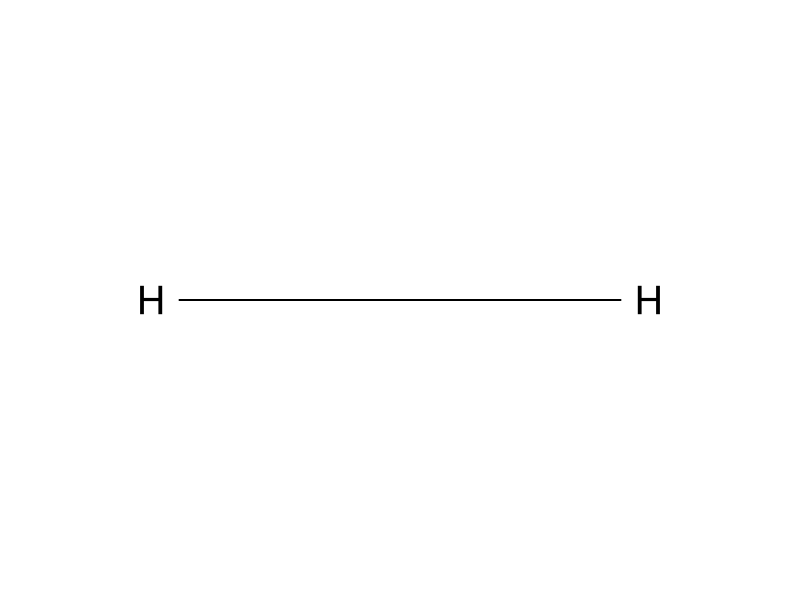
Typically, hydrogenation of β-ketoester XVI, e.g., methyl 3-oxotetradecanoate, is conducted in a conventional hydrogenation solvent including an alkyl alcohol, such as ethanol or preferably in methanol, at a reaction temperature of about 80° C. The concentration of the substrate (i.e., β-ketoester XVI) in hydrogenation reaction is generally at about 40 wt %, and the ratio of HCl to Ru(OAc)2((R)-MeOBIPHEP) in the hydrogenation catalyst is about 20:1. A typical ratio of methyl 3-oxotetradecanoate to the hydrogenation catalyst is about 50,000:1. To this reaction mixture, typically about 40 bar of technical grade hydrogen gas is added, and the reaction is allowed to proceed for about 4 hours (h). The resulting methyl (R)-3-hydroxy tetradecanoate is then saponified by diluting the crude hydrogenation solution in methanol and 28% aqueous sodium hydroxide solution at room temperature. The saponified product is then acidified with an acid, such as sulfuric acid, to isolate (R)-3-hydroxy tetradecanoic acid. In this manner, the β-hydroxy acid IIA, such as(R)-3-hydroxy tetradecanoic acid, can be produced in at least about 90% isolated yield from the corresponding β-ketoester XVI, more preferably in at least about 93% isolated yield and most preferably in at least about 95% isolated yield. The enantiomeric excess of the product is at least about 90%ee, preferably at least about 95%ee, and more preferably at least about 99%ee. The enantiomeric excess can be increased to at least about 95%ee after a single recrystallization, preferably at least about 99%ee, and most preferably at least about 99.5%ee.
Workup
- customat a reaction temperature of about 80° C
- customat room temperature
Sources & evidence
- ORD record
- ord-32c7cb6714ce48699ca6e954c64190c1
- Source dataset
- uspto-grants-2003_04
- Patent number
- US06552204B1
Reaction notes
Loading…