2,6-Dichlorobenzamide → EL 494
Reaction equation

[Cl:1][C:2]1[CH:10]=[CH:9][CH:8]=[C:7]([Cl:11])[C:3]=1[C:4]([NH2:6])=[O:5].C([Li])CCC.Cl[C:18](OC1C=CC([N+]([O-])=O)=CC=1)=[O:19].[NH2:30][C:31]1[CH:36]=[N:35][C:34]([C:37]2[CH:42]=[CH:41][C:40]([Br:43])=[CH:39][CH:38]=2)=[C:33]([CH3:44])[N:32]=1>O1CCCC1>[Cl:1][C:2]1[CH:10]=[CH:9][CH:8]=[C:7]([Cl:11])[C:3]=1[C:4]([NH:6][C:18]([NH:30][C:31]1[CH:36]=[N:35][C:34]([C:37]2[CH:38]=[CH:39][C:40]([Br:43])=[CH:41][CH:42]=2)=[C:33]([CH3:44])[N:32]=1)=[O:19])=[O:5]Participants
Reactant 4

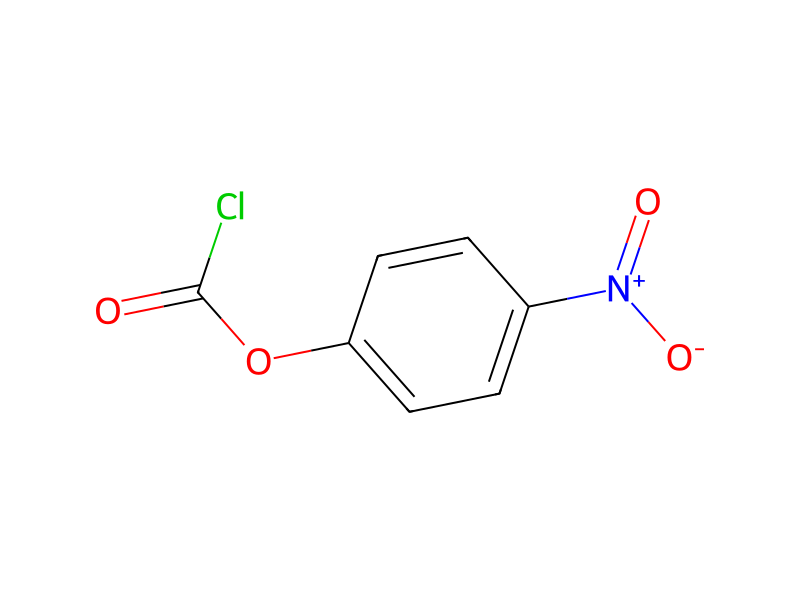


Product 1

Reagents, catalysts & solvents 1

Conditions
- Temperature
- -72 °C
Procedure
A solution of 304 mg. of 2,6-dichlorobenzamide and 25 ml. of dry tetrahydrofuran was placed in a 3-necked, 50 ml. round bottomed flask. With mechanical stirring and under nitrogen the solution was cooled to about -72° C. in a dry ice/acetone bath. To this solution was added 0.6 ml. of n-butyllithium reagent over a period of 5 minutes. After the addition was complete, the mixture was stirred for 30 minutes at about -72° C. A solution of 268 ml. of 4-nitrophenyl chloroformate in 8 ml. of dry tetrahydrofuran was added dropwise over a period of 15 to 20 minutes. A pale yellow solution formed. After the addition was complete, the mixture was stirred for 30 minutes at about -72° C. giving a colorless solution. The cooling bath was adjusted so that the temperature was raised to between -40° C. and -30° C. and stirring was continued for 3 hours. The mixture was recooled to approximately -72° C. and a solution of 351 mg. of 2-amino-5-(4-bromophenyl)-6-methylpyrazine in 6 ml. of dry tetrahydrofuran was added dropwise over a period of 10 minutes. The cooling bath was removed allowing the mixture to warm to room temperature. The mixture was then heated at 50° C. for 16 hours to complete the reaction. The solvent was removed in vacuo and the residue was taken up in ethyl acetate. The ethyl acetate solution was washed 5 times with aqueous sodium carbonate solution and twice with salt water. The solvent was again evaporated and the residue dissolved in 2 ml. of tetrahydrofuran and chromatographed over silica gel using 4:1 benzene/tetrahydrofuran. The product from chromatography was dissolved in tetrahydrofuran and the solution concentrated in vacuo to an oil. Ether was added and the solution was cooled to precipitate in 2 crops 240 mg. of product. Recrystallization from tetrahydrofuran/ether yielded 132 mg. of product, m.p. 225°-227° C. An additional 69 mg. of product was obtained from the filtrate by preparative thin-layer chromatography.
Workup
- additionTo this solution was added 0.6 ml
- additionAfter the addition
- stirringthe mixture was stirred for 30 minutes at about -72° C
- customA pale yellow solution formed
- additionAfter the addition
- stirringthe mixture was stirred for 30 minutes at about -72° C.
- customgiving a colorless solution
- temperaturewas raised to between -40° C. and -30° C.
- stirringstirring
- customwas recooled to approximately -72° C.
- customThe cooling bath was removed
- temperatureto warm to room temperature
- temperatureThe mixture was then heated at 50° C. for 16 hours
- customthe reaction
- customThe solvent was removed in vacuo
- washThe ethyl acetate solution was washed 5 times with aqueous sodium carbonate solution
- customThe solvent was again evaporated
- dissolutionthe residue dissolved in 2 ml
- customof tetrahydrofuran and chromatographed over silica gel using 4:1 benzene/tetrahydrofuran
- dissolutionThe product from chromatography was dissolved in tetrahydrofuran
- concentrationthe solution concentrated in vacuo to an oil
- additionEther was added
- temperaturethe solution was cooled
- customto precipitate in 2 crops 240 mg
- customRecrystallization from tetrahydrofuran/ether
- customyielded 132 mg
- customof product was obtained from the filtrate by preparative thin-layer chromatography
Sources & evidence
- ORD record
- ord-d04bbd84595d48b3bb19c20c8260d05d
- Source dataset
- uspto-grants-1981_03
- Patent number
- USRE030563
Reaction notes
Loading…