Acetophenone → Phenacyl bromide
Reaction equation

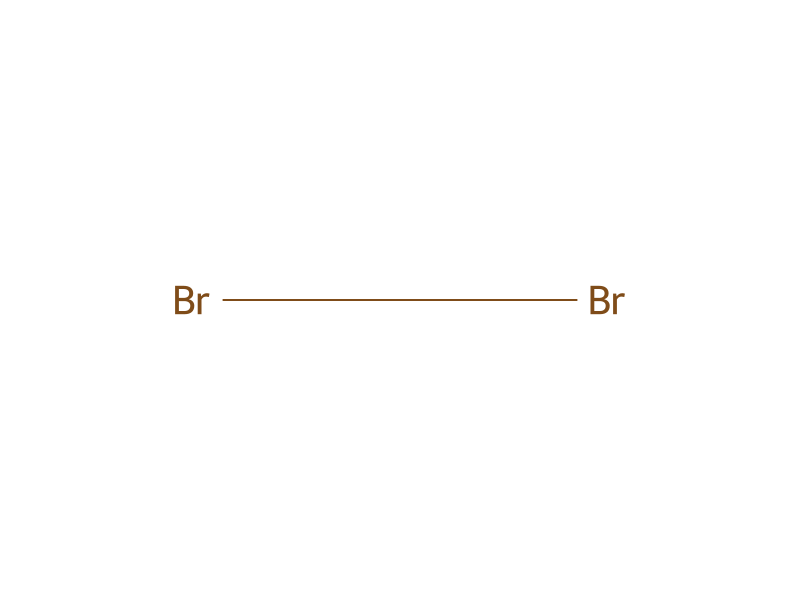
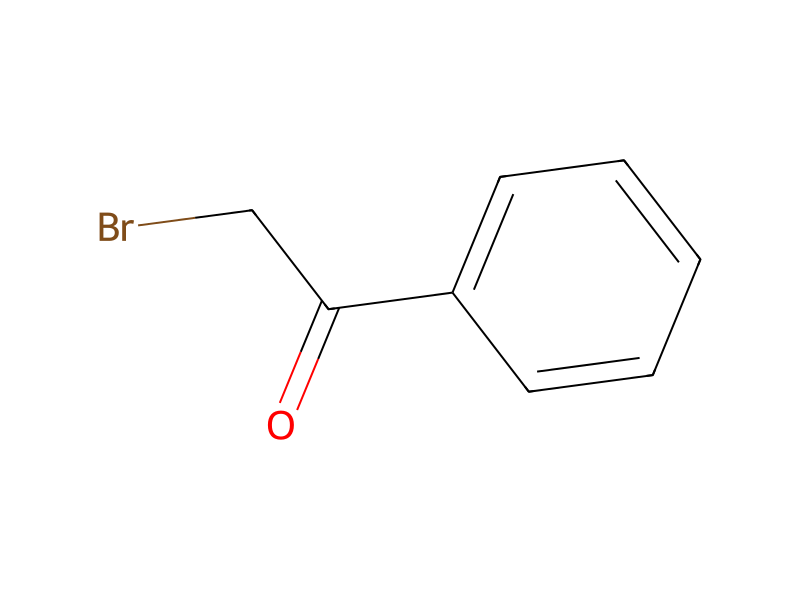
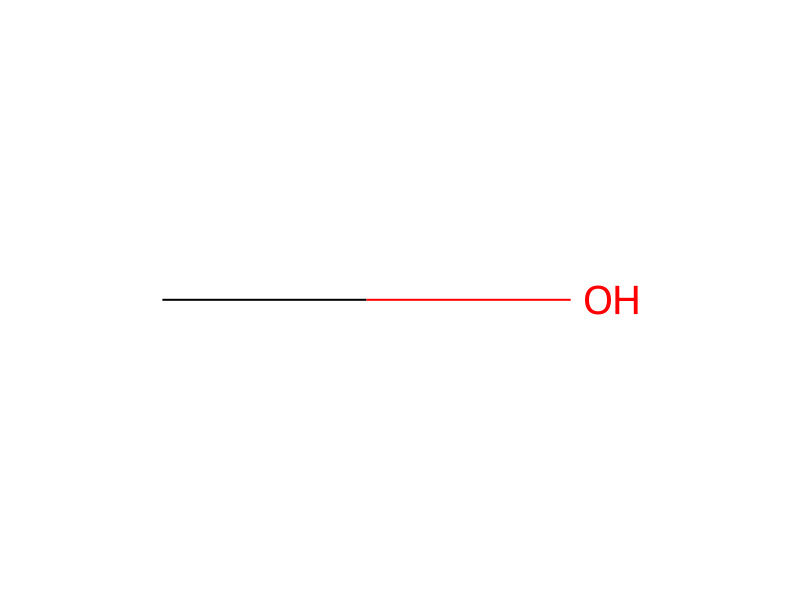
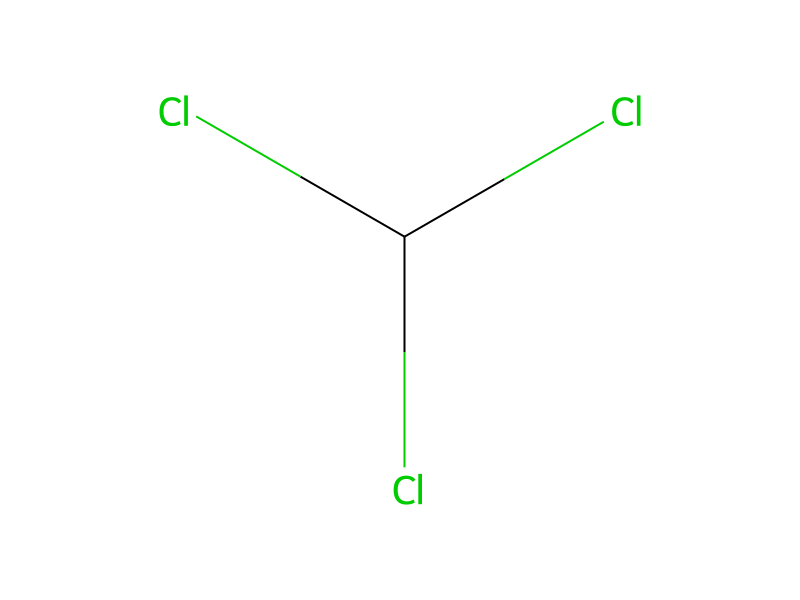
[CH3:1][C:2]([C:4]1[CH:9]=[CH:8][C:7](OCC2C=CC=CC=2)=[C:6]([N+]([O-])=O)[CH:5]=1)=[O:3].C(C1C=CC=CC=1)(=O)C.[Br:30]Br.[Br-].[Br-].[Br-].[NH+]1C=CC=CC=1.[NH+]1C=CC=CC=1.[NH+]1C=CC=CC=1>C(Cl)(Cl)Cl.CO.CC#N>[Br:30][CH2:1][C:2]([C:4]1[CH:9]=[CH:8][CH:7]=[CH:6][CH:5]=1)=[O:3]Participants



Procedure
The optically pure epoxide (FAE) is prepared from commercially available 4-benzyloxy-3-nitroacetophenone. Thus, the acetophenone may be brominated with bromine or pyridinium tribromide in an inert organic solvent such as CH3CN, MeOH or chloroform to give the α-bromoacetophenone. The bromoacetophenone is then reduced with a borane reducing agent, such as BH3.THF, BH3.diethylaniline or BH3Me2S, in the presence of a chiral oxazaborolidine catalyst, such as cis-(1R,2S)-aminoindanol-B-Me catalyst, to give the optically active bromohydrin after isolation by crystallization in >96% ee. The bromohydrin can be further enriched to >98% ee by recrystallization. The absolute configuration of the bromohydrin is determined by the chirality of the oxazaborolidine catalyst. The nitro group in the bromohydrin is selectively reduced to the amine group using a reducing agent known for selective nitro reduction, such as Sn, Fe with acid, SnCl2 or by heterogeneous catalytic hydrogenation in the presence of a noble metal catalyst such as PtO2 or Pt/C. Catalytic hydrogenation is cleaner if a noble metal catalyst such as platinum on carbon poisoned with dimethyl sulfide is used. The amine group is then formylated with a mixture of formic acid and acetic anhydride without racemization, and the resulting compound is converted to optically pure 4-benzyloxy-3-formamidostyrene oxide with a base such as aq. NaOH or K2CO3 in an alcohol solvent or solvent mixture such as MeOH/THF. The epoxide obtained can be purified by recrystallization from an inert organic solvent or solvent mixture, preferably from EtOAc/heptane or toluene/heptane.
Sources & evidence
- ORD record
- ord-9da8e8fd9d0d45bba3bc7937bc6431a6
- Source dataset
- uspto-grants-2001_07
- Patent number
- US06268533B1
Reaction notes
Loading…