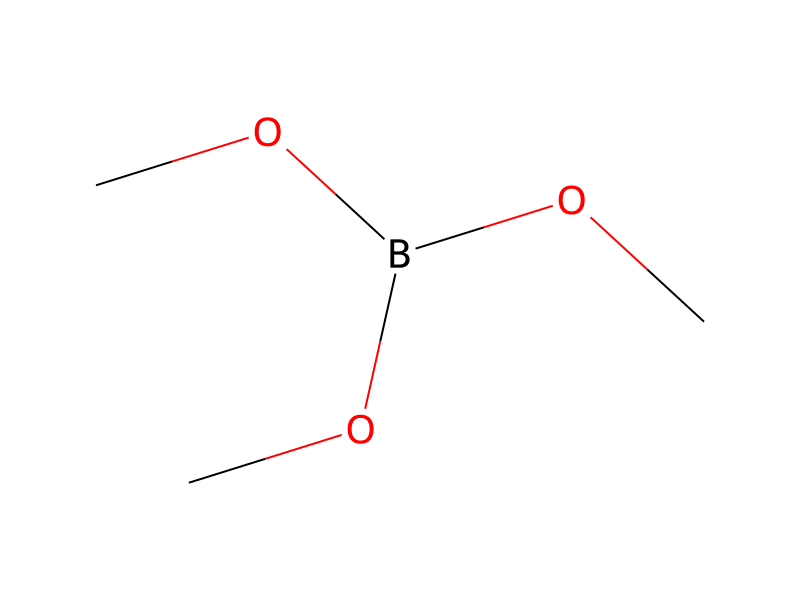
Trimethyl borate → 1H-Imidazo[4,5-c]pyridin-7-ol, 2-(4-amino-1,2,5-oxadiazol-3-yl)-1-ethyl-
Reaction equation

Br[C:2]1[C:3]2[N:10]([CH2:11][CH3:12])[C:9]([C:13]3[C:14]([NH2:18])=[N:15][O:16][N:17]=3)=[N:8][C:4]=2[CH:5]=[N:6][CH:7]=1.C([Li])CCC.C[O:25]B(OC)OC>O1CCCC1>[NH2:18][C:14]1[C:13]([C:9]2[N:10]([CH2:11][CH3:12])[C:3]3[C:2]([OH:25])=[CH:7][N:6]=[CH:5][C:4]=3[N:8]=2)=[N:17][O:16][N:15]=1Participants
Reactant 3


Product 1

Reagents, catalysts & solvents 1

Procedure
A solution of the product from Example 100 (2.6 g, 8.41 mmol) in tetrahydrofuran (180 ml) at −78° C. was treated with a 2.5M solution of n-butyllithium (8.41 ml, 21.03 mmol) in hexanes. After the addition was complete the mixture was treated with trimethylborate (2.62 g, 25.23 mmol) and allowed to reach room temperature. After 1.5 hours at room temperature the reaction was carefully quenched with 3M aq. NaOH (12.5 ml) followed by a 30% aqueous hydrogen peroxide solution (4.3 ml). After 45 minutes the reaction was acidified with 2M hydrochloric acid and then applied to a SCX ion exchange column and eluted with methanol and then a mixture of methanol/0.880 ammonia (9:1). The basic fractions were then reduced and the solid residue was triturated with dichloromethane and filtered to afford the title compound, (1.2 g, 58%); MS (ES+) m/e 247 [M+H]+.
Workup
- additionAfter the addition
- customto reach room temperature
- customAfter 1.5 hours at room temperature the reaction was carefully quenched with 3M aq. NaOH (12.5 ml)
- washeluted with methanol
- additiona mixture of methanol/0.880 ammonia (9:1)
- customthe solid residue was triturated with dichloromethane
- filtrationfiltered
Sources & evidence
- ORD record
- ord-bf588f2e3b4b4f30bded9fc398708daf
- Source dataset
- uspto-grants-2008_03
- Patent number
- US07348339B2
Reaction notes
Loading…