(+-)-1-(tert-Butoxycarbonyl)pyrrolidine-3-carboxaldehyde → tert-Butyl 3-ethenylpyrrolidine-1-carboxylate
Reaction equation

[CH2:1]([Li])CCC.[C:6]([O:10][C:11]([N:13]1[CH2:17][CH2:16][CH:15]([CH:18]=O)[CH2:14]1)=[O:12])([CH3:9])([CH3:8])[CH3:7]>[Br-].C[P+](C1C=CC=CC=1)(C1C=CC=CC=1)C1C=CC=CC=1.C1COCC1>[C:6]([O:10][C:11]([N:13]1[CH2:17][CH2:16][CH:15]([CH:18]=[CH2:1])[CH2:14]1)=[O:12])([CH3:9])([CH3:8])[CH3:7]Participants



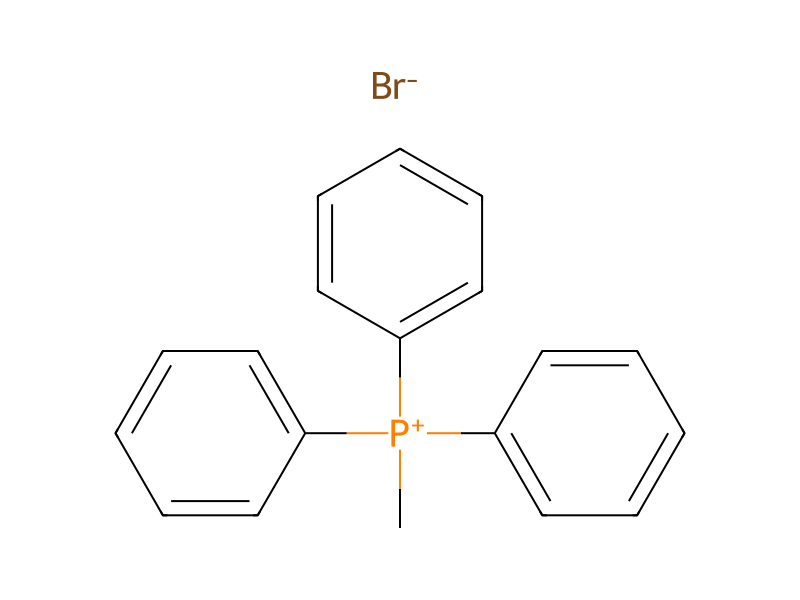

Conditions
- Temperature
- 0 °C
Procedure
To a suspension consisting of methyl triphenylphosphonium bromide (4.76 g, 13.3 mmol) and THF (20 mL) at 0° C. was added n-butyl lithium (1.6 M solution in hexanes, 8.3 mL). The resulting orange solution was stirred at 0° C. for 5 min. A solution consisting of 3-formyl-pyrrolidine-1-carboxylic acid tert-butyl ester (2.50 g, 12.5 mmol) and THF (15 mL) was then added via cannula. The reaction mixture was stirred at 0° C. and was warmed to rt over 2.5 h. The reaction mixture was then cooled to 0° C., quenched with sat. NH4Cl, and extracted with Et2O. The organic layer was combined, dried (MgSO4) and concentrated. The crude residue was suspended in hot hexanes and filtered. The filtrate was concentrated and purified (FCC) to give the title compound (1.7 g, 70%).
Workup
- additionwas then added via cannula
- stirringThe reaction mixture was stirred at 0° C.
- temperaturewas warmed to rt over 2.5 h
- temperatureThe reaction mixture was then cooled to 0° C.
- customquenched with sat. NH4Cl
- extractionextracted with Et2O
- dry with materialdried (MgSO4)
- concentrationconcentrated
- filtrationfiltered
- concentrationThe filtrate was concentrated
- custompurified (FCC)
Sources & evidence
- ORD record
- ord-2e8c36f4973d40d08216969e60a6b094
- Source dataset
- uspto-grants-2014_12
- Patent number
- US08901111B2
Reaction notes
Loading…