1,4-Dibromobenzene → 1-(4-Bromophenyl)cyclopentan-1-ol
Reaction equation

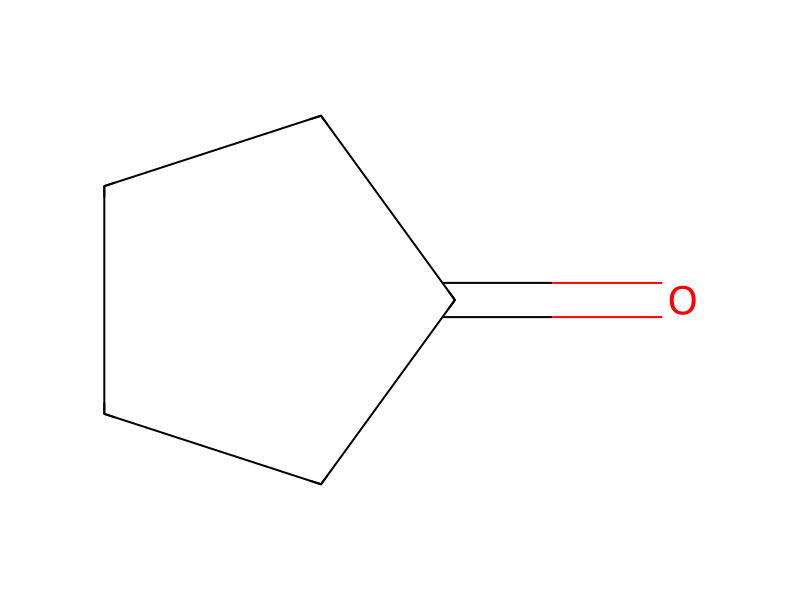
Br[C:2]1[CH:7]=[CH:6][C:5]([Br:8])=[CH:4][CH:3]=1.C([Li])CCC.[C:14]1(=[O:19])[CH2:18][CH2:17][CH2:16][CH2:15]1>O1CCCC1>[Br:8][C:5]1[CH:6]=[CH:7][C:2]([C:14]2([OH:19])[CH2:18][CH2:17][CH2:16][CH2:15]2)=[CH:3][CH:4]=1Participants
Reactant 3


Product 1

Reagents, catalysts & solvents 1

Conditions
- Temperature
- -78 °C
Procedure
To a cold (−78 °C.) solution of 1,4-dibromobenzene (33 g, 139.8 mmol) in tetrahydrofuran (200 mL) was added n-butyllithium (59.0 mL, 146.8 mmol, 2.49 M in hexane) dropwise. The viscous solution was stirred at −78° C. for 45 min, and cyclopentanone (13.6 mL, 153.8 mmol) was then added dropwise over 30 min. The resulting solution was stirred at −78° C. for 1 h and was then quenched by the addition of 0.5M HCl (200 mL) and ethyl acetate (200 mL). The layers; were separated, and the organics were washed with water (1×100 mL), brine (1×100 mL), dried over sodium sulfate, filtered, and concentrated under reduced pressure. The residue was purified by chromatography on SiO2 gel, eluting with 5% ethyl acetate in hexane to give the title compound. 1H NMR (300 MHz, DMSO-d6) δ ppm 1.71-1.76 (m, 2 H), 1.78-1.88 (m, 6 H), 4.85 (s, 1 H), 7.39-7.43 (m, 2 H), 7.44-7.49 (m, 2 H).
Workup
- stirringThe resulting solution was stirred at −78° C. for 1 h
- customwas then quenched by the addition of 0.5M HCl (200 mL) and ethyl acetate (200 mL)
- customwere separated
- washthe organics were washed with water (1×100 mL), brine (1×100 mL)
- dry with materialdried over sodium sulfate
- filtrationfiltered
- concentrationconcentrated under reduced pressure
- customThe residue was purified by chromatography on SiO2 gel
- washeluting with 5% ethyl acetate in hexane
Sources & evidence
- ORD record
- ord-2885c30aa55044a9b6fb1b7febaf0beb
- Source dataset
- uspto-grants-2014_12
- Patent number
- US08901152B2
Reaction notes
Loading…