Benzoyl Peroxide → 3-Bromo-2-(bromomethyl)pyridine
Reaction equation

[Br:1][C:2]1[C:3]([CH3:8])=[N:4][CH:5]=[CH:6][CH:7]=1.[Br:9]N1C(=O)CCC1=O.C(OOC(=O)C1C=CC=CC=1)(=O)C1C=CC=CC=1>C(Cl)(Cl)(Cl)Cl.C(=O)(O)[O-].[Na+]>[Br:1][C:2]1[C:3]([CH2:8][Br:9])=[N:4][CH:5]=[CH:6][CH:7]=1Participants





Procedure
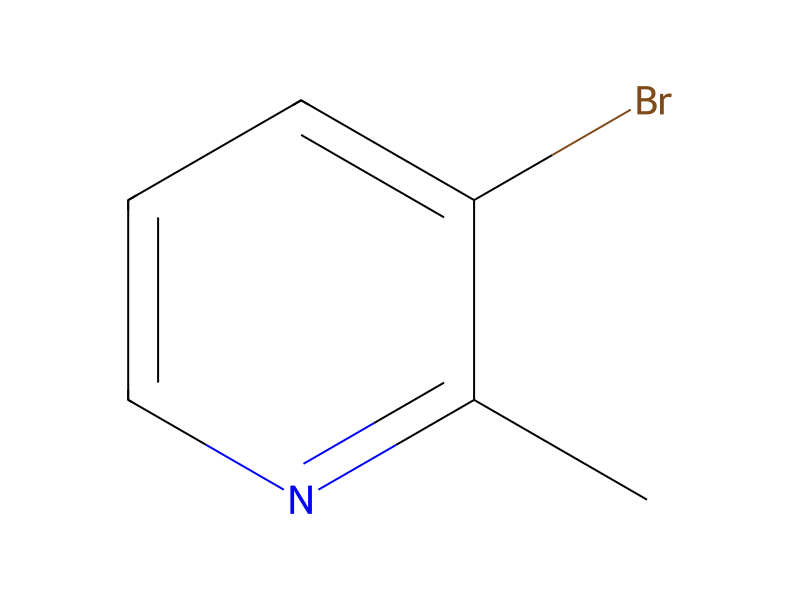
To a room temperature solution of 3-bromo-2-methylpyridine (2.60 g, 15.1 mmol) and N-bromosuccinimide (NBS) (2.90 g, 16.3 mmol) in CCl4 is added benzoyl peroxide (150 mg, 1.08 mmol). The mixture is heated at reflux for 7 hours, cooled to room temperature, diluted with saturated aqueous sodium bicarbonate (30 mL) and extracted with ethyl acetate (EtOAc) (3×30 mL). The combined organic layers are washed with brine (3×30 mL), dried over magnesium sulfate, filtered and concentrated. LCMS analysis indicated starting material and the desired product. The residue is dissolved in CCl4 (40 mL) and NBS (1.7 g, 9.6 mmol) and benzoyl peroxide (100 mg, 0.72 mmol) is added, and the mixture is warmed at reflux. After 24 hours, the mixture is cooled to room temperature, diluted with saturated aqueous sodium bicarbonate (30 mL) and extracted with EtOAc (3×30 mL). The combined organic layers are washed with brine (3×30 mL), dried over magnesium sulfate, filtered and concentrated. The residue is purified by silica gel chromatography eluting with a mixture of dichloromethane in hexanes (25:75, then 3:7) to afford 3-bromo-2-bromomethyl-pyridine.
Workup
- temperatureThe mixture is heated
- temperatureat reflux for 7 hours
- extractionextracted with ethyl acetate (EtOAc) (3×30 mL)
- washThe combined organic layers are washed with brine (3×30 mL)
- dry with materialdried over magnesium sulfate
- filtrationfiltered
- concentrationconcentrated
- dissolutionThe residue is dissolved in CCl4 (40 mL)
- temperaturethe mixture is warmed
- temperatureat reflux
- temperaturethe mixture is cooled to room temperature
- extractionextracted with EtOAc (3×30 mL)
- washThe combined organic layers are washed with brine (3×30 mL)
- dry with materialdried over magnesium sulfate
- filtrationfiltered
- concentrationconcentrated
- customThe residue is purified by silica gel chromatography
- washeluting with a mixture of dichloromethane in hexanes (25:75
Sources & evidence
- ORD record
- ord-98226504901941b9bb65509edb205e97
- Source dataset
- uspto-grants-2015_01
- Patent number
- US08927550B2
Reaction notes
Loading…