Ammonia → 4-(1-Butylpentyl)pyridine
Reaction equation

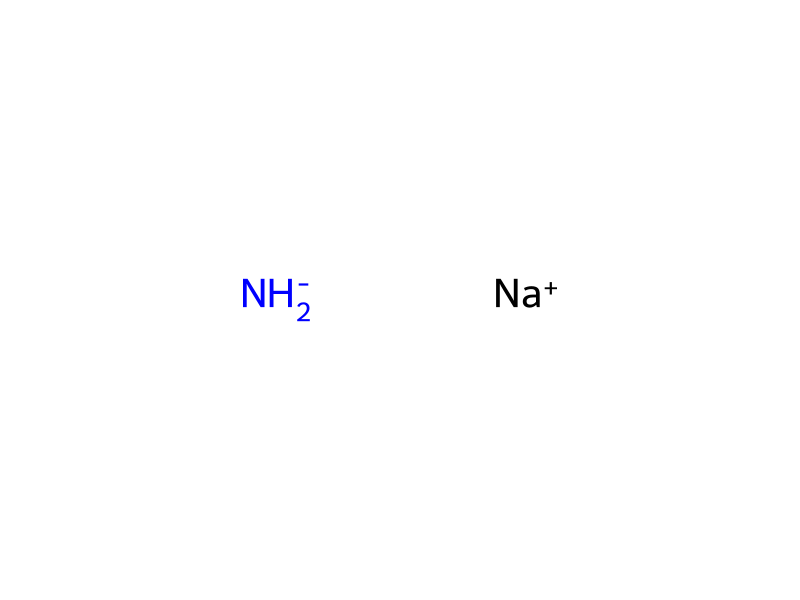
[NH3:1].[NH2-].[Na+].[CH3:4][CH2:5][CH2:6][CH2:7][CH:8]([C:13]1[CH:18]=[CH:17][N:16]=[CH:15][CH:14]=1)[CH2:9][CH2:10][CH2:11][CH3:12].[H][H]>CN(C)C1C=CC=CC=1>[CH3:12][CH2:11][CH2:10][CH2:9][CH:8]([C:13]1[CH:18]=[CH:17][N:16]=[CH:15][CH:14]=1)[CH2:7][CH2:6][CH2:5][CH3:4].[NH2:1][C:15]1[CH:14]=[C:13]([CH:8]([CH2:7][CH2:6][CH2:5][CH3:4])[CH2:9][CH2:10][CH2:11][CH3:12])[CH:18]=[CH:17][N:16]=1Participants





Conditions
- Temperature
- 150 °C
Procedure
Liquid ammonia, containing one mole of freshly prepared sodamide, was replaced with 500 cc of N,N-dimethylaniline. The mixture was heated to 150° C. and 102.5 g (0.5 moles) of 4-(5-nonyl)pyridine was rapidly added through a dropping funnel. This mixture was heated to 175° C. at which point a fast evolution of hydrogen gas began. The reaction mixture was kept at 175°-180° C. for 4.5 hours and then allowed to cool over night with little hydrogen gas evolution during the last hour of the heating period. The cooled mixture was then hydrolyzed with 200 cc of water and the organic phase was separated and distilled to give 8.7 g of unreacted 4-(5-nonyl)pyridine and 39.2 g of 2-amino-4-(5-nonyl)pyridine, with most of the aminopyridine product boiling at 162°-164° C. and 2 mm Hg. Also obtained from such distilling was 18.6 g of 4,4'-di-(5-nonyl)-2,2'-bipyridyl, such 2,2' -bipyridyl product boiling at 237°-250° C. and 1 mm Hg. Based on the recovered 4-(5-nonyl)pyridine, yields were calculated for the amino product of 38.9% and for the 2,2'-bipyridyl product of 19.9%. Upon subsequent testing, the 2,2'-bipyridyl product performed effectively as a metal chelating agent and exhibited significant and valuable fungicidal properties.
Workup
- customhydrolyzed with 200 cc of water and the organic phase was separated
- distillationdistilled
Sources & evidence
- ORD record
- ord-f9fdb21aac5342eea9275479740dd7ee
- Source dataset
- uspto-grants-1979_12
- Patent number
- US04177349
Reaction notes
Loading…