2,3,4-Trichloro-1,5-dinitrobenzene → 4,6-Diaminoresorcinol
Reaction equation

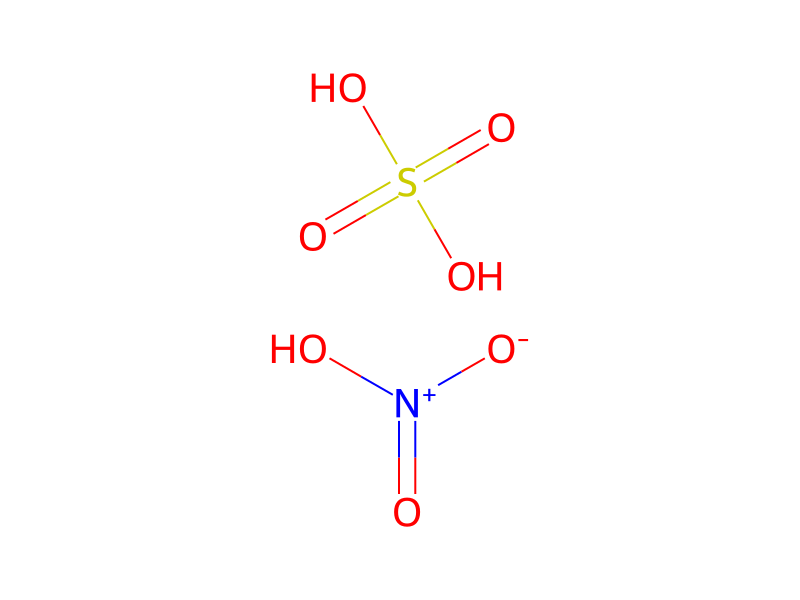
ClC1C=CC=C(Cl)C=1Cl.[N+]([O-])(O)=O.S(=O)(=O)(O)O.[N+]([O-])(O)=O.ClC1C([N+]([O-])=O)=CC([N+]([O-])=O)=C(Cl)C=1Cl.[OH:38][C:39]1[C:44]([N+:45]([O-])=O)=[CH:43][C:42]([N+:48]([O-])=O)=[C:41]([OH:51])[C:40]=1Cl>CO.O.[Pd]>[NH2:45][C:44]1[C:39]([OH:38])=[CH:40][C:41]([OH:51])=[C:42]([NH2:48])[CH:43]=1Participants
Reactant 4


Product 1

Reagents, catalysts & solvents 2


Procedure
Because of the difficulties mentioned it has been tried to obtain diaminoresorcinol from another starting material. Thus, in EP 266,222 it is proposed to nitrate 1,2,3-trichlorobenzene in a sulphuric acid/nitric acid mixture to 1,2,3-trichloro-4,6-dinitro-benzene and to convert this compound, using an alkali metal hydroxide in methanol/water, into 1,3-dihydroxy-2-chloro-4,6-dinitrobenzene. The reduction of the latter compound on a Pd/activated charcoal catalyst gives diaminoresorcinol. However this process has the disadvantage that the dihydroxy compound of the second process step must be extracted with ethyl acetate, as a consequence of which the space yield drops to about 75 g/l (0.32 mole/l); after the said extraction the dihydroxy compound is isolated by evaporation of the ethyl acetate phase.
Sources & evidence
- ORD record
- ord-0f8c8fb349ec484f8780350682af36e3
- Source dataset
- uspto-grants-1991_12
- Patent number
- US05072053
Reaction notes
Loading…