Hydrochloric Acid → HCID 86669941, compound
Reaction equation

[C:1]1([C:7]2[O:11][N:10]=[C:9]([C:12]3[O:16][N:15]=[C:14]4[C:17]5[C:22]([CH2:23][CH2:24][C:13]=34)=[CH:21][C:20]([CH:25]=[O:26])=[CH:19][CH:18]=5)[C:8]=2[C:27]([F:30])([F:29])[F:28])[CH:6]=[CH:5][CH:4]=[CH:3][CH:2]=1.C[Si]([C:35]#[N:36])(C)C.Cl.C(OCC)(=O)C>C(#N)C.[I-].[Zn+2].[I-]>[OH:26][CH:25]([C:20]1[CH:21]=[C:22]2[C:17](=[CH:18][CH:19]=1)[C:14]1=[N:15][O:16][C:12]([C:9]3[C:8]([C:27]([F:28])([F:29])[F:30])=[C:7]([C:1]4[CH:2]=[CH:3][CH:4]=[CH:5][CH:6]=4)[O:11][N:10]=3)=[C:13]1[CH2:24][CH2:23]2)[C:35]#[N:36]Participants
Reactant 4




Product 1

Reagents, catalysts & solvents 2

Procedure
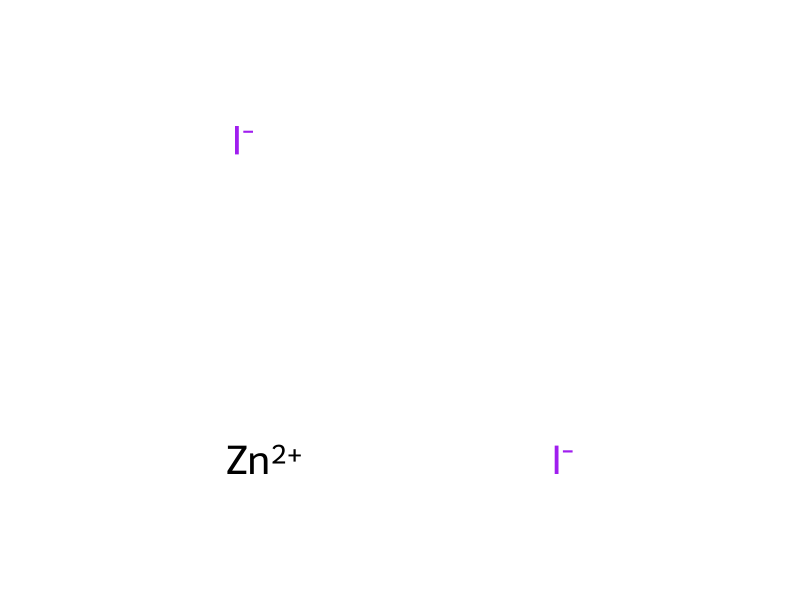
To 3-(5-phenyl-4-(trifluoromethyl)isoxazol-3-yl)-4,5-dihydronaphtho[1,2-c]isoxazole-7-carbaldehyde (Preparation 88A, 1 g, 2.4 mmol) in acetonitrile (75 mL) was added trimethylsilyl cyanide (0.49 mL, 3.7 mmol) and zinc iodide (0.79 g, 2.4 mmol). The reaction mixture was stirred for 70 min. at room temperature. After being cooled in ice-water bath, the mixture was acidified by addition of aqueous hydrochloric acid (1N, 4.4 mL, 4.4 mmol). Ethyl acetate (100 mL) was added and the layers were separated. The organic phase was washed with saturated sodium thiosulfate solution (5 mL×2). The organic phase was then dried, filtered, and concentrated to provide the product (±)-2-hydroxy-2-(3-(5-phenyl-4-(trifluoromethyl)isoxazol-3-yl)-4,5-dihydronaphtho[1,2-c]isoxazol-7-yl)acetonitrile (1.1 g, 2.4 mmol, 99% yield); LC/MS M+1=438.00; 1H NMR (400 MHz, CDCl3) δ ppm 8.09 (1H, d, J=7.92 Hz), 7.76 (2H, d, J=7.26 Hz), 7.50-7.68 (5H, m), 5.62 (1H, s), 3.11 (4H, s).
Workup
- customthe layers were separated
- washThe organic phase was washed with saturated sodium thiosulfate solution (5 mL×2)
- customThe organic phase was then dried
- filtrationfiltered
- concentrationconcentrated
Sources & evidence
- ORD record
- ord-61392413fe0e4431bf0ca0dc06871306
- Source dataset
- uspto-grants-2015_12
- Patent number
- US09216972B2
Reaction notes
Loading…