Benzoyl chloride → 6,7-Dimethoxy-1-phenyl-1,2,3,4-tetrahydroisoquinoline
Reaction equation

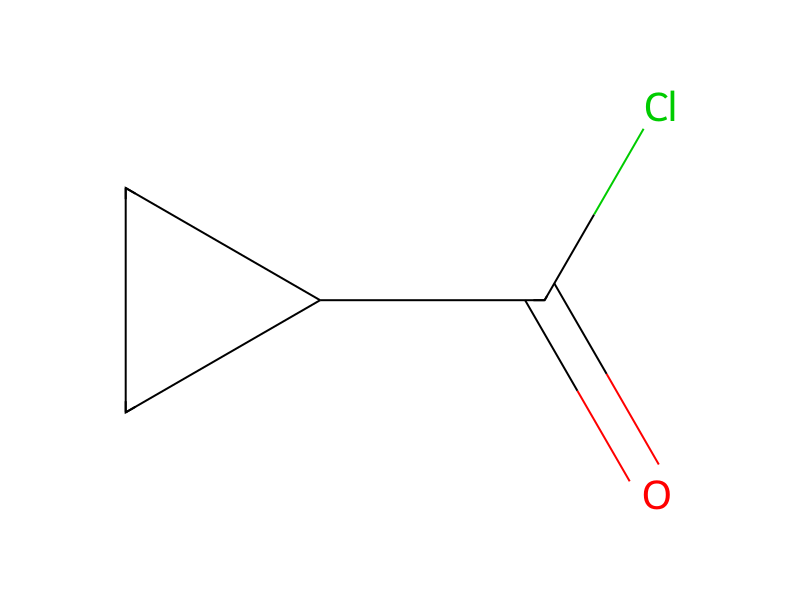
[CH:1]1([CH:4]2[C:13]3[C:8](=[CH:9][C:10]([O:16][CH3:17])=[C:11]([O:14][CH3:15])[CH:12]=3)[CH2:7][CH2:6][NH:5]2)[CH2:3][CH2:2]1.[C:18](Cl)(=O)[C:19]1C=CC=C[CH:20]=1.C1(C(Cl)=O)CC1.C([BH3-])#N.[Na+]>>[C:1]1([CH:4]2[C:13]3[C:8](=[CH:9][C:10]([O:16][CH3:17])=[C:11]([O:14][CH3:15])[CH:12]=3)[CH2:7][CH2:6][NH:5]2)[CH:3]=[CH:2][CH:20]=[CH:19][CH:18]=1Participants




Procedure
1,2,3,4-Tetrahydro-1-phenyl-6,7-dimethoxyisoquinoline was prepared by a procedure analogous to that described in example 4 for 1,2,3,4-tetrahydro-1-cyclopropyl-6,7-dimethoxy- isoquinoline but substituting in the first step benzoyl chloride for cyclopropylcarbonyl chloride. The 1,2,3,4-tetrahydro-1-phenyl-6,7-dimethoxyisoquinolinyl was reacted with 7-[N-3-(4-fluorophenyl)propionyl]amino-4,4-diphenylheptan-1-al in the presence of sodium cyanoborohydride as described in example 1 to give the desired product as glassy residue: MS showed (M+H)+ @ 685; 1H-NMR (CDCl3, δ): 1.0-1.2 (m, 4H), 1.65-1.75 (m, 1H), 1.95-2.05 (m, 2H), 2.06-2.15 ((m, 1H), 2.15-2.25 (m, 1H), 2.32-2.36 (t, 2H), 2.36-2.45 (m, 2H), 2.62-2.70 (m, 1H), 2.85-2.95 (m, 4H), 3.08-3.17 (q, 2H), 3.58 (s, 3H), 3.83 (s, 3H), 4.36 (s, 1H), 5.01 (broad t, 1H), 6.13 (s, 1H), 6.58 (s, 1H), 6.88-6.94 (m, 2H), 7.06-7.33 (m, 17H); IR (CHCl3) u 3300, 2950, 1645, 1505 cm-1. The hydrochloride salt was prepared as in example 1 to give 7-[N-3-(4-fluorophenylpropionyl]amino-1-[N-(1,2,3,4-tetrahydro-1-phenyl-6,7-dimethoxy- isoquinolinyl)]-4,4-diphenylheptane hydrochloride: mp 117-120° C.; Anal. Calcd for C45H49N2O3F-HCl 0.5H2O: C, 74.0; H. 7.30; N. 3.83; Found: C. 73.14; H, 6.74; N, 3.71.
Sources & evidence
- ORD record
- ord-f34018c14ed1421a9dbb686148a86e20
- Source dataset
- uspto-grants-1999_11
- Patent number
- US05981521
Reaction notes
Loading…