Pyridine → HCID 21549054, compound
Reaction equation

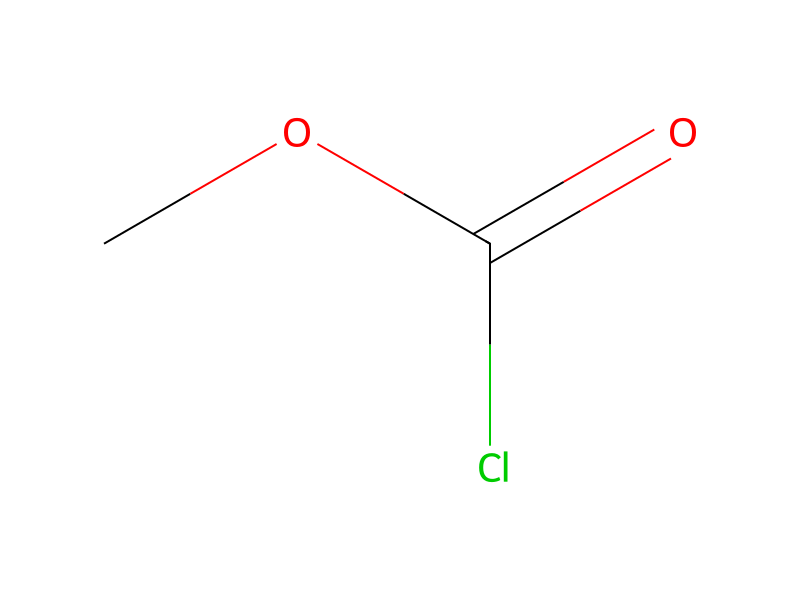
[Cl:1][C:2]1[CH:3]=[C:4]([N:9]([OH:14])[C:10]([NH:12][CH3:13])=[O:11])[CH:5]=[CH:6][C:7]=1[Cl:8].N1C=CC=CC=1.Cl[C:22]([O:24][CH3:25])=[O:23]>C(O)(C)C>[Cl:1][C:2]1[CH:3]=[C:4]([N:9]([O:14][C:22]([O:24][CH3:25])=[O:23])[C:10]([NH:12][CH3:13])=[O:11])[CH:5]=[CH:6][C:7]=1[Cl:8]Participants
Reactant 3


Product 1

Reagents, catalysts & solvents 1

Procedure
A solution of 1-(3,4-dichlorophenyl)-1-hydroxy-3-methylurea (15 grams; 0.06 mol) in isopropyl alcohol (50 ml), and pyridine (8 ml) were charged into a glass reaction flask equipped with a mechanical stirrer. Methyl chloroformate (7 ml; 0.09 mol) was then slowly added, with stirring, at a temperature of 10° to 15°C. After the addition was completed stirring was continued for an additional period of one-half hour resulting in the formation of a precipitate. After this time the reaction mixture was poured onto ice and the precipitate recovered by filtration. The precipitate was recrystallized first from a benzene-hexane mixture and then from a methyl alcohol-water mixture to yield 1-(3,4-dichlorophenyl)-1-methoxycarbonyloxy-3-methylurea having a melting point of 110°C with decomposition and having the following elemental analysis as calculated for C10H10Cl2N2O4 :
Workup
- customequipped with a mechanical stirrer
- additionAfter the addition
- stirringwas completed stirring
- waitwas continued for an additional period of one-half hour
- customresulting in the formation of a precipitate
- additionAfter this time the reaction mixture was poured onto ice
- filtrationthe precipitate recovered by filtration
- customThe precipitate was recrystallized first from a benzene-hexane mixture
Sources & evidence
- ORD record
- ord-6b7ce4798aac492ebde49f49f7634c61
- Source dataset
- uspto-grants-1976_04
- Patent number
- US03948967
Reaction notes
Loading…