4-Chloro-1-butanol → 4-[2,6-Dichloro-4-(phenylmethoxy)phenoxy]butan-1-ol
Reaction equation

[Cl:1][C:2]1[CH:7]=[C:6]([O:8][CH2:9][C:10]2[CH:15]=[CH:14][CH:13]=[CH:12][CH:11]=2)[CH:5]=[C:4]([Cl:16])[C:3]=1[OH:17].Cl[CH2:19][CH2:20][CH2:21][CH2:22][OH:23]>>[Cl:1][C:2]1[CH:7]=[C:6]([O:8][CH2:9][C:10]2[CH:15]=[CH:14][CH:13]=[CH:12][CH:11]=2)[CH:5]=[C:4]([Cl:16])[C:3]=1[O:17][CH2:19][CH2:20][CH2:21][CH2:22][OH:23]Participants
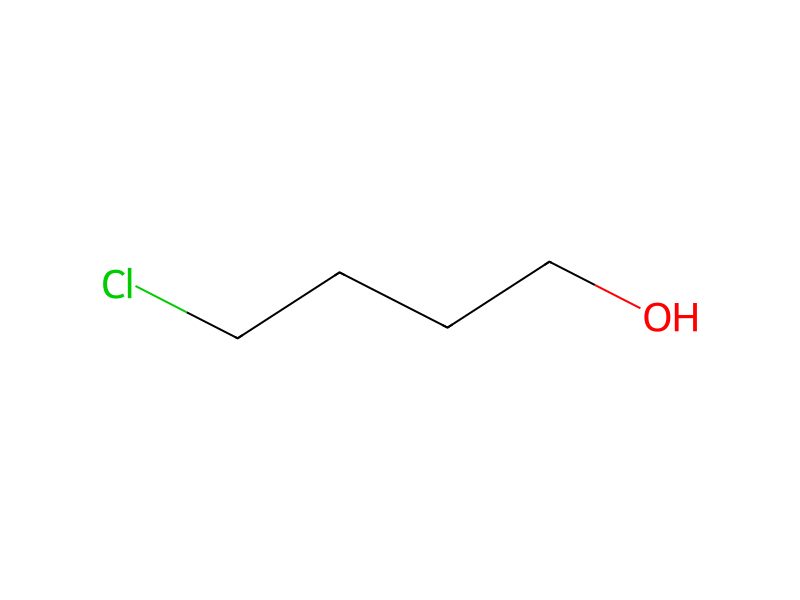


Procedure
In a second series of steps, 2,6-dichloro-4-phenylmethoxyphenol (known compound) was reacted under basic conditions with, for example 4-chlorobutan-1-ol, as a means of attaching bridging group B, yielding the corresponding intermediate 4-[2,6-dichloro-4-(phenylmethoxy)phenoxy]butan-1-ol (H). Intermediate (H) was then de-protected by cleavage of the phenylmethyl moiety using hydrogenation under catalytic conditions affording the corresponding phenol intermediate (J), which was in turn reacted with, for example 1,1,1,3-tetrachloropropane under basic conditions, affording the corresponding butanol intermediate (K). Intermediate (K) was then brominated with, for example carbon tetrabromide and triphenylphosphine, providing the corresponding bromobutane intermediate (L). Intermediate (L) was in turn reacted with intermediate (G) under basic conditions, affording a compound of formula I where, for example R8 is trifluoromethyl (Compound 20). Example 3 set forth below, provides a detailed method to how Compound 20 shown in Scheme 3 was prepared.
Sources & evidence
- ORD record
- ord-b59a24d7bded4a0f9ce669cc22cb68d0
- Source dataset
- uspto-grants-2006_01
- Patent number
- US06987194B2
Reaction notes
Loading…