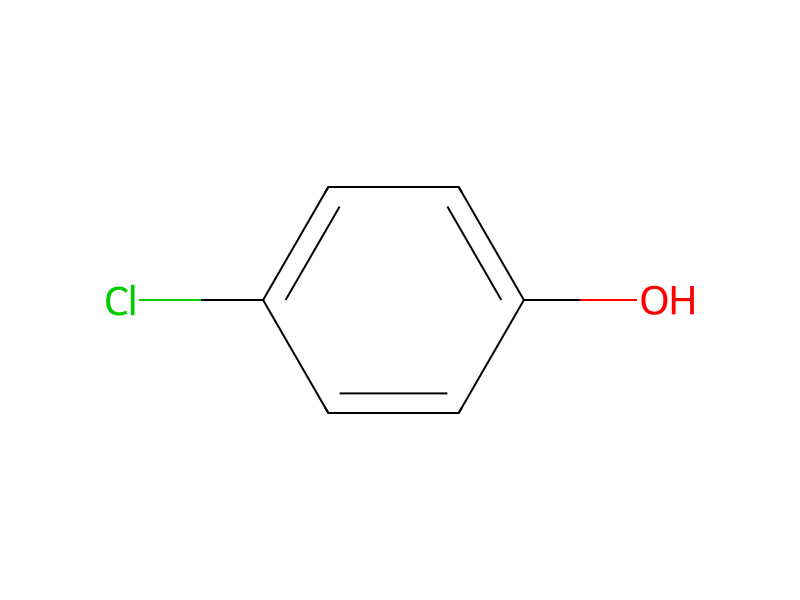
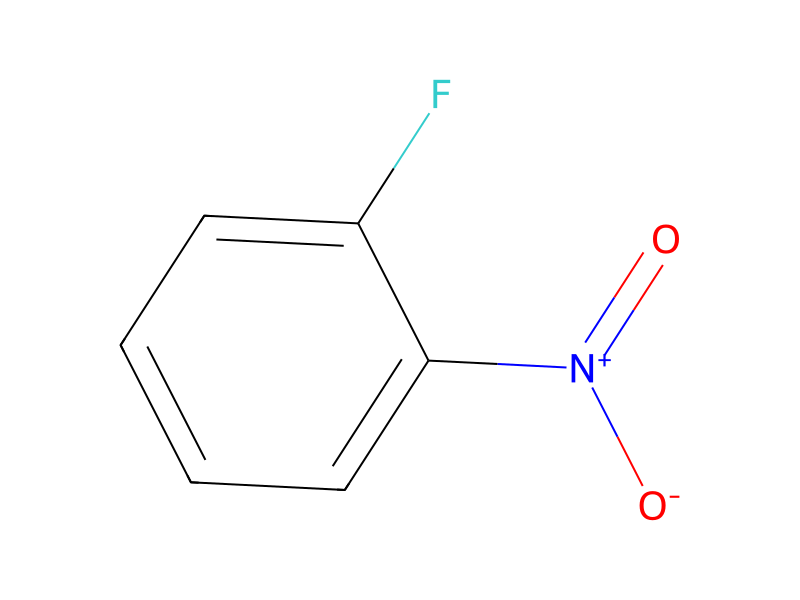
4-Chlorophenol → 1-(4-Chlorophenoxy)-2-nitrobenzene
Reaction equation

[Cl:1][C:2]1[CH:7]=[CH:6][C:5]([OH:8])=[CH:4][CH:3]=1.F[C:10]1[CH:15]=[CH:14][CH:13]=[CH:12][C:11]=1[N+:16]([O-:18])=[O:17].C(=O)([O-])[O-].[K+].[K+]>CN(C=O)C>[Cl:1][C:2]1[CH:7]=[CH:6][C:5]([O:8][C:10]2[CH:15]=[CH:14][CH:13]=[CH:12][C:11]=2[N+:16]([O-:18])=[O:17])=[CH:4][CH:3]=1Participants
5
Reactant 3

Product 1

Reagents, catalysts & solvents 1

Procedure
A mixture of 4-chlorophenol (2.00 g, 15.56 mmol), 1-fluoro-2-nitrobenzene (2.20 g, 15.56 mmol) and potassium carbonate (2.15 g, 15.56 mmol) in DMF (10 mL) was stirred under reflux for 1 h. After removal of DMF, the residue was dissolved in DCM and washed with NaOH (5%, 3×20 mL) and brine. The organic layer was dried (MgSO4), filtered and evaporated to give 1-(4-chlorophenoxy)-2-nitrobenzene (2.6 g, 67%) as a yellow oil which solidified upon standing at room temperature (mp 33-35° C. from EtOH) and was used in the next step without further purification. Rf: 0.77 (DCM) 1H NMR (270 MHz, CDCl3) δ 696 (2H, AA′BB′), 699 (1H, m), 7.22 (1H, m), 7.31 (2H, AA′BB′), 7.52 (1H, m) and 7.96 (2H, dd, J=8.2, 1.7 Hz)
Workup
- temperatureunder reflux for 1 h
- customAfter removal of DMF
- dissolutionthe residue was dissolved in DCM
- washwashed with NaOH (5%, 3×20 mL) and brine
- dry with materialThe organic layer was dried (MgSO4)
- filtrationfiltered
- customevaporated
Sources & evidence
- ORD record
- ord-b8d61ddfae6645bd96dab60265b08ce5
- Source dataset
- uspto-grants-2012_02
- Patent number
- US08119627B2
Reaction notes
Loading…