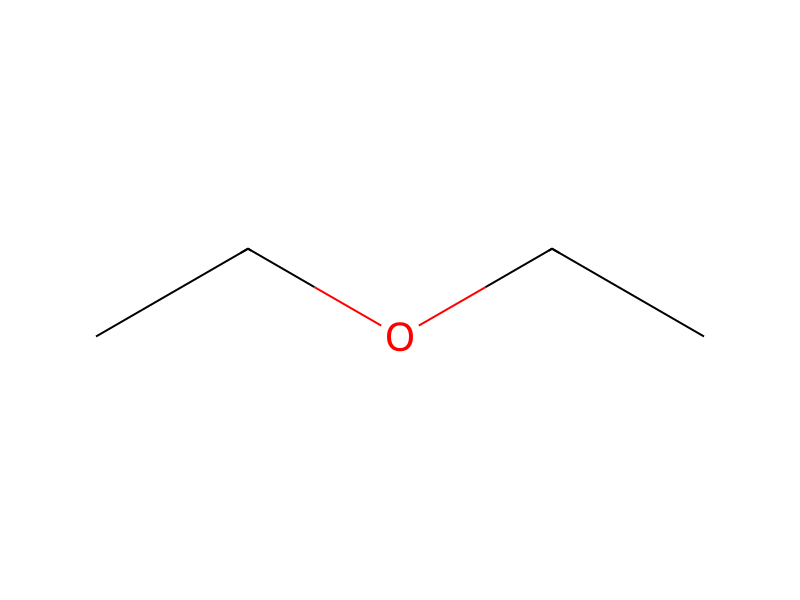
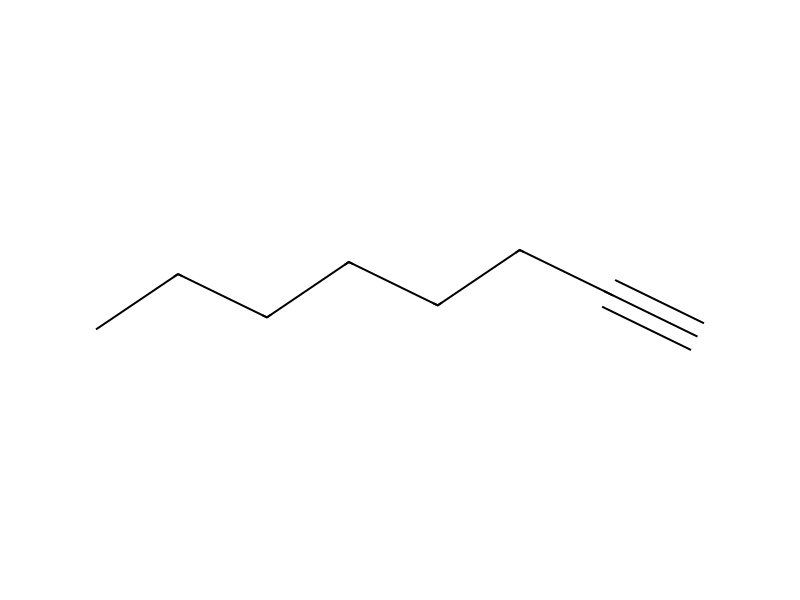
Diethyl Ether → 3-(1-Octen-1-yl)-4-isopropylcyclohexanone
Reaction equation

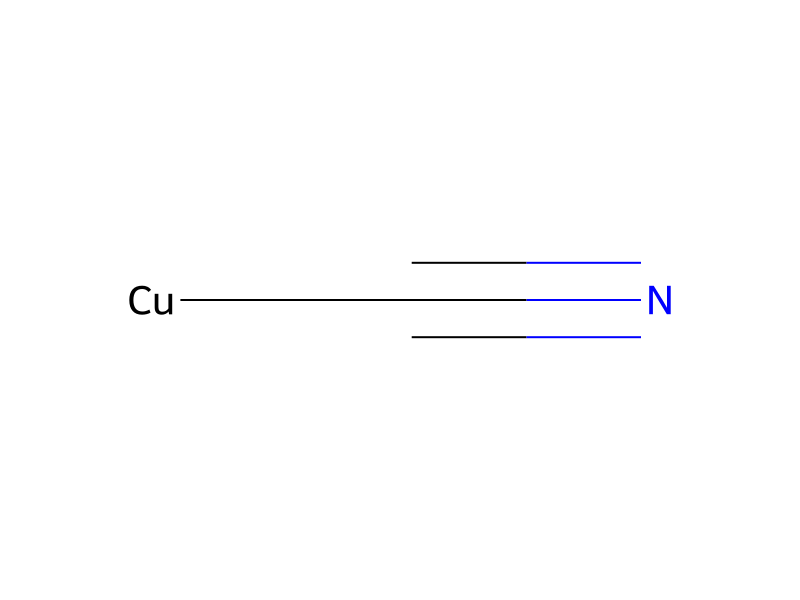
[CH:1]#[C:2][CH2:3][CH2:4][CH2:5][CH2:6][CH2:7][CH3:8].[Li]C.CCOCC.C([Cu])#N.[CH:19]([CH:22]1[CH2:27][CH2:26][C:25](=[O:28])[CH:24]=[CH:23]1)([CH3:21])[CH3:20]>[H-].[Cl-].[CH-]1C=CC=C1.[CH-]1C=CC=C1.[Zr+2].Cl[Ni]Cl.[CH-]1C=CC=C1.[CH-]1C=CC=C1.[Zr+2].[Cu]>[CH:1]([CH:23]1[CH:22]([CH:19]([CH3:21])[CH3:20])[CH2:27][CH2:26][C:25](=[O:28])[CH2:24]1)=[CH:2][CH2:3][CH2:4][CH2:5][CH2:6][CH2:7][CH3:8]Participants
Reactant 5


Product 1

Reagents, catalysts & solvents 4


Conditions
- Temperature
- -78 °C
Procedure
A 10 mL round-bottom flask equipped with a stir bar was charged with zirconocene chloride hydride (0.305 g, 1.07 mmol) and sealed with a septum. The flask was evacuated with a vacuum pump and purged with argon, the process being repeated 3 times. THF (4 mL) was injected and the mixture stirred to generate a white slurry which was treated via syringe with 1-octyne (0.115 g, 1.04 mmol). The mixture was stirred for 15 minutes to yield a yellow-to-green solution which was cooled to -78° C. and treated via syringe with ethereal MeLi (0.63 mL, 1.01 mmol) to generate a dark red solution. At the same time, NiCl2 (68 mg, 0.52 mmol) was placed in a 5 mL round bottom flask and purged as above with Ar to which was added 1 mL THF via syringe. This solution was then cooled to -78° C. where it was treated with MeLi in Et2O (0.98 mL, 1.574 mmol) and then warmed to about -20° C. for 10 minutes to generate a dark brown solution. It was then cooled again to -78° C. Concurrently, CuCN (9.3 mg, 0.104 mmol) was placed in a 10 mL round-bottom flask equipped with a stir bar and sealed under septum. The flask was warmed slightly to generate a clear solution of Me2Cu(CN)Li2, then cooled to -78° C. At -78° C. and by cannula the solution of NiMe3Li was added to the Me2Cu(CN)Li2 solution. The solution of the zirconocene was added via cannula to the resulting Me2Cu(CN)Li2 /NiMe3Li solution, thereby providing a reaction mixture comprising 20 mol-% of copper per mole of substrate enone. The mixture was stirred for 15 minutes at -78° C. to provide a dark brown solution, which was treated with 4-isopropyl-2-cyclohexenone (77 μL, 0.5 mmol) added slowly as a neat liquid over 70 minutes. After stirring for 1.5 hours, the mixture was quenched with 5 mL of 10% NH4OH in saturated NH4Cl. The product was extracted with 3×20 mL of ether and dried over Na2SO4. The solution was then filtered through fritted filter paper and the solvent removed in vacuo. The resulting residue was submitted to flash chromatography on silica gel (Petroleum Ether/Ethyl Acetate, 40/1) to give a 77% yield (97.1 mg) of 3-(1-octen-1-yl)-4-isopropylcyclohexanone as a colorless oil giving satisfactory IR, NMR, MS and HRMS data.
Workup
- customA 10 mL round-bottom flask equipped with a stir bar
- customsealed with a septum
- customThe flask was evacuated with a vacuum pump
- custompurged with argon
- stirringThe mixture was stirred for 15 minutes
- customto yield a yellow-to-green solution which
- custompurged as above with Ar to which
- additionwas added 1 mL THF via syringe
- temperatureThis solution was then cooled to -78° C. where it
- temperaturewarmed to about -20° C. for 10 minutes
- temperatureIt was then cooled again to -78° C
- customequipped with a stir bar
- customsealed under septum
- temperatureThe flask was warmed slightly
- temperaturecooled to -78° C
- additionAt -78° C. and by cannula the solution of NiMe3Li was added to the Me2Cu(CN)Li2 solution
- customproviding a reaction mixture
- stirringThe mixture was stirred for 15 minutes at -78° C.
- customto provide a dark brown solution, which
- additionadded slowly as a neat liquid over 70 minutes
- stirringAfter stirring for 1.5 hours
- customthe mixture was quenched with 5 mL of 10% NH4OH in saturated NH4Cl
- extractionThe product was extracted with 3×20 mL of ether
- dry with materialdried over Na2SO4
- filtrationThe solution was then filtered through fritted filter paper
- customthe solvent removed in vacuo
Sources & evidence
- ORD record
- ord-0a194c98ec9849e48b20679c7a67ec93
- Source dataset
- uspto-grants-1995_04
- Patent number
- US05405981
Reaction notes
Loading…