Isobutyraldehyde → 2-Cyclohexen-1-one, 4,4,6-trimethyl-
Reaction equation

[CH:1](=[O:5])[CH:2]([CH3:4])[CH3:3].[C:6]([C:9]([CH3:11])=O)([CH3:8])=[CH2:7]>[OH-].[Na+]>[CH3:7][C:6]1([CH3:8])[CH2:3][CH:2]([CH3:4])[C:1](=[O:5])[CH:11]=[CH:9]1Participants
Reactant 2
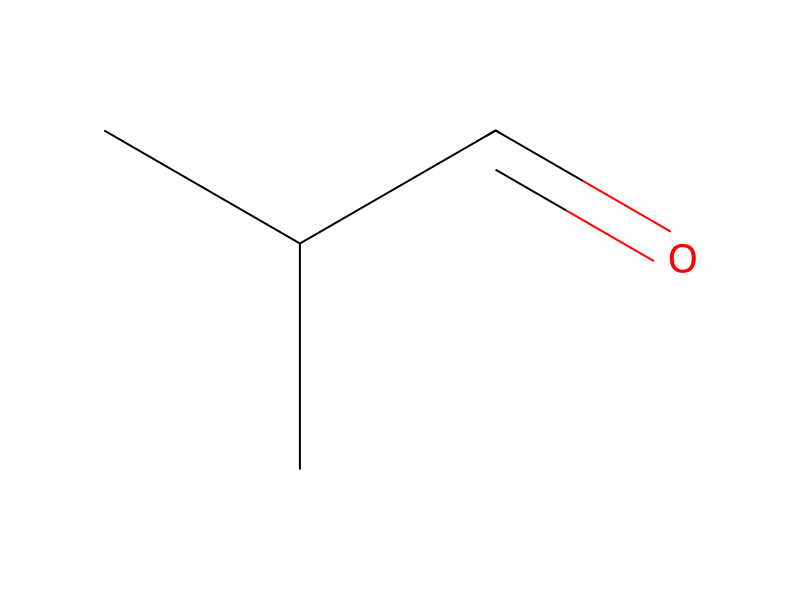

Product 1

Reagents, catalysts & solvents 1

Procedure
The procedure of example III was employed on 12 moles of isobutyraldehyde, 11 moles of methyl isopropenyl ketone and 800 ml of 0.8 M aqueous sodium hydroxide solution. After the reaction was completed the aqueous layer was removed. To the residual organic phase was added an equal volume of benzene and a catalytic amount (ca. 5 g) of p-toluenesulfonic acid. The reaction mixture was heated at reflux with concomitant removal of water via a Dean Stark trap. The usual workup and distillation afforded 897 g (59%) of the desired 4,4,6-trimethyl-2-cyclohexenone (II) with physical constants and spectral data identical with that isolated in Example III. Continued distillation afforded no material containing the 5-hydroxy-2,4,4-trimethylcyclohexanone isolated in Example III where the acid treatment step was omitted.
Workup
- customwas removed
- additionTo the residual organic phase was added an equal volume of benzene
- temperatureThe reaction mixture was heated
- temperatureat reflux with concomitant removal of water via a Dean Stark trap
- distillationThe usual workup and distillation
Sources & evidence
- ORD record
- ord-5db9e35a4369498f9e5c631d325ed967
- Source dataset
- uspto-grants-1976_06
- Patent number
- US03962148
Reaction notes
Loading…