Cholesterol → 3beta-Acetoxyandrost-5-en-4,7,17-trione
Reaction equation

CC(CCC[C@H]([C@@H]1[C@]2(C)[C@H]([C@H:13]3[C@H:24](CC2)[C@:22]2([CH3:23])[C:16]([CH2:17][C@H:18]([CH2:20][CH2:21]2)[OH:19])=[CH:15][CH2:14]3)CC1)C)C.[CH3:29][C@@:30]12[C@@H:38]([OH:39])[CH2:37][CH2:36][C@H:35]1[C@@H]1CCC3[C@@](C)([C@H]1[CH2:32][CH2:31]2)CCC(=O)C=3.C[C@]12CC[C@H]3[C@@H](CCC4[C@]3(C)CCC(=[O:69])C=4)[C@@H]1CCC2=O.C[C@]12CC[C@H]3[C@@H](CC(=O)C4[C@]3(C)CCC(=O)C=4)[C@@H]1CCC2=O.CC(OO)(C)C.[C:99]([O:102][C@H]1CC[C@@]2(C)C(=CC[C@@H]3[C@@H]2CC[C@@]2(C)[C@H]3CCC2=O)C1)(=[O:101])[CH3:100]>C1CCNC(=O)CC1.C1CCNC(=O)CC1.C1CCNC(=O)CC1.C1CCNC(=O)CC1.[Rh].[Rh]>[C:99]([O:102][C@H:14]1[CH2:13][CH2:24][C@@:22]2([CH3:23])[C:16](=[CH:17][C:18](=[O:19])[C@@H:20]3[C@@H:21]2[CH2:32][CH2:31][C@@:30]2([CH3:29])[C@H:35]3[CH2:36][CH2:37][C:38]2=[O:39])[C:15]1=[O:69])(=[O:101])[CH3:100]Participants
Reactant 6



Product 1

Reagents, catalysts & solvents 1

Procedure
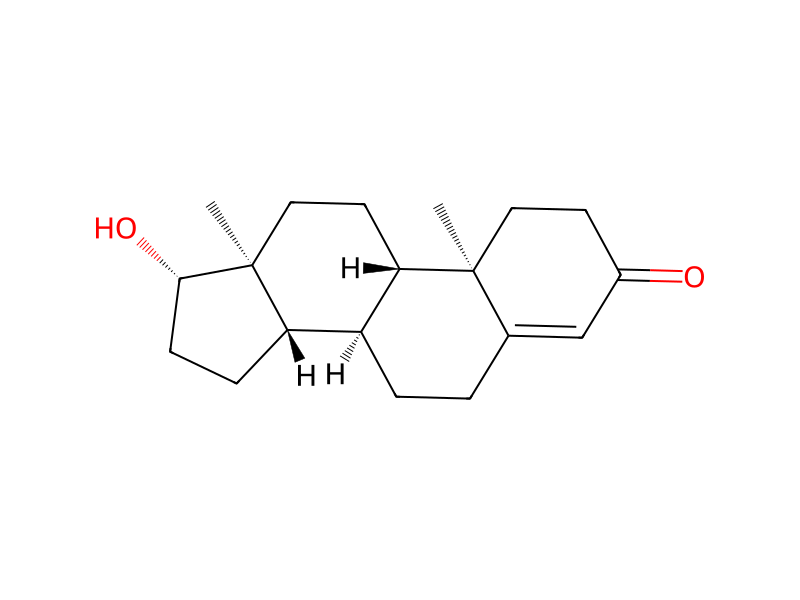
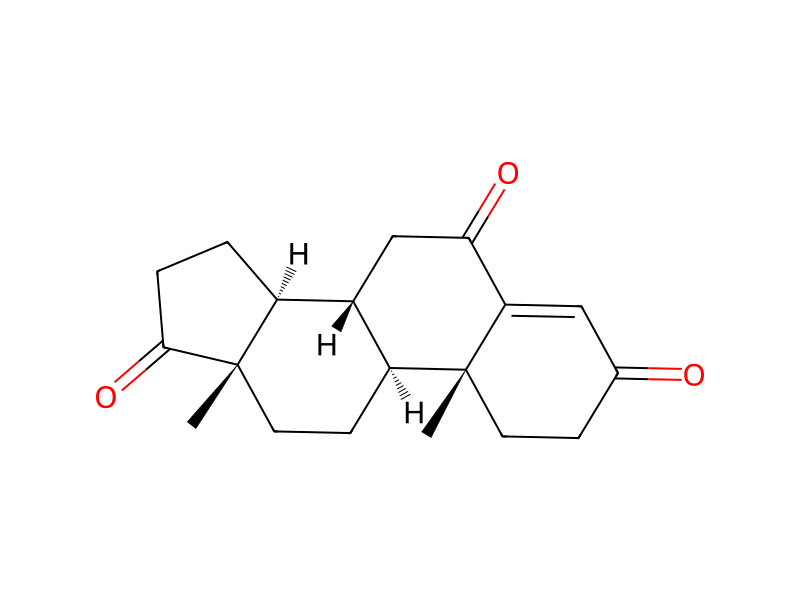
The oxidations of testosterone (eq V), 17-acetyltestosterone (eq VI), 4-androstene-3,17-dione (eq VII), and 4-cholesten-3-one (eq VIII) were performed under the same conditions as those reported for the reactions of Table 3. Although using 1,2-dichloroethane as solvent was initially believed to be necessary to dissolve the water-insoluble steroidal compounds, examination of the oxidation process using water as solvent actually led to an improvement in product yield (e.g., 68% yield for 29 after 48 h with 12 equiv of T-HYDRO®). In contrast to oxidations of cholesterol in which the secondary alcohol at the 3-position was stable to oxidative conversion to a ketone, oxidation of the secondary alcohol at the 17-position of testosterone was competitive with allylic oxidation of the enone, and both androst-4-ene-3,17-dione and androst-4-ene-3,6,17-trione accompanied formation of 25. This oxidative process appears to be general for strained secondary alcohols (cyclopentanol, endo-norbornanol, borneol, for example). In an attempt to effect sequential oxidation on both sides of the carbon-carbon double bond, 3β-acetoxyandrost-5-en-17-one was subjected to sequential treatments with TBHP and Rh2(cap)4 (eq IX); the desired 3β-acetoxyandrost-5-en-4,7,17-trione 29 was formed in 54% yield.
Sources & evidence
- ORD record
- ord-09962c303aaa44bfabb3781220e147a3
- Source dataset
- uspto-grants-2012_04
- Patent number
- US08163944B2
Reaction notes
Loading…