Anthranilic Acid → 2-(4-Chloro-2-nitroanilino)benzoic acid
반응식

Br[C:2]1[CH:7]=[CH:6][C:5]([Cl:8])=[CH:4][C:3]=1[N+:9]([O-:11])=[O:10].[C:12]([OH:21])(=[O:20])[C:13]1[C:14](=[CH:16][CH:17]=[CH:18][CH:19]=1)[NH2:15].CCCCCO.C(=O)([O-])[O-].[K+].[K+]>[Cu]>[Cl:8][C:5]1[CH:6]=[CH:7][C:2]([NH:15][C:14]2[C:13](=[CH:19][CH:18]=[CH:17][CH:16]=2)[C:12]([OH:21])=[O:20])=[C:3]([N+:9]([O-:11])=[O:10])[CH:4]=1참가 물질



실험 절차
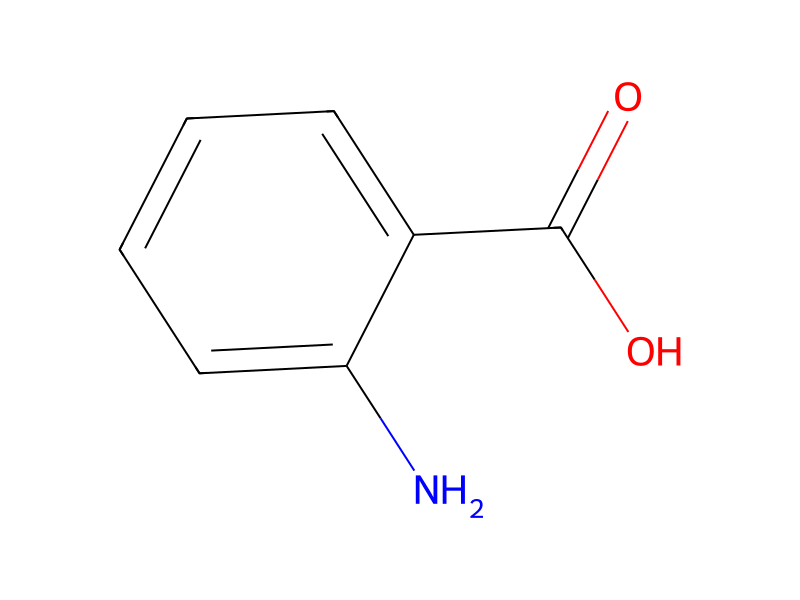
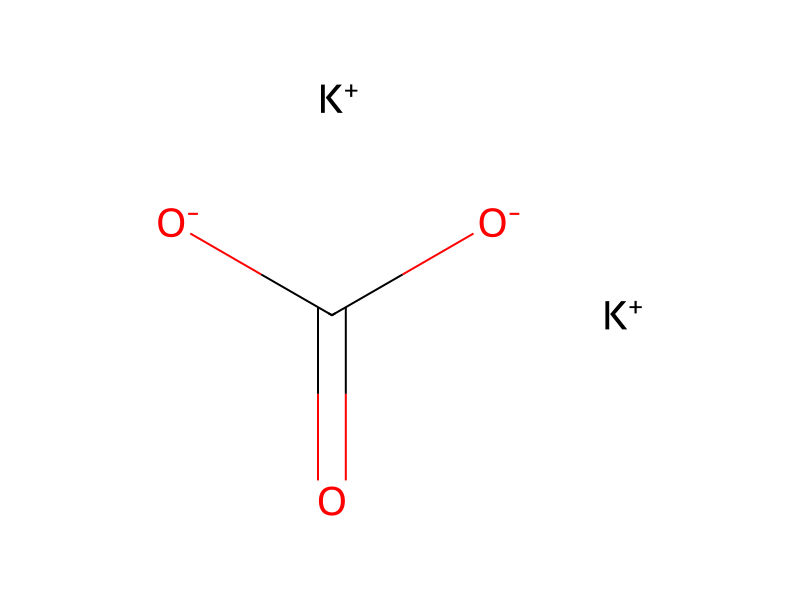
In a 3 liter, three necked round bottom flask, provided with a mechanical stirrer, reflux condenser and thermometer (to 200° C.) was placed 300 g. (1.25 m.) 1-bromo-4-chloronitrobenzene, 140 g. (1.02 m.) anthranilic acid, and 130 ml. n-amyl alcohol. The mixture was heated in an oil bath. After most of the chemicals were dissolved (80°-90° C.) the stirrer was started. Then, 1.3 gm. copper powder and 140 gm. (1.02 m.) potassium carbonate were added all at once. A yellow voluminous froth formed but no heat of reaction. As the reaction temperature rose from 80° to 120°, a red reaction mixture became more solid and hindered further stirring. The reflux condenser was replaced to distill off the formed water and amyl alcohol. Meanwhile, the temperature of the oil bath was steadily increased and finally kept at 200°-210° for 3 hours. The oil bath was replaced by a steam bath and the excess bromochloronitrobenzene was removed by steam distillation. After removal of bromochloronitrobenzene was completed, the solution was filtered and water added making the total volume of dark red solution about 2.5 liters. The solution was cooled to room temperature overnight, and filtered. Dilute HCl (1:1) was carefully added to the filtrate until it was just acid to Congo red litmus paper. The ochre-colored precipitate was removed by filtration and washed with water (750 ml.). The product was dried in vacuo at 70°. The original dark-red filter cake was digested with hot water several times and then treated as described above to extract all the desired product. Obtained: 247 grams (83% yield) of crude N-(4-chloro-2-nitrophenyl)anthranilic acid; orange granular powder; m.p. 235°-247° C.
후처리
- customIn a 3 liter, three necked round bottom flask, provided with a mechanical stirrer
- temperaturereflux condenser
- customthermometer (to 200° C.)
- temperatureThe mixture was heated in an oil bath
- dissolutionAfter most of the chemicals were dissolved (80°-90° C.) the stirrer
- customA yellow voluminous froth formed
- temperatureno heat of reaction
- customrose from 80° to 120°
- distillationto distill off the formed water and amyl alcohol
- temperatureMeanwhile, the temperature of the oil bath was steadily increased
- customThe oil bath was replaced by a steam bath
- customthe excess bromochloronitrobenzene was removed by steam distillation
- customAfter removal of bromochloronitrobenzene
- filtrationthe solution was filtered
- additionwater added
- filtrationfiltered
- additionDilute HCl (1:1) was carefully added to the filtrate until it
- customThe ochre-colored precipitate was removed by filtration
- washwashed with water (750 ml.)
- customThe product was dried in vacuo at 70°
- additiontreated
- extractionto extract all the desired product
- customObtained
출처 및 근거
- ORD 기록
- ord-ad46416b40594ec5bdb903ea60cf5bf4
- 출처 데이터셋
- uspto-grants-1980_03
- 특허 번호
- US04191760
반응 노트
불러오는 중…