Triphenylphosphine → 4-(4-Hydroxy-1-Butynyl)benzoic Acid Methyl Ester
Reaction equation

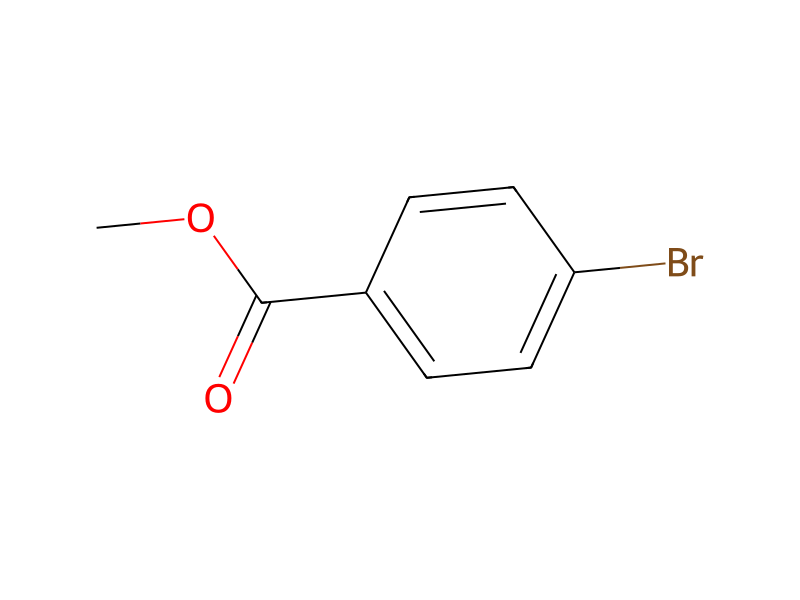
Br[C:2]1[CH:11]=[CH:10][C:5]([C:6]([O:8][CH3:9])=[O:7])=[CH:4][CH:3]=1.C1(P(C2C=CC=CC=2)C2C=CC=CC=2)C=CC=CC=1.[CH2:31]([OH:35])[CH2:32][C:33]#[CH:34]>C(NCC)C.[Pd](Cl)Cl.[Cu](I)I>[CH3:9][O:8][C:6](=[O:7])[C:5]1[CH:10]=[CH:11][C:2]([C:34]#[C:33][CH2:32][CH2:31][OH:35])=[CH:3][CH:4]=1Participants
Reactant 3


Product 1

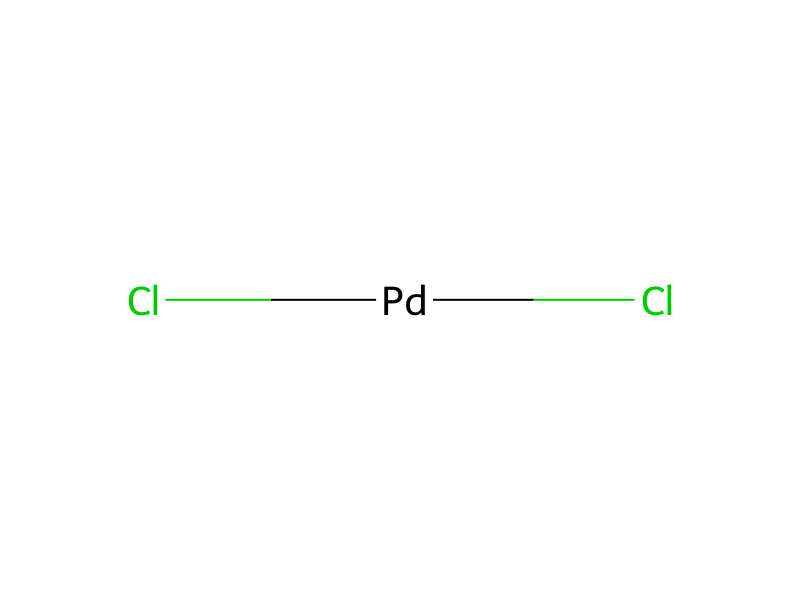
Reagents, catalysts & solvents 3


Procedure
To a stirring solution of methyl 4-bromobenzoate (13.4 g, 0.62 mmol) in diethyl amine (200 mL) was added palladium chloride (0.55 g, 3.06 mmol), and triphenylphosphine (0.16 g, 0.62 mmol). The solution was degassed and copper iodide (0.12 g, 0.62 mmol) and 3-butyn-1-ol (4.34 g, 62 mmol) were added. The reaction mixture continued to stir at room temperature overnight. Over the next two days, an additional 0.5 mol % palladium chloride, 1.0 mol % triphenylphosphine, and 12 mol % 3-butyn-1-ol were added. Once the reaction was complete according to LCMS, the reaction mixture was concentrated and the crude material was taken up in a slurry of silica gel and ethyl acetate. The organic solvent was removed and the remaining dried silica gel was packed in a fritted funnel. Extensive washes with a hexane:ethyl acetate mixture (1:4) followed by ethyl acetate (100%) washes yielded the desired 4-(4-hydroxy-but-1-ynyl)-benzoic acid methyl ester (11.9 g, 0.58 mmol) as the desired product (94% yield). 1H (CDCl3, 600 MHz): δ 7.95 (2H, d, J=8.4 Hz), 7.45 (2H, d, J=8.4 Hz), 3.9 (s, 3H), 3.83 (2H, t, J=6.6 Hz), 2.71 (2H, t, J=6.0 Hz).
Workup
- customThe solution was degassed
- concentrationthe reaction mixture was concentrated
- customThe organic solvent was removed
- customthe remaining dried silica gel was packed in a fritted funnel
Sources & evidence
- ORD record
- ord-e7ad5a676eeb441584852d430be6c3f7
- Source dataset
- uspto-grants-2009_02
- Patent number
- US07485283B2
Reaction notes
Loading…