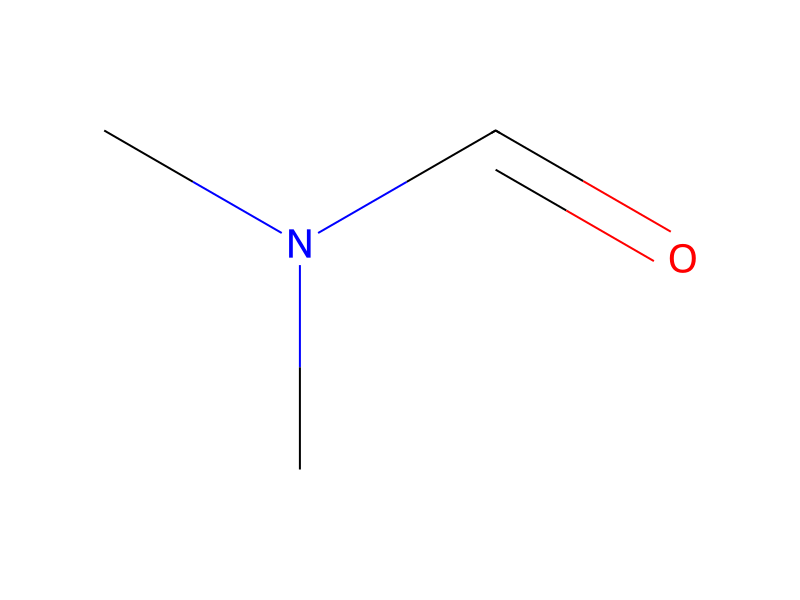
Dimethylformamide → 1-(4-chloro-2-fluorophenyl)-4,5-dihydro-3-methyl-5-oxo-1H-1,2,4-triazole
Reaction equation

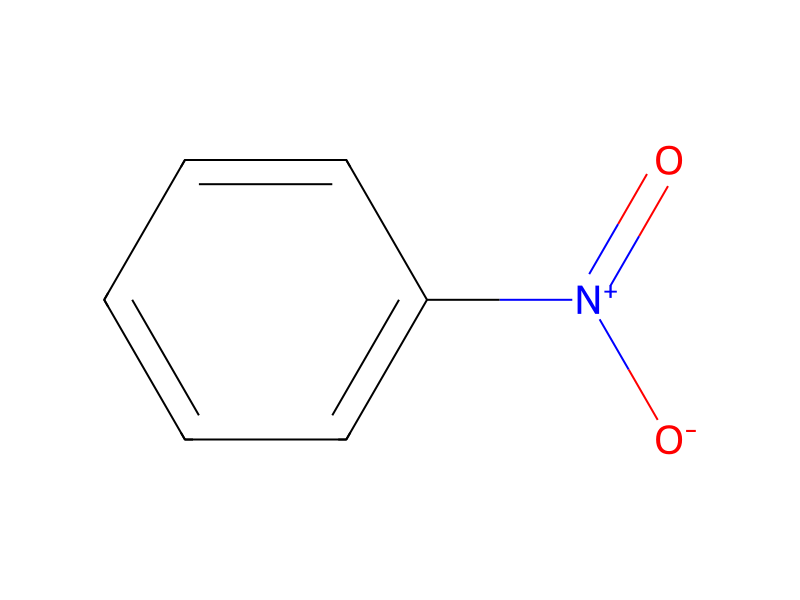
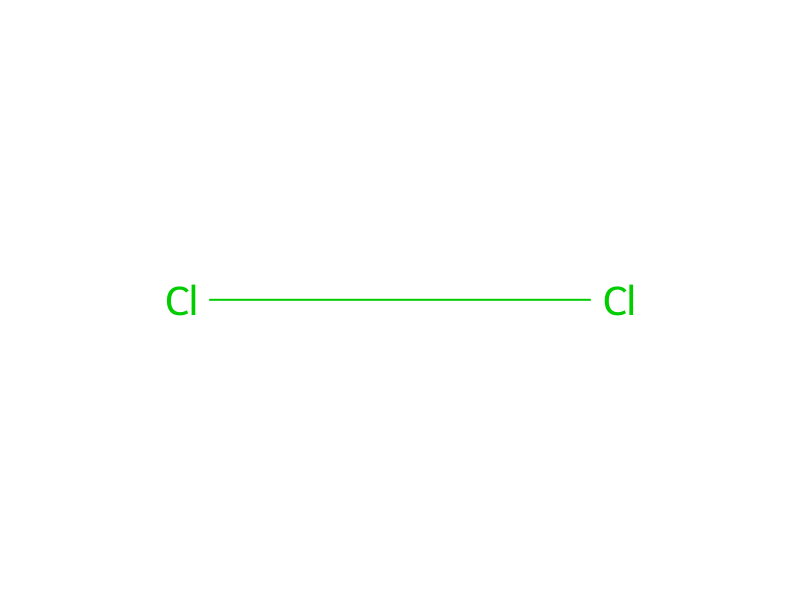
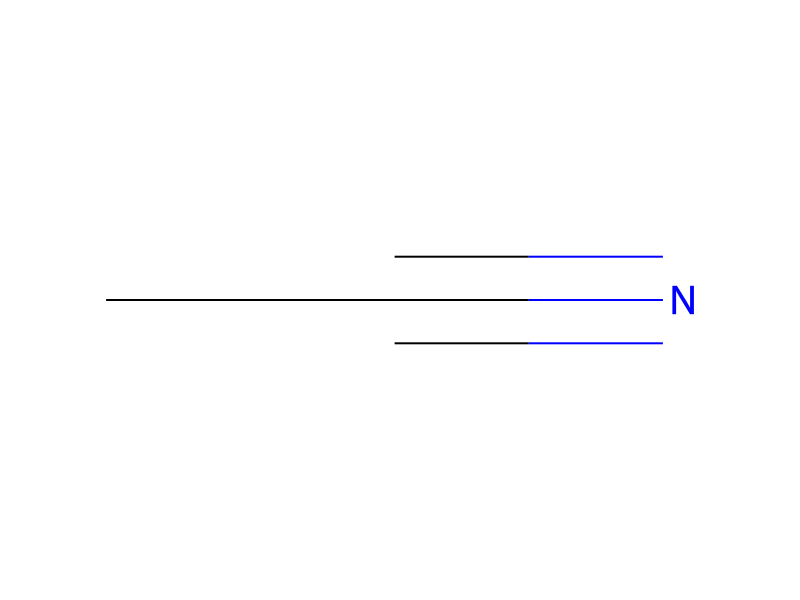
[F:1][C:2]1[CH:7]=[CH:6][CH:5]=[CH:4][C:3]=1[N:8]1[C:12](=[O:13])[NH:11][C:10]([CH3:14])=[N:9]1.CN(C)C=O.[N+](C1C=CC=CC=1)([O-])=O.[Cl:29]Cl>C(#N)C.[N+](C)([O-])=O>[Cl:29][C:6]1[CH:5]=[CH:4][C:3]([N:8]2[C:12](=[O:13])[NH:11][C:10]([CH3:14])=[N:9]2)=[C:2]([F:1])[CH:7]=1Participants
Reactant 4

Product 1

Reagents, catalysts & solvents 2

Conditions
- Temperature
- 50 °C
Procedure
The key to these superior yields is the removal of the hydrogen chloride gas generated during the chlorination steps after each of the one molar equivalent chlorine feeds. If left in the reaction mixture, the hydrogen chloride will stall the reaction and/or react with the acetonitrile solvent, thereby giving reduced yields of product. The hydrogen chloride is removed from the reaction mixture to the extent possible by first using a vacuum strip, then optionally purging with nitrogen. The reduced hydrogen chloride concentration also helps to reduce the corrosivity of the reaction mixture, which becomes especially important during the reaction, filtration, and handling steps. In the preferred process of the present invention, 4,5-dihydro-1-(2-fluorophenyl)-3-methyl-5-oxo-1H-1,2,4-triazole (one equiv.) is placed in a solvent such as acetonitrile, N,N-dimethylformamide, nitromethane, or nitrobenzene, preferably acetonitrile. The concentration of this 2-fluorophenyl derivative in the solvent on a percent weight of 2-fluorophenyl derivative to volume of solvent is in the range of about 5 to 70%, preferably about 10 to 35%, and most preferably 15 to 25%. The solvent used may be fresh, recycled from previous runs of this chlorination reaction, or combinations of fresh and recycled. The resulting slurry is stirred during the chlorination steps at a temperature in the range of about 0° C. to about 75° C., preferably ambient temperature (e.g., 23° C.) to 50° C., and most preferably 30° C. to 40° C. In a pilot plant scale run of the process of the present invention, the chlorine addition is conducted in a closed system under a vacuum of about 300 to 500 mm Hg, which helps to alleviate pressure build-up from the chlorine gas addition. Laboratory scale runs of the chlorination are routinely conducted at atmospheric pressure with no apparent adverse consequence. The chlorine gas feed rate is important to ensure proper absorbtion. In a pilot plant scale run, the reactor pressure is dependent on the rate of chlorine gas addition versus the rate of reaction. It is preferred to maintain the pressure in the reactor under 15 psig by the rate of addition of chlorine gas, preferably, at about 0.5 lb/minute. With the reaction mixture in the preferred temperature range, 0.8 to 1.6 molar equivalents, preferably 0.9 to 1.5 molar equivalents, of chlorine gas are added below the surface of the reaction mixture at a rate that will maintain the reaction mixture below 50° C., preferably between 30° C. and 40° C. The time required to complete the first feed of chlorine gas while maintaining the above conditions is about 10 minutes to two hours, preferably 20 minutes to one hour. Upon completion of the first feed of chlorine gas the reaction mixture is brought to a temperature of about 30° C. to 50° C., preferably 30° C. to 40° C., where it is stirred for a hold time of one to 10 hours, preferably three to six hours, after which time the conversion of 4,5-dihydro-1-(2-fluorophenyl)-3-methyl-5-oxo-1H-1,2,4-triazole to 1-(4-chloro-2-fluorophenyl)-4,5-dihydro-3-methyl-5-oxo-1H-1,2,4-triazole, as determined by gas chromatographic methods, is about 50% (area %). Upon completion of the hold-time the reaction mixture is maintained at the preferred temperature of 30° C. to 40° C. and placed under reduced pressure. In a pilot plant scale run the pressure reduction is to about 100 to 200 mm Hg, preferably 135 to 165 mm Hg. In a laboratory scale run, the pressure reduction is to about 10 to 30 mm Hg, preferably 15 to 25 mm Hg. In a pilot plant scale run, refluxing under the conditions described above is continued for a period of one to six hours, preferably two to four hours during which time trace amounts of residual chlorine and about 99% of the by-product hydrogen chloride is driven off. If more than 1% of the hydrogen chloride remains in the reaction mixture, the reaction mixture is purged with nitrogen gas to bring the hydrogen chloride level to less than 1%. In a laboratory scale run, refluxing under the conditions described above is continued for a period of about 20 minutes to two hours, preferably 30 to 50 minutes, then the reaction mixture is purged with nitrogen gas for a period of about 10 to 30 minutes, preferably 15 to 25 minutes. Upon completion of the first feed of chlorine gas and the subsequent removal of the by-product hydrogen chloride, the process is repeated with a second feed of chlorine gas in the amounts and under the conditions described above. The conversion of 4,5-dihydro-1-(2-fluorophenyl)-3-methyl-5-oxo-1H-1,2,4-triazole to 1-(4-chloro-2-fluorophenyl)-4,5-dihydro-3-methyl-5-oxo-1H-1,2,4-triazole after the second feed, as determined by gas chromatographic methods, is about 75% (area %). The subsequent removal of the by-product hydrogen chloride is again conducted under conditions described above. A third feed of chlorine and by-product hydrogen chloride removal are conducted in the same manner. Upon completion of the third feed of chlorine and the subsequent by-product hydrogen chloride removal, conversion of 4,5-dihydro-1-(2-fluorophenyl)-3-methyl-5-oxo-1H-1,2,4-triazole to 1-(4-chloro-2-fluorophenyl)-4,5-dihydro-3-methyl-5-oxo-1H-1,2,4-triazole, as determined by gas chromatographic methods, is about 97% (area %) or better. After removal of the hydrogen chloride the reaction mixture is cooled and the solid product collected by filtration or centrifugation. In a pilot plant scale run, the reaction mixture is cooled to about 0° C. to 15° C., preferably to 3° C. to 10° C. to maximize precipitation of any product in solution, and held at this temperature for about 30 minutes to two hours, preferably one hour. The solid product is collected by centrifugation and washed with a cold solvent, preferably acetonitrile. In the pilot plant scale runs, yields of 1-(4-chloro-2-fluorophenyl)-4,5-dihydro-3-methyl-5-oxo-1H-1,2,4-triazole are about 80% with purity of 98 to 100%. In corresponding laboratory scale runs, yields of 82% to 89% are obtained with purity of 98 to 100%. The acetonitrile solvent removed from the product by filtration or centrifugation may be distilled for use in subsequent chlorinations by this process.
Workup
- customThe key to these superior yields
- customthe removal of the hydrogen chloride gas
- waitIf left in the reaction mixture
- customthe reaction
- customgiving
- customreduced yields of product
- customThe hydrogen chloride is removed from the reaction mixture to the extent possible
- customoptionally purging with nitrogen
- concentrationThe reduced hydrogen chloride concentration
- custombecomes especially important during the reaction, filtration
- customrecycled from previous runs of this chlorination reaction, or combinations of fresh and recycled
- custommost preferably 30° C. to 40° C
- customabsorbtion
- additionIn a pilot plant scale run, the reactor pressure is dependent on the rate of chlorine gas addition versus the rate of reaction
- temperatureto maintain the pressure in the reactor under 15 psig
- additionby the rate of addition of chlorine gas
- additionWith the reaction mixture in the preferred temperature range, 0.8 to 1.6 molar equivalents, preferably 0.9 to 1.5 molar equivalents, of chlorine gas are added below the surface of the reaction mixture at a rate that
- temperaturewill maintain the reaction mixture below 50° C., preferably between 30° C. and 40° C
- temperaturewhile maintaining the above conditions
- waitis about 10 minutes to two hours, preferably 20 minutes to one hour
- customis brought to a temperature of about 30° C. to 50° C., preferably 30° C. to 40° C., where it
- stirringis stirred for a hold time of one to 10 hours, preferably three to six hours
- temperatureUpon completion of the hold-time the reaction mixture is maintained at the preferred temperature of 30° C. to 40° C.
- temperatureIn a pilot plant scale run, refluxing under the conditions
- waitabove is continued for a period of one to six hours, preferably two to four hours during which time trace amounts of residual chlorine and about 99% of the by-product hydrogen chloride
- customthe reaction mixture is purged with nitrogen gas
- temperaturerefluxing under the conditions
- customthe reaction mixture is purged with nitrogen gas for a period of about 10 to 30 minutes, preferably 15 to 25 minutes
- customUpon completion of the first feed of chlorine gas and the subsequent removal of the by-product hydrogen chloride
- customThe subsequent removal of the by-product hydrogen chloride
- customA third feed of chlorine and by-product hydrogen chloride removal
- customUpon completion of the third feed of chlorine and the subsequent by-product hydrogen chloride removal, conversion of 4,5-dihydro-1-(2-fluorophenyl)-3-methyl-5-oxo-1H-1,2,4-triazole to 1-(4-chloro-2-fluorophenyl)-4,5-dihydro-3-methyl-5-oxo-1H-1,2,4-triazole
- customAfter removal of the hydrogen chloride the reaction mixture
- temperatureis cooled
- filtrationthe solid product collected by filtration or centrifugation
- temperatureIn a pilot plant scale run, the reaction mixture is cooled to about 0° C. to 15° C., preferably to 3° C. to 10° C.
- customprecipitation of any product in solution
- waitheld at this temperature for about 30 minutes to two hours, preferably one hour
- customThe solid product is collected by centrifugation
- washwashed with a cold solvent, preferably acetonitrile
Sources & evidence
- ORD record
- ord-ef579cb586964c649dbc52f6251a9345
- Source dataset
- uspto-grants-1999_10
- Patent number
- US05965742
Reaction notes
Loading…