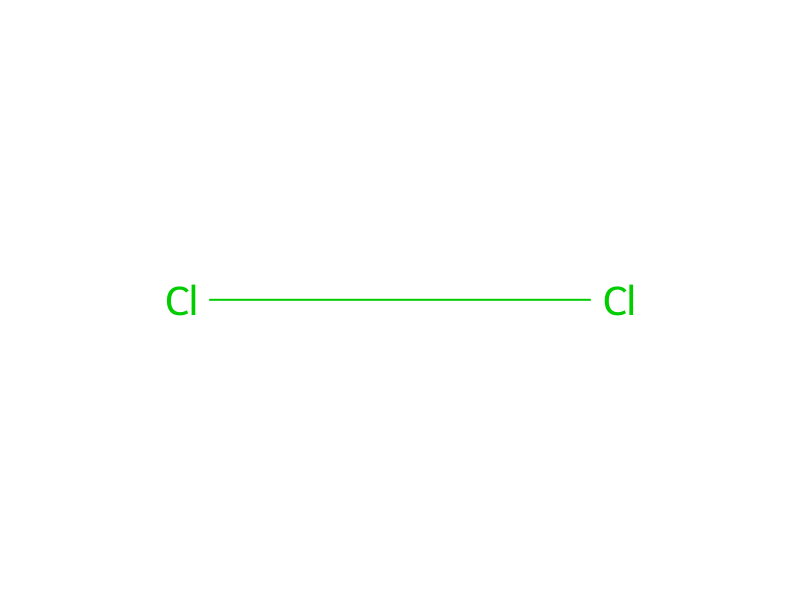
Chlorine → 1-(4-chloro-2-fluorophenyl)-4,5-dihydro-3-methyl-5-oxo-1H-1,2,4-triazole
Reaction equation

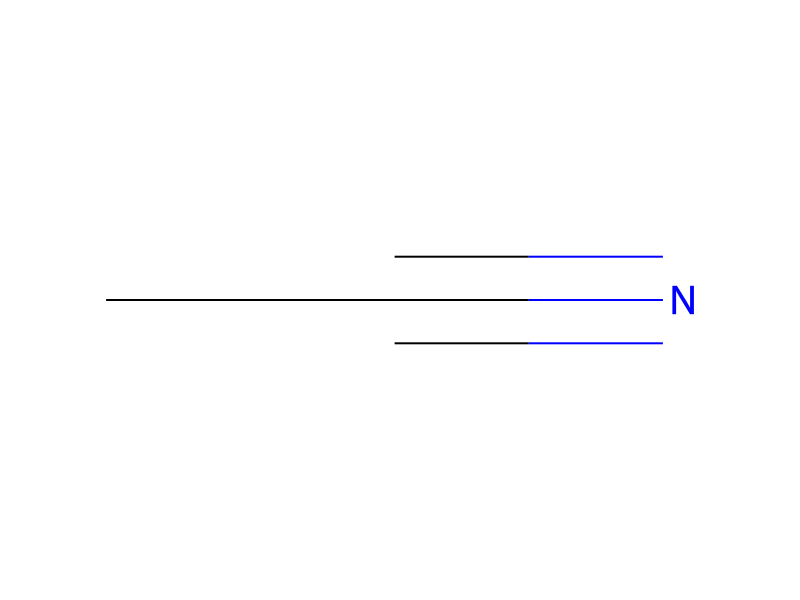
[F:1][C:2]1[CH:7]=[CH:6][CH:5]=[CH:4][C:3]=1[N:8]1[C:12](=[O:13])[NH:11][C:10]([CH3:14])=[N:9]1.[Cl:15]Cl>C(#N)C>[Cl:15][C:6]1[CH:5]=[CH:4][C:3]([N:8]2[C:12](=[O:13])[NH:11][C:10]([CH3:14])=[N:9]2)=[C:2]([F:1])[CH:7]=1Participants


Conditions
- Temperature
- 35 °C
Procedure
A 50 gallon glass-lined reaction vessel equipped with a Hasteloy condenser and a glass stirring device was charged with 115 pounds of acetonitrile recycled from a previous run of the present reaction, 47.4 pounds of fresh acetonitrile (total 162.4 pounds--94.685 liters), and 40.6 pounds (0.210 lb-mole; 1.00 equiv.--18.416 Kg) of 4,5-dihydro-1-(2-fluorophenyl)-3-methyl-5-oxo-1H-1,2,4-triazole (wt. %/vol.--triazole/solvent is 19.46%). The mixture was then stirred and warmed to 35° C. During the warm-up period the reaction vessel was purged three times with nitrogen gas and sealed under a vacuum of about 300 to 500 mm Hg. Chlorine gas, 21.01 pounds (0.296 lb-mole; 1.41 equiv.) was then fed into the reaction mixture below the surface at a rate (about 0.5 lb./min.) to maintain the reaction mixture temperature at 40° C. or less and the reaction vessel pressure under 15 psig. The time required to complete the feed of chlorine gas was about 30 minutes. The chlorine gas feed lines were purged with nitrogen following the feed of chlorine, which caused some reduction in temperature. The reaction mixture temperature was then brought slowly to 40° C., while the reaction vessel pressure was kept under 15 psig. The reaction mixture was then stirred for a hold time of three hours, after which time it was analyzed for conversion of starting material to product and hydrogen chloride by-product content. During the three hour hold time the conversion of starting material to product, as determined by gas chromatographic methods, was about 50% (area %). After this time the reaction mixture was refluxed for three hours at 40° C./150 mm Hg, causing the removal of hydrogen chloride by-product. An acceptable hydrogen chloride by-product content of less than 1% had been achieved by the end of the three hour reflux. The reaction mixture was then cooled to 35° C., and the reaction vessel was placed under a vacuum of about 300 to 500 mm Hg. A second feed of chlorine gas, 14.01 pounds (0.198 lb-mole; 0.94 equiv.) was then charged (~seven hours following the first feed) into the reaction mixture in the manner described for the first feed of chlorine. The time required to complete the second feed of chlorine gas was about 30 minutes. Upon completion of the feed of chlorine, the reaction mixture was held at 40° C./≤15 psig for a three hour hold time, as previously described. The reaction mixture was then analyzed for conversion of starting material to product and hydrogen chloride by-product content. During the three hour hold time the conversion of starting material to product, as determined by gas chromatographic methods, was about 75% (area %). The reaction mixture was again refluxed for three hours at 40° C./150 mm Hg, to remove hydrogen chloride by-product to less than 1%. The reaction mixture was then adjusted to the conditions previously described, and a third feed of 14.01 pounds (0.198 lb-mole; 0.94 equiv.) of chlorine gas was charged (~14.5 hours following the first feed). Upon completion of the addition of the third feed of chlorine gas the reaction mixture was again held at 40° C. for four hours. A conversion of starting material to product of 96% (area %) or greater was accomplished during the four hour hold time. The reaction mixture was again refluxed at 40° C./≤15 psig for three hours to remove hydrogen chloride by-product. Upon completion of the reflux time (total reaction time: ~22.5 hours) the reaction mixture was cooled to 5° C. during 30 minutes, and stirred at that temperature for one hour. The reaction mixture was then transferred into an appropriate centrifuge, where it was spun for 30 minutes to remove the mother liquor. The mother liquor was placed in a separate receiver for reclamation of the acetonitrile by distillation. The filter cake was washed first with 35 pounds of cold (0-5° C.) acetonitrile charged directly into the centrifuge. The mixture was spun for 30 minutes to remove the acetonitrile wash. A second 35 pounds of cold acetonitrile was charged into the reaction vessel, where it was stirred for five minutes to remove any remaining reaction mixture. The acetonitrile wash was then transferred into the centrifuge, where it was spun as previously described. The filter cake was removed from the centrifuge and dried at 60° C./25 mm Hg for 24 hours, yielding 38.27 pounds (80.2% yield) of 1-(4-chloro-2-fluorophenyl)-4,5-dihydro-3-methyl-5-oxo-1H-1,2,4-triazole, which was 99.9% pure (weight % as determined by gas chromatographic methods).
Workup
- customequipped with a Hasteloy condenser
- stirringThe mixture was then stirred
- customDuring the warm-up period the reaction vessel was purged three times with nitrogen gas
- customsealed under a vacuum of about 300 to 500 mm Hg
- temperatureto maintain the reaction mixture temperature at 40° C. or less
- customThe chlorine gas feed lines were purged with nitrogen following the feed of chlorine, which
- customwas then brought slowly to 40° C., while the reaction vessel pressure
- stirringThe reaction mixture was then stirred for a hold time of three hours
- customDuring the three hour
- temperatureAfter this time the reaction mixture was refluxed for three hours at 40° C./150 mm Hg
- customthe removal of hydrogen chloride by-product
- customhad been achieved by the end of the three hour
- temperaturereflux
- temperatureThe reaction mixture was then cooled to 35° C.
- additionA second feed of chlorine gas, 14.01 pounds (0.198 lb-mole; 0.94 equiv.) was then charged (~seven hours
- waitwas about 30 minutes
- customwas held at 40° C.
- customfor a three hour
- customDuring the three hour
- temperatureThe reaction mixture was again refluxed for three hours at 40° C./150 mm Hg
- customto remove hydrogen chloride by-product to less than 1%
- waitwas again held at 40° C. for four hours
- customgreater was accomplished during the four hour
- temperatureThe reaction mixture was again refluxed at 40° C./≤15 psig for three hours
- customto remove hydrogen chloride by-product
- temperatureUpon completion of the reflux time (total reaction time: ~22.5 hours) the reaction mixture was cooled to 5° C. during 30 minutes
- stirringstirred at that temperature for one hour
- waitwas spun for 30 minutes
- customto remove the mother liquor
- distillationThe mother liquor was placed in a separate receiver for reclamation of the acetonitrile by distillation
- washThe filter cake was washed first with 35 pounds of cold (0-5° C.) acetonitrile
- additioncharged directly into the centrifuge
- waitThe mixture was spun for 30 minutes
- customto remove the acetonitrile
- washwash
- additionA second 35 pounds of cold acetonitrile was charged into the reaction vessel, where it
- stirringwas stirred for five minutes
- customto remove
- customany remaining reaction mixture
- washThe acetonitrile wash
- customThe filter cake was removed from the centrifuge
- customdried at 60° C./25 mm Hg for 24 hours
Sources & evidence
- ORD record
- ord-d7bfc1898f5a4c7e97711630b9664b13
- Source dataset
- uspto-grants-1999_10
- Patent number
- US05965742
Reaction notes
Loading…