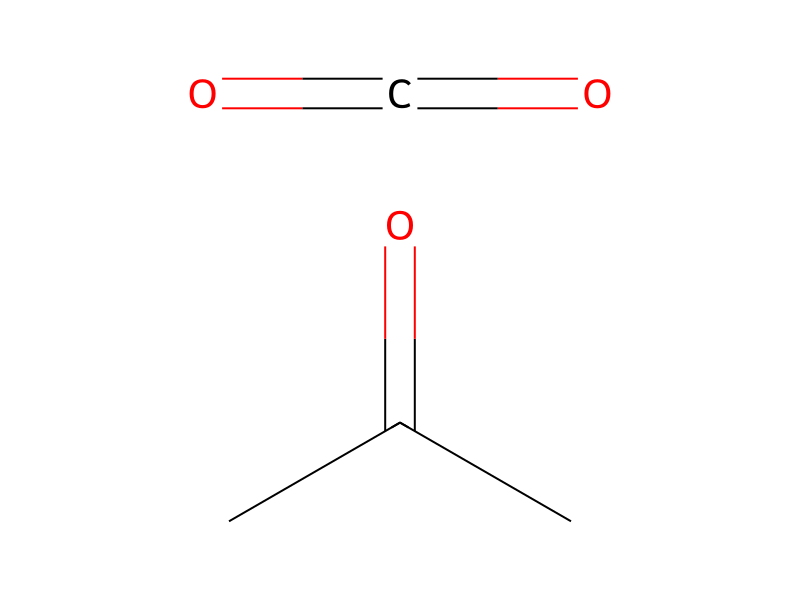
Acetone cardice → 1-(4-bromo-2,6-dimethylphenyl)-3,5-diethyl-1H-pyrazol-4-yl-methanol
Reaction equation

C(=O)=O.CC(C)=O.C[O:9][C:10]([C:12]1[C:13]([CH2:28][CH3:29])=[N:14][N:15]([C:19]2[C:24]([CH3:25])=[CH:23][C:22]([Br:26])=[CH:21][C:20]=2[CH3:27])[C:16]=1[CH2:17][CH3:18])=O.[H-].C([Al+]CC(C)C)C(C)C>O1CCCC1>[Br:26][C:22]1[CH:21]=[C:20]([CH3:27])[C:19]([N:15]2[C:16]([CH2:17][CH3:18])=[C:12]([CH2:10][OH:9])[C:13]([CH2:28][CH3:29])=[N:14]2)=[C:24]([CH3:25])[CH:23]=1Participants
5
Reactant 3


Product 1

Reagents, catalysts & solvents 1

Procedure
To a dry ice/acetone bath-chilled solution of 1-(4-bromo-2,6-dimethylphenyl)-3,5-diethyl-1H-pyrazole-4-carboxylic acid methyl ester (1.1 g, 3.1 mmol) in anhydrous tetrahydrofuran (8 ml), diisobutylaluminum hydride (1.0 M in toluene; 10 ml, 10 mmol) was added dropwise. After 15 minutes, the reaction mixture was warmed to 0°-5° C. and stirred at that temperature for 2.5 hours. The reaction was then quenched by addition of 2 ml of water, and the organic solvent was removed in vacuo. Extraction of the residual mixture with ethyl acetate, anhydrous sodium sulfate drying of the resulting extract, and its concentration in vacuo afforded the title compound as a yellow oil (0.77 g).
Workup
- temperaturethe reaction mixture was warmed to 0°-5° C.
- customThe reaction was then quenched by addition of 2 ml of water
- customthe organic solvent was removed in vacuo
- extractionExtraction of the residual mixture with ethyl acetate, anhydrous sodium sulfate
- customdrying of the resulting
- extractionextract
- concentrationits concentration in vacuo
Sources & evidence
- ORD record
- ord-45aea6c38cb640fb8e048faf18b81a92
- Source dataset
- uspto-grants-1999_10
- Patent number
- US05968944
Reaction notes
Loading…