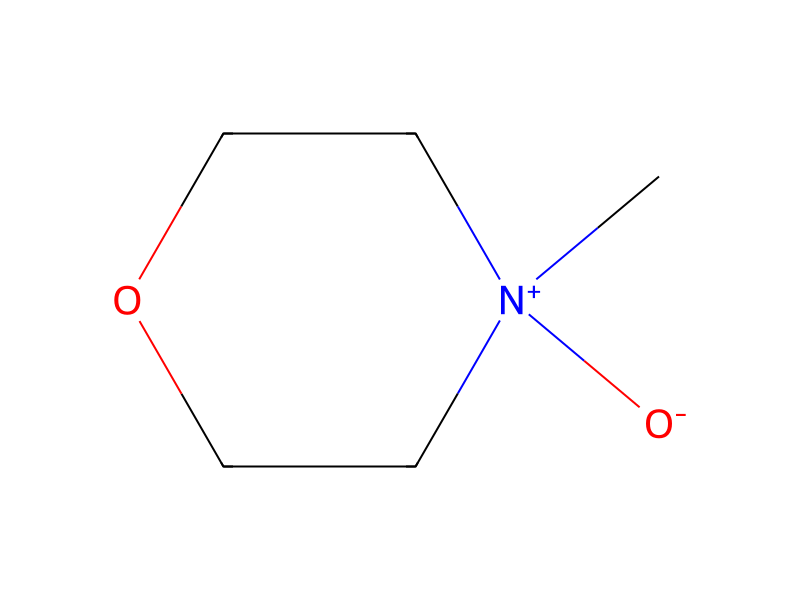
Methyl morpholine oxide → Ethyl 1-(p-chlorophenyl)-beta-oxocyclopropanepropionate
Reaction equation

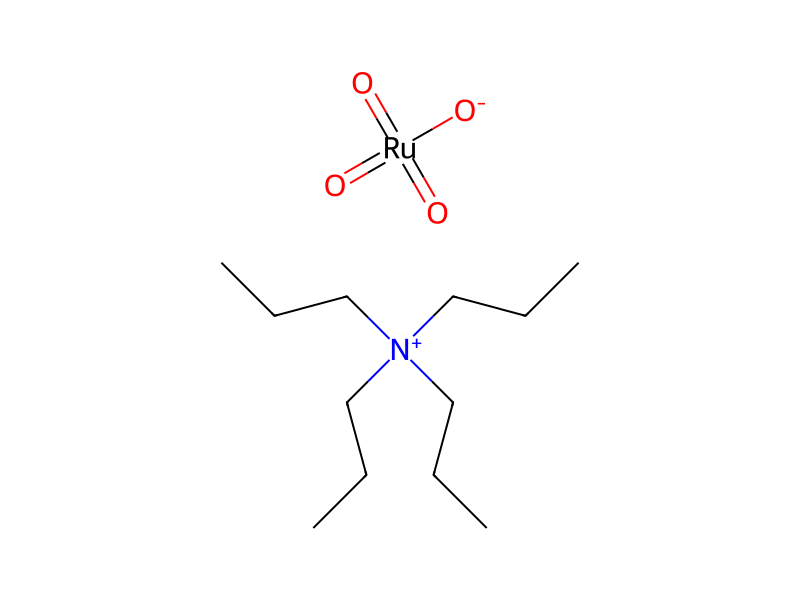
[Cl:1][C:2]1[CH:7]=[CH:6][C:5]([C:8]2([CH:11]([OH:18])[CH2:12][C:13]([O:15][CH2:16][CH3:17])=[O:14])[CH2:10][CH2:9]2)=[CH:4][CH:3]=1.C[N+]1([O-])CCOCC1>C(#N)C.C(OCC)C.[Ru]([O-])(=O)(=O)=O.C([N+](CCC)(CCC)CCC)CC>[Cl:1][C:2]1[CH:3]=[CH:4][C:5]([C:8]2([C:11](=[O:18])[CH2:12][C:13]([O:15][CH2:16][CH3:17])=[O:14])[CH2:10][CH2:9]2)=[CH:6][CH:7]=1Participants
Reactant 2

Product 1

Reagents, catalysts & solvents 3


Procedure
A solution of ethyl 1-(p-chlorophenyl)-β-hydroxy-cyclopropanepropionate (7.9 g, 29.4 mmol) and 4-methyl-morpholine N-oxide (14.0 g, 120 mmol) in acetonitrile containing 30 4 Å molecular sieves is stirred at room temperature for 20 minutes, treated with tetrapropyl-ammonium perruthenate (0.8 g, 2.3 mmol), stirred for two hours while maintaining the reaction mixture temperature at room temperature with an ice-water bath, diluted with diethyl ether, filtered through diatomaceous earth, and concentrated in vacuo to obtain a residue. A solution of the residue in diethyl ether is washed sequentially with water, 5% sulfuric acid, water and brine, dried over anhydrous sodium sulfate, and concentrated in vacuo to obtain a dark oil. Chromatography of the oil using silica gel and a 1:19 to 3:17 ethyl acetate/hexanes gradient gives the title product as a pale yellow oil (4.3 g, 55%) which is identified by NMR spectral analyses.
Workup
- filtrationfiltered through diatomaceous earth
- concentrationconcentrated in vacuo
- customto obtain a residue
- washA solution of the residue in diethyl ether is washed sequentially with water, 5% sulfuric acid, water and brine
- dry with materialdried over anhydrous sodium sulfate
- concentrationconcentrated in vacuo
- customto obtain a dark oil
Sources & evidence
- ORD record
- ord-f97e9bc5afca420a8c2ec6ed565db699
- Source dataset
- uspto-grants-1999_10
- Patent number
- US05973190
Reaction notes
Loading…