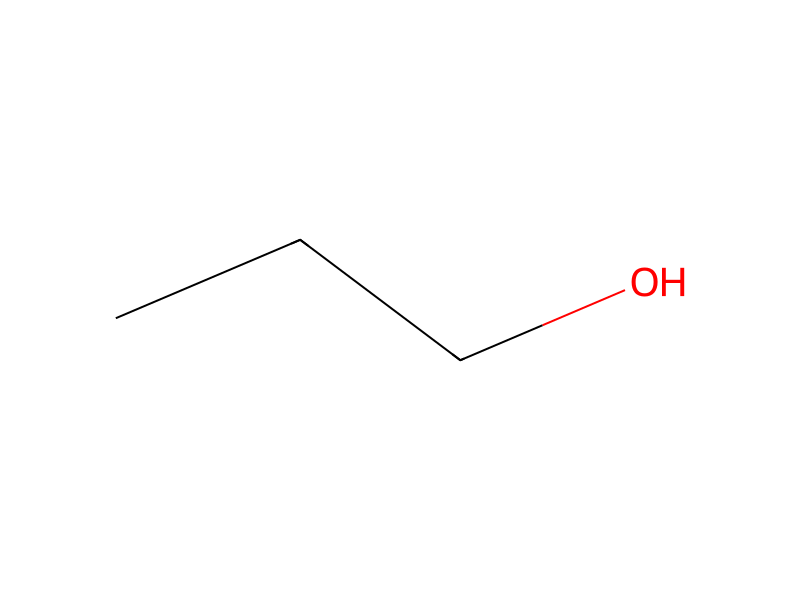
1-Propanol → Propyl ether
Reaction equation

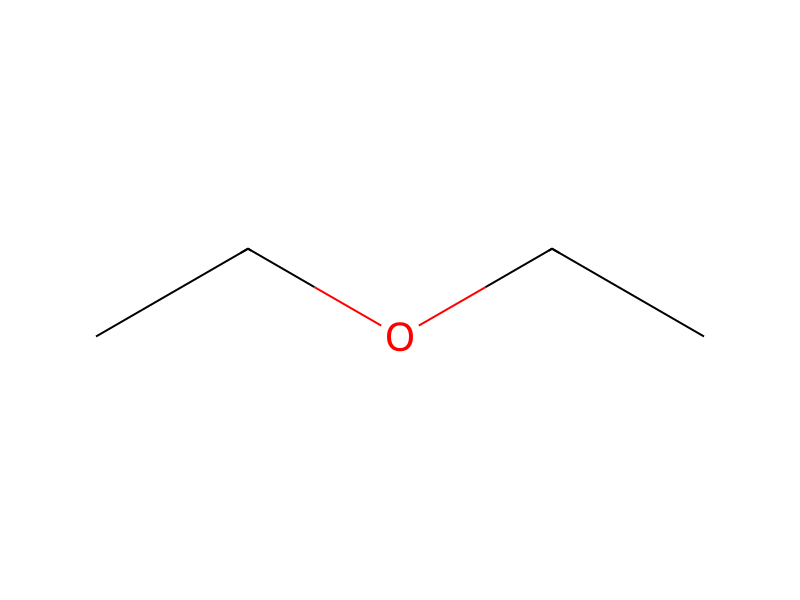
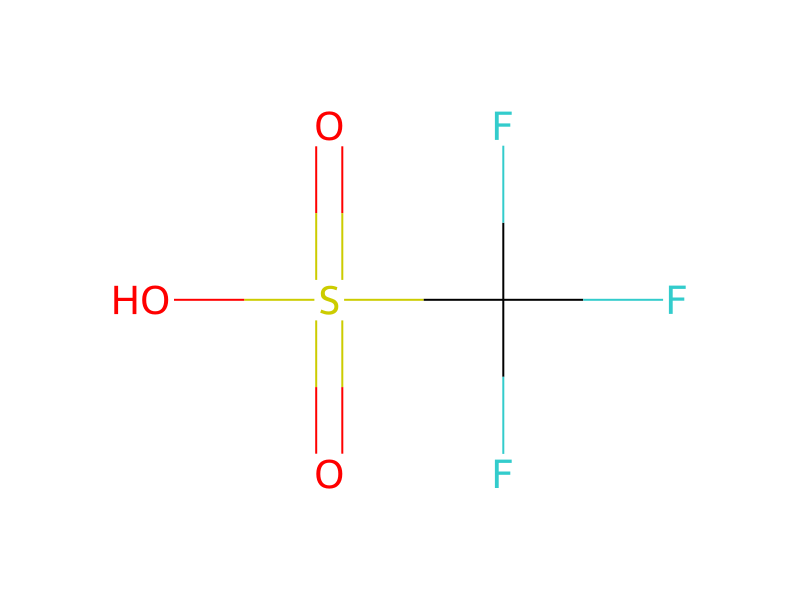
F[C:2](F)(F)S(O)(=O)=O.[CH2:9]([OH:12])[CH2:10][CH3:11].CC[O:15][CH2:16][CH3:17]>>[CH2:9]([O:12][CH2:2][CH:16]([OH:15])[CH3:17])[CH2:10][CH3:11].[CH2:9]([O:12][CH2:2][CH2:16][CH3:17])[CH2:10][CH3:11]Participants


Procedure
Homogenous catalysts have a distinct advantage in that the application of mechanistic understanding can allow rational tuning of catalyst structure and reaction conditions to optimize activity, selectivity and lifetimes. Schlaf and coworkers have explored the reduction of terminal vicinal diols to n-alcohols using homogeneous Ru ionic hydrogenation catalysts and through these studies have provided insight into various factors that control deoxygenation selectivity. The use of diol models, which are less reactive than their polyol analogs, enabled kinetic analysis and more thorough characterization of product profiles. The most selective of the Ru hydrogenation catalysts was [Cp*Ru(CO)2(H2)][OTf], which achieved a 54% yield of 1-propanol in sulfolane solvent at 110° C. and 710 psi H2 using trifluoromethanesulfonic acid (HOTf) as the catalyst for the initial dehydration step. In addition to the 1-propanol hydrogenation product, the formation of several ether condensation products was observed, including significant yields of propylene glycol propyl ether (11%) and di-n-propyl ether (15%). The overall selectivity for reduction of the secondary hydroxyl group is 99%. The high regioselectivity of the ruthenium catalyst was impressive, but the catalyst is deactivated by water, which is a byproduct of the reaction. The active Ru dihydrogen complex is deprotonated by water to yield an inactive dimer. This catalyst decomposition makes it impractical for use with inherently wet glycerol from biodiesel production. Several ruthenium containing ionic hydrogenation catalysts with N-donor ligands have demonstrated greater solubility and stability in aqueous solution, however significant thermal decomposition and/or reduced selectivities were observed.
Workup
- customat 110° C.
Sources & evidence
- ORD record
- ord-1e58346173e640ae97402ba7d17047a5
- Source dataset
- uspto-grants-2016_02
- Patent number
- US09260367B2
Reaction notes
Loading…