Hexamethyldisilazane → 9-[(1RS,4SR)-4-hydroxy-cyclopent-2-en-1-yl]guanine
Reaction equation

[NH:1]1[C:10](=[O:11])[C:9]2[NH:8][CH:7]=[N:6][C:5]=2[N:4]=[C:2]1[NH2:3].C[Si](C)(C)N[Si](C)(C)C.S([O-])([O-])(=O)=O.[NH4+].[NH4+].[SiH3]NC1NC(=O)C2NC=NC=2N=1.[O:40]1[C:42]2[CH2:43][CH2:44][CH2:45][C:41]1=2>C1(C)C(C)=CC=CC=1.O1CCCC1.[Pd].CO>[OH:40][CH:41]1[CH2:45][CH:44]([N:6]2[CH:7]=[N:8][C:9]3[C:10](=[O:11])[NH:1][C:2]([NH2:3])=[N:4][C:5]2=3)[CH:43]=[CH:42]1Participants
Reactant 5



Product 1

Reagents, catalysts & solvents 4




Procedure
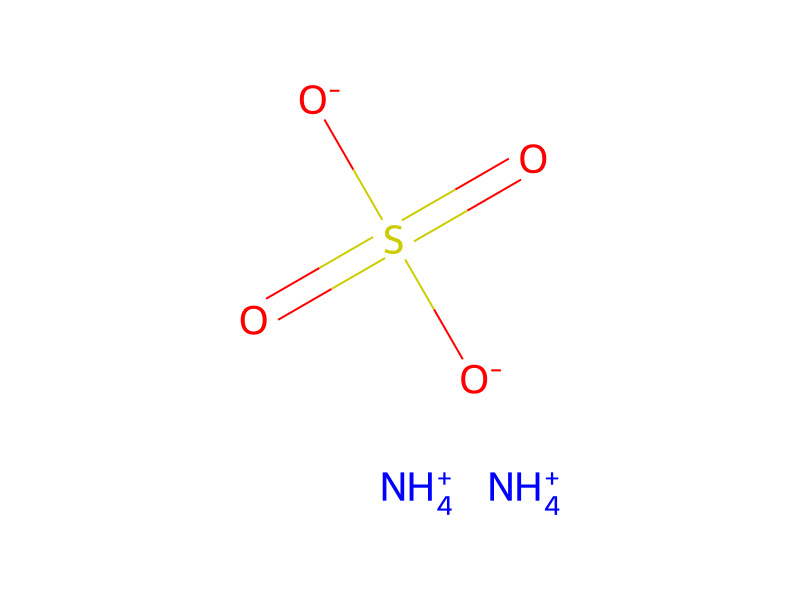
105.8 g (0.7 mol) of guanine are reacted in 600 ml of dry xylene with 500 ml of hexamethyldisilazane and 4 g of ammonium sulfate for 2 days to give the pertrimethylsilyl compound. The oily silylguanine compound is dissolved in 400 ml of dry tetrahydrofuran and the solution is added dropwise to a solution of the palladium(0) catalyst (5 mol %) prepared in situ as described above in 450 ml of tetrahydrofuran at 0° C. A solution of the equivalent amount of epoxycyclopentene in 200 ml of tetrahydrofuran is then added dropwise over a period of 2-3 hours. The resulting solution is stirred at room temperature for 3 days. 400 ml of methanol are added and the mixture is heated under reflux for 1 hour. During this operation, a very voluminous precipitate is formed, and can be converted into a homogeneous suspension after further stirring. The suspension thus obtained is filtered. 4.7 g of a mixture of the compounds 1.12.1. and 1.12.2. crystallize out of the filtrate. The residue on the filter is stirred with 1.2 l of water and filtered off with suction again. This residue on the filter is washed with ethanol and then boiled up in several portions with 1 l of ethanol. On cooling, this ethanolic solution gives 4.75 g of 9-[(1RS,4SR)-4-hydroxy-cyclopent-2-en-1-yl]guanine as beige crystals of melting point 265°-273° C. (decomposition) (compound of Example 1.12.1.). 1H NMR (270 MHz, de-DMSO), δ[ppm]: 10.56 (s, 1H), 7.60 (s, 1H), 6.42 (s, 2H), 6.15 (m, 1H), 5.95 (m, 1H), 5.24 (d, 1H), 5.20 (m, 1H), 4.70 (m, 1H), 2.82 (m, 1H), 1.60 (m, 1H). If the residue on the filter is boiled up again with 1.5 l of water, 5.0 g of 7-[(1RS,4SR)-4-hydroxy-cyclopent-2-en-1-yl]guanine of melting point >310° C. crystallize out of the aqueous filtrate (compound of Example 1.12.2.). 1H NMR (270 MHz, d6 -DMSO), δ[ppm]: 10.80 (s, 1H), 7.84 (s, 1H), 6.15 (m, 1H), 6.13 (s, 2H), 6.01 (m, 1H), 5.61 (m, 1H), 5.18 (d, 1H), 4.68 (m, 1H), 2.88 (m, 1H), 1.60 (m, 1H). The residue which remains on the filter of 82.7 g consists of a mixture of the compounds of Example 1.12.1. and 1.12.2.
Workup
- customto give the pertrimethylsilyl compound
- customprepared in situ
- temperaturethe mixture is heated
- temperatureunder reflux for 1 hour
- customDuring this operation, a very voluminous precipitate is formed
- customThe suspension thus obtained
- filtrationis filtered
- customcrystallize out of the filtrate
- stirringThe residue on the filter is stirred with 1.2 l of water
- filtrationfiltered off with suction again
- washThis residue on the filter is washed with ethanol
- temperatureOn cooling
Sources & evidence
- ORD record
- ord-2a5c50b1454647ab93b2a5a04b014175
- Source dataset
- uspto-grants-1997_05
- Patent number
- US05631259
Reaction notes
Loading…