Tetrahydrofuran → N-[5-chloro-7-(3-methoxyprop-1-yn-1-yl)-1,3-benzodioxol-4-yl]-7-(3-morpholin-4-ylpropoxy)-5-(tetrahydro-2H-pyran-4-yloxy)quinazolin-4-amine
Reaction equation

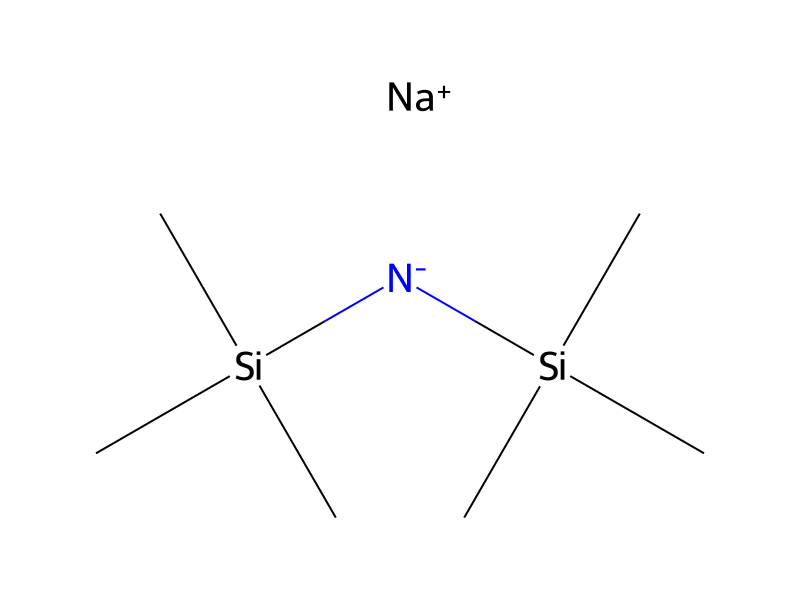
C[Si]([N-][Si](C)(C)C)(C)C.[Na+].O1CCCC1.[Cl:16][C:17]1[CH:25]=[C:24]([C:26]#[C:27][CH2:28][O:29][CH3:30])[C:20]2[O:21][CH2:22][O:23][C:19]=2[C:18]=1[NH2:31].Cl[C:33]1[C:42]2[C:37](=[CH:38][C:39]([O:50][CH2:51][CH2:52][CH2:53][N:54]3[CH2:59][CH2:58][O:57][CH2:56][CH2:55]3)=[CH:40][C:41]=2[O:43][CH:44]2[CH2:49][CH2:48][O:47][CH2:46][CH2:45]2)[N:36]=[CH:35][N:34]=1>CN(C=O)C>[Cl:16][C:17]1[CH:25]=[C:24]([C:26]#[C:27][CH2:28][O:29][CH3:30])[C:20]2[O:21][CH2:22][O:23][C:19]=2[C:18]=1[NH:31][C:33]1[C:42]2[C:37](=[CH:38][C:39]([O:50][CH2:51][CH2:52][CH2:53][N:54]3[CH2:55][CH2:56][O:57][CH2:58][CH2:59]3)=[CH:40][C:41]=2[O:43][CH:44]2[CH2:45][CH2:46][O:47][CH2:48][CH2:49]2)[N:36]=[CH:35][N:34]=1Participants
Reactant 4



Product 1

Reagents, catalysts & solvents 1

Conditions
- Temperature
- -10 °C
Procedure
A solution of sodium bis(trimethylsilyl)amide (1.28 ml) in tetrahydrofuran (1.0M, 1.28 mmol) was added to a suspension of 5-chloro-7-(3-methoxyprop-1-yn-1-yl)-1,3-benzodioxol-4-amine (0.153 g) and 4-chloro-7-(3-morpholin-4-ylpropoxy)-5-(tetrahydro-2H-pyran-4-yloxy)quinazoline (0.260 g) in DMF (4 ml) that had been cooled to −10° C. and the mixture was stirred for 90 minutes. A further portion of sodium bis(trimethylsilyl)amide (0.64 ml) in tetrahydrofuran (1.0M, 0.64 mmol) was added and the reaction was allowed to warm to room temperature and then stirred for a further 2 hours. The reaction mixture was quenched into water and saturated ammonium chloride solution was added. This was then extracted into dichloromethane and the organic portion was then washed with brine, dried over magnesium sulfate and evaporated. The residue was purified by column chromatography on silica using increasingly polar mixtures of dichloromethane and methanol as eluent. The product material gathered after chromatography as a foam was triturated with diethyl ether giving an off-white solid. This was then re-dissolved into dichloromethane and then evaporated under reduced pressure. The resulting solid was triturated with diethyl ether and air-dried. There was thus obtained the title compound (0.141 g) as a white solid; NMR Spectrum: (CDCl3) 2.00 (m, 4H), 2.23 (m, 2H), 2.48 (m, 4H), 2.54 (t, 2H), 3.46 (s, 3H), 3.63 (dq, 2H), 3.73 (t, 4H), 4.02 (dt, 2H), 4.16 (t, 2H), 4.35 (s, 2H), 4.76 (tt, 1H), 6.11 (s, 2H), 6.51 (d, 1H), 6.85 (d, 1H), 7.06 (s, 1H), 8.52 (s, 1H), 9.26 (s, 1H); Mass Spectrum: M+H+ 611/613.
Workup
- temperatureto warm to room temperature
- stirringstirred for a further 2 hours
- customThe reaction mixture was quenched into water and saturated ammonium chloride solution
- additionwas added
- extractionThis was then extracted into dichloromethane
- washthe organic portion was then washed with brine
- dry with materialdried over magnesium sulfate
- customevaporated
- customThe residue was purified by column chromatography on silica using
- temperatureincreasingly polar mixtures of dichloromethane and methanol as eluent
- customwas triturated with diethyl ether giving an off-white solid
- dissolutionThis was then re-dissolved into dichloromethane
- customevaporated under reduced pressure
- customThe resulting solid was triturated with diethyl ether
- customair-dried
Sources & evidence
- ORD record
- ord-8ffaa77a8e984dbd916df2b62730caa8
- Source dataset
- uspto-grants-2009_03
- Patent number
- US07504408B2
Reaction notes
Loading…