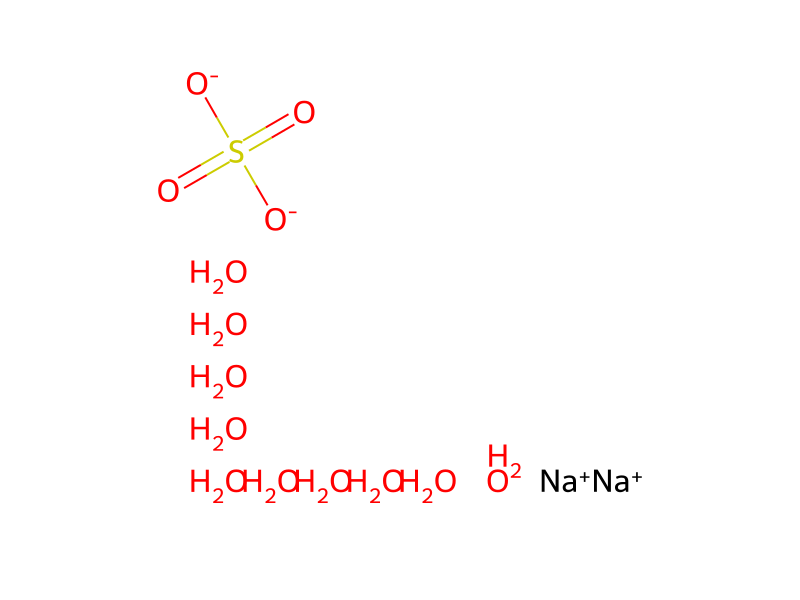
Sodium sulfate decahydrate → 3-[5-(4-Methylphenyl)-4-isoxazolyl]propan-1-ol
Reaction equation

[CH3:1][C:2]1[CH:7]=[CH:6][C:5]([C:8]2[O:12][N:11]=[CH:10][C:9]=2[CH2:13][CH2:14][C:15](OC)=[O:16])=[CH:4][CH:3]=1.[H-].C([Al+]CC(C)C)C(C)C.O.O.O.O.O.O.O.O.O.O.[O-]S([O-])(=O)=O.[Na+].[Na+]>O1CCCC1>[CH3:1][C:2]1[CH:3]=[CH:4][C:5]([C:8]2[O:12][N:11]=[CH:10][C:9]=2[CH2:13][CH2:14][CH2:15][OH:16])=[CH:6][CH:7]=1Participants




Procedure
To a solution of methyl 3-[5-(4-methylphenyl)-4-isoxazolyl]propionate (2.00 g) in tetrahydrofuran (50 ml) was gently added diisobutylaluminum hydride (0.95 M hexane solution, 21.5 ml) at 0° C., and the mixture was stirred at room temperature for 1 hr. Sodium sulfate 10 hydrate (6.57 g) was added to the reaction mixture and the mixture was stirred for 2 hr, after which an insoluble material was filtered off. The filtrate was concentrated and the residue was subjected to silica gel column chromatography, and 3-[5-(4-methylphenyl)-4-isoxazolyl]propan-1-ol (1.53 g, yield 86%) was obtained as a colorless oil from a fraction eluted with ethyl acetate-hexane (1:1, volume ratio). NMR (CDCl3) δ: 1.25–1.35 (1H, m), 1.8–2.0 (2H, m), 2.41 (3H, s), 2.7–2.85 (2H, m), 3.65–3.8 (2H, m), 7.29 (2H, d, J=8 Hz), 7.62 (2H, d, J=8 Hz), 8.19 (1H, s).
Workup
- customat 0° C.
- stirringthe mixture was stirred for 2 hr
- filtrationafter which an insoluble material was filtered off
- concentrationThe filtrate was concentrated
Sources & evidence
- ORD record
- ord-5f3558b6dd894e459c91c3e805f08cf2
- Source dataset
- uspto-grants-2006_04
- Patent number
- US07022725B2
Reaction notes
Loading…