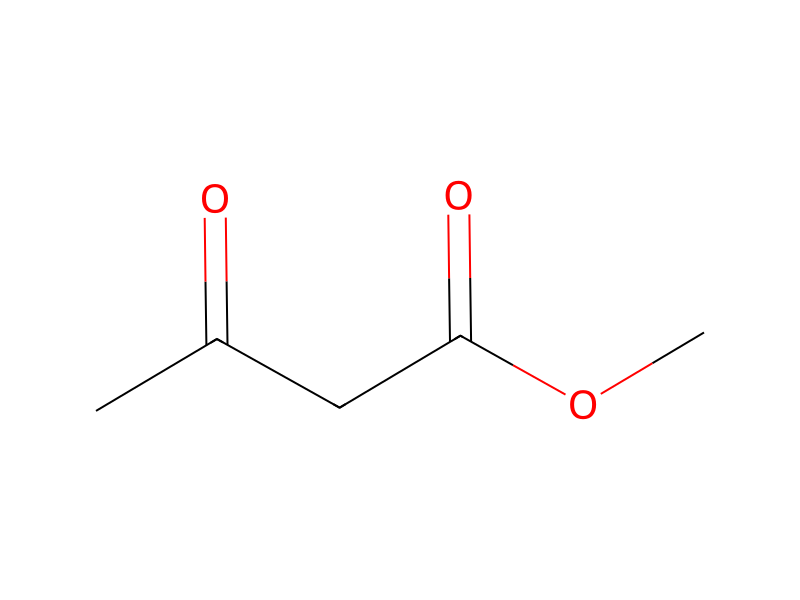
Methyl acetoacetate → Methyl 5-Methyl-3-(4-pyridyl)isoxazole-4-carboxylate
Reaction equation

[Na].[C:2]([O:8][CH3:9])(=[O:7])[CH2:3][C:4]([CH3:6])=[O:5].O[N:11]=[C:12](Cl)[C:13]1[CH:18]=[CH:17][N:16]=[CH:15][CH:14]=1>CO>[CH3:6][C:4]1[O:5][N:11]=[C:12]([C:13]2[CH:18]=[CH:17][N:16]=[CH:15][CH:14]=2)[C:3]=1[C:2]([O:8][CH3:9])=[O:7]Participants
Reactant 3


Product 1

Reagents, catalysts & solvents 1

Conditions
- Temperature
- 0 °C
Procedure
Sodium (0.400 g, 0.0166 mol) was added to anhydrous methanol under nitrogen. After complete dissolution, the reaction vessel was cooled to 0° C. and methyl acetoacetate (1.8 ml, 0.166 mol) added. A solution of N-hydroxy-4-pyridine carboximidoyl chloride (2 g, 0.0128 mol; prepared according to Kocevar, M., Synth. Commun., 1988, 18(12), 1427) was added dropwise over 20 minutes. The reaction was stirred at 25° C. for 16 h, and quenched with acetic acid (1 ml). The methanol was removed in vacuo and the product partitioned between EtOAc and water. The organic layer was collected, dried over MgSO4, and evaporated. The residue was chromatographed on silica eluting with 20% EtOAc/hexane→EtOAc to obtain the title compound as a beige solid (1.2 g). 1H NMR (400 MHz, CDCl3) δ 8.73–8.71 (m, 2H), 7.57–7.56 (m, 2H), 3.80 (s, 3H), 2.77(s, 3H).
Workup
- dissolutionAfter complete dissolution
- customquenched with acetic acid (1 ml)
- customThe methanol was removed in vacuo
- customthe product partitioned between EtOAc and water
- customThe organic layer was collected
- dry with materialdried over MgSO4
- customevaporated
- customThe residue was chromatographed on silica eluting with 20% EtOAc/hexane
Sources & evidence
- ORD record
- ord-3d66b4bfa1ea41539c237744f3495c67
- Source dataset
- uspto-grants-2006_06
- Patent number
- US07060710B2
Reaction notes
Loading…