Pyrrole → HCID 21044361, compound
Reaction equation

ClC(OCC)=O.N1C=CC=C1.[C:12]([O:16][C:17]([N:19]1[CH:23]([C:24]2[C:28]([NH2:29])=[C:27]([C:30]#[N:31])[N:26](C(OCC)=O)[CH:25]=2)[CH:22]2[O:37][C:38]([CH3:41])([CH3:40])[O:39][CH:21]2[CH:20]1[CH2:42][S:43][CH3:44])=[O:18])([CH3:15])([CH3:14])[CH3:13].N12CCCN=C1CCCCC2>>[C:12]([O:16][C:17]([N:19]1[CH:23]([C:24]2[C:28]([NH2:29])=[C:27]([C:30]#[N:31])[NH:26][CH:25]=2)[CH:22]2[O:37][C:38]([CH3:41])([CH3:40])[O:39][CH:21]2[CH:20]1[CH2:42][S:43][CH3:44])=[O:18])([CH3:15])([CH3:14])[CH3:13]Participants
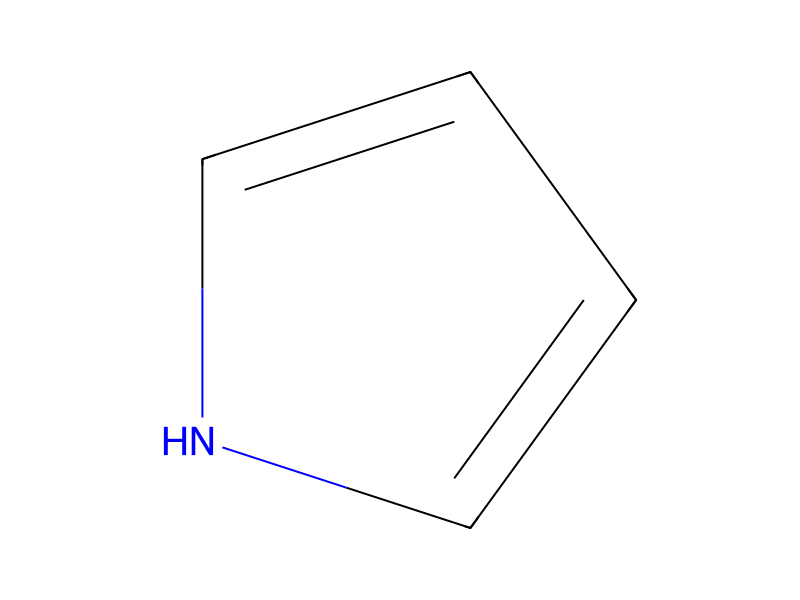




Procedure
The corresponding cyanomethylamino compound is then obtained by reaction, for example, with amino acctonitrile. This intermediate is then converted to the ester form by reaction with an esterification agent such as ethyl chloroformate. This intermediate is then cyclized to the corresponding pyrrol compound, 4-(4-amino-5-cyano-1-ethoxycarbonyl-1H-pyrrol-3-yl)-2,2-dimethyl-6-methylsulfanylmethyl-tetrahydro-[1,3]dioxolo[4,5-c]pyrrole-5-carboxylic acid tert-butyl ester using, for example, 1,8-diazabicyclo[5.4.0]undec-7-ene. This compound was then converted to the corresponding amino derivative by removal of the ethoxycarbonyl substituent to produce 4-(4-amino-5-cyano-1H-pyrrol-3-yl)-2,2-dimethyl-6-methylsulfanylmethyl-tetrahydro-[1,3]dioxolo[4,5-c]pyrrole-5-carboxylic acid tert-butyl ester. This compound, in turn was then reacted with formamidine acetate to form the target compound.
Workup
- customThis compound was then converted to the corresponding amino derivative by removal of the ethoxycarbonyl substituent
Sources & evidence
- ORD record
- ord-f3c2bf0aef5945ac8fc9138383062917
- Source dataset
- uspto-grants-2004_08
- Patent number
- US06780993B1
Reaction notes
Loading…