Cyclopropanecarboxaldehyde → (4-Chloro-3-methyl-2-pyridyl)-cyclopropyl-methanol
Reaction equation

Br[C:2]1[C:7]([CH3:8])=[C:6]([Cl:9])[CH:5]=[CH:4][N:3]=1.C([Mg]Cl)(C)C.[CH:15]1([CH:18]=[O:19])[CH2:17][CH2:16]1>C1COCC1>[CH3:8][C:7]1[C:2]([CH:18]([CH:15]2[CH2:17][CH2:16]2)[OH:19])=[N:3][CH:4]=[CH:5][C:6]=1[Cl:9]Participants




Procedure
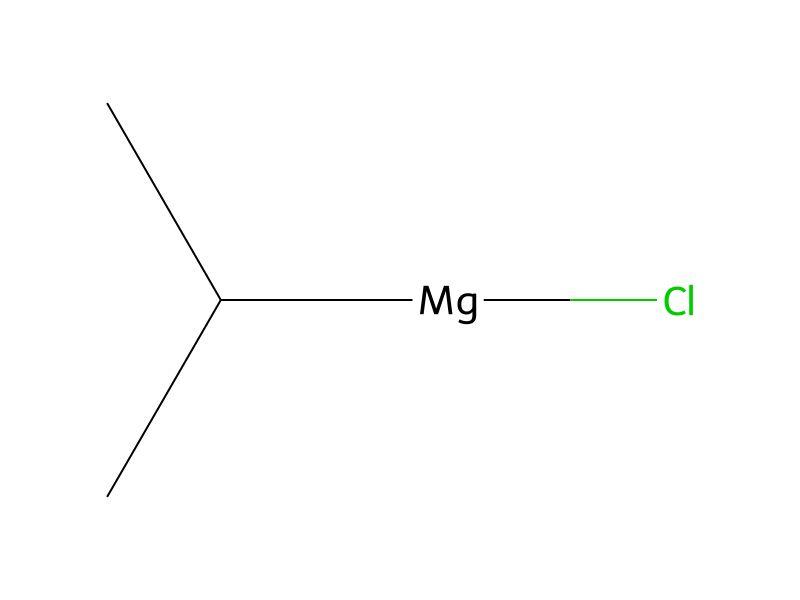
A solution of 2-bromo-3-methyl-4-chloro-pyridine (10.6 g, 57.1 mmol) in freshly distilled THF (120 mL) was cooled down to 0° C. and treated with isopropyl magnesium chloride (45.7 mL, 2.0 M in THF, 91.5 mmol). The resulting mixture was stirred at room temperature for 3 h then cooled to −5° C. Cyclopropane carboxaldehyde (6.83 mL, 91.5 mmol) was added. The reaction mixture was stirred at room temperature for 1 h and quenched by adding water (100 mL), and extracted with ethyl acetate (2×150 mL). The organic phase was separated, dried, and concentrated. The residue was purified by flash silica column chromatography (hexane:ethyl acetate, 3:1) to afford the title compound as a yellow oil (7.01 g, 62%). ESI-MS m/z: 198 (M+H)+; 1H NMR (CDCl3, 300 MHz) δ ppm: 8.28 (d, J=5.4 Hz, 1H), 7.26 (d, J=5.4 Hz, 1H), 4.79 (d, J=5.4 Hz, 1H), 4.55 (br, s, 1H), 2.39 (s, 3H), 1.10-1.28 (m, 1H), 0.58-0.41 (m, 4H).
Workup
- temperaturethen cooled to −5° C
- stirringThe reaction mixture was stirred at room temperature for 1 h
- customquenched
- additionby adding water (100 mL)
- extractionextracted with ethyl acetate (2×150 mL)
- customThe organic phase was separated
- customdried
- concentrationconcentrated
- customThe residue was purified by flash silica column chromatography (hexane:ethyl acetate, 3:1)
Sources & evidence
- ORD record
- ord-75ec7d96af9349948679814c27e44db3
- Source dataset
- uspto-grants-2015_02
- Patent number
- US08962842B2
Reaction notes
Loading…